Air India Aims At 30% Domestic Market Share In 5 Years
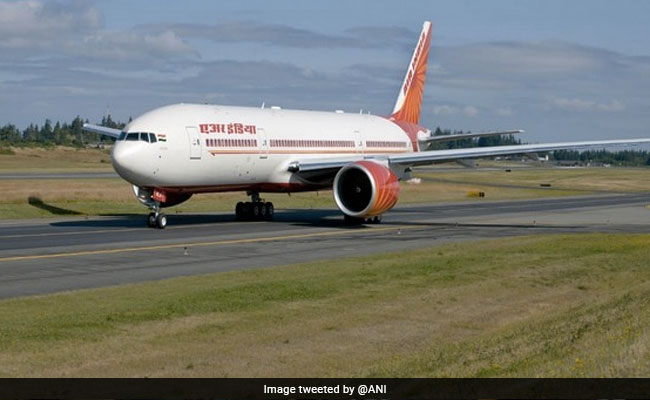
Air India aims to have a domestic market share of 30 per cent and significantly strengthen its international operations in next five years, with the Tatas-owned airline putting in place a transformation plan after gathering feedback from staff.
The carrier, which plans to induct 30 new wide-body and narrow-body aircraft, on Thursday announced 'Vihaan.AI', a comprehensive transformation plan with a detailed road map for next five years.
Under the plan, the focus will be on dramatically growing both its network and fleet, developing a completely revamped customer proposition, improving reliability and on-time performance, and taking a leadership position in technology, sustainability, and innovation, as well as aggressively investing behind the best industry talent, according to a release.
"Over next 5 years, Air India will strive to increase its market share to at least 30 per cent in the domestic market while significantly growing the international routes from the present market share. The plan is aimed at putting Air India on a path to sustained growth, profitability and market leadership," the airline said.
Air India had a domestic market share of 8.4 per cent in July, as per the latest data from aviation regulator DGCA.
The plan, developed after extensive feedback from Air India employees, will focus on five key pillars -- exceptional customer experience, robust operations, industry-best talent, industry leadership, and commercial efficiency and profitability.
"While the immediate focus of the airline remains on fixing the basics and readying itself for growth (Taxiing Phase), the more medium-to-long term focus will be on building for excellence and establishing scale to become a global industry leader (Take Off & Climb phases)," the release said.
Air India MD and CEO Campbell Wilson said the transformation has already started with a slew of initiatives in areas like refurbishing cabins, serviceable seats and in-flight entertainment system.
"We are also adopting proactive maintenance and refining flight schedules to enhance on-time performance. Our fleet expansion will involve a combination of both narrow-bodied and wide-bodied aircraft to cater to varied network needs," he added.
'Vihaan.AI' plan was unveiled through Workplace, the airline's virtual communication and engagement platform. Over the coming days and weeks, the management team will engage employees across regions, departments, and locations through a series of physical and hybrid sessions.
In Sanskrit, Vihaan signifies the dawn of a new era.
The airline will be inducting 5 wide-body Boeing and 25 Airbus narrow-body planes over the next 15 months. The aircraft being leased are 21 Airbus A320 neos, 4 Airbus A321 neos and 5 Boeing B777-200LRs.
Air India's narrow-body fleet stands at 70 aircraft. Out of them, 54 are in service and the remaining 16 aircraft will progressively return to service by early 2023. The wide-body fleet stands at 43 aircraft, of which 33 are operational. The rest will return to service by early 2023.
(Except for the headline, this story has not been edited by NDTV staff and is published from a syndicated feed.)

-
Navigating Friction And Energy Realities: An Analysis Of Marco Rubio's October Visit To India

Occurring at a critical juncture marked by stalled trade negotiations and escalating geopolitical pressures over global energy supplies, the visit offers a profound window into modern US-India relations.
-
India Exports Capital. Why Not Export Trusteeship?
The big question, then, is whether India can build an institution that global borrowers, investors, banks, and lawyers can trust, even without an Indian connection.
-
France's Economy & Politics Are In Crisis | The Reason Why
Let's look at how the French economy and politics evolved under Nicolas Sarkozy, Franois Hollande and Emmanuel Macron.
-
You May Inherit The Business. You Must Earn Its Credibility.
Succession tests the founder's ability to share authority as much as it tests the next generation's readiness to assume it.
-
Signing Deals Is One Thing; Making Them Work Is Another | The Week In Whys
Sometimes, things don't turn out as planned. Indian companies have lost some bids to rivals, some projects won't produce until 2030.
-
FOMC Wall, PERM Suspension, Hospital Stocks | Talking Points This Week
A PERM suspension would directly affect green-card sponsorship rather than H-1B visas, so the near-term earnings impact could remain relatively limited. The key question is whether this marks a new phase in US scrutiny of Indian IT.
-
Everything, Everywhere, All At Once: Dalal Street's Week To Forget | Joining The Dots
Visa curbs, a Starlink spat and cancer drug caps: what connects this week's shocks for Indian markets
-
India Is Going Abroad For Critical Minerals. But It May Take Years To Pay Off | The Reason Why
Although India's steps are in the right direction, they remain modest compared with India's growing dependence.
-
When Everyone Has AI, What Gives You An Edge?
India's young workforce is entering an uncertain world of work where powerful AI tools are becoming widely accessible. The advantage will belong to those who combine deep expertise with digital fluency, and the distinctly human capabilities that technology cannot manufacture.
-
Wrong Labels, High Pesticide Residues Holding Back Agri Exports | The Reason Why
India needs stronger domestic food-safety and labelling standards, with best practices becoming part of everyday business for farmers, traders and food companies.










