AI Disruption Deepens With Chegg Plunge, IBM Hiring Halt, Samsung Chatbot Ban
(Bloomberg) -- The speed of disruption brought on by a worldwide rush into artificial intelligence was on full display this week, sending shares of education-technology company Chegg Inc. plunging, leading IBM to halt some hiring and prompting a chatbot ban at Samsung Electronics Co.
Chegg shares at one point had lost half their value Tuesday before closing 48% lower after the company said OpenAI's ChatGPT is threatening the growth of its homework-help services. The San Diego-based company makes most of its money from subscriptions and offers online guidance for test taking and essay-writing, tasks some students are outsourcing to freely available ChatGPT tools. Educational publisher Pearson Plc fell by the most in more than six years in London.

Read More: Chegg Sinks 42% as ChatGPT Threatens Growth Outlook: Street Wrap
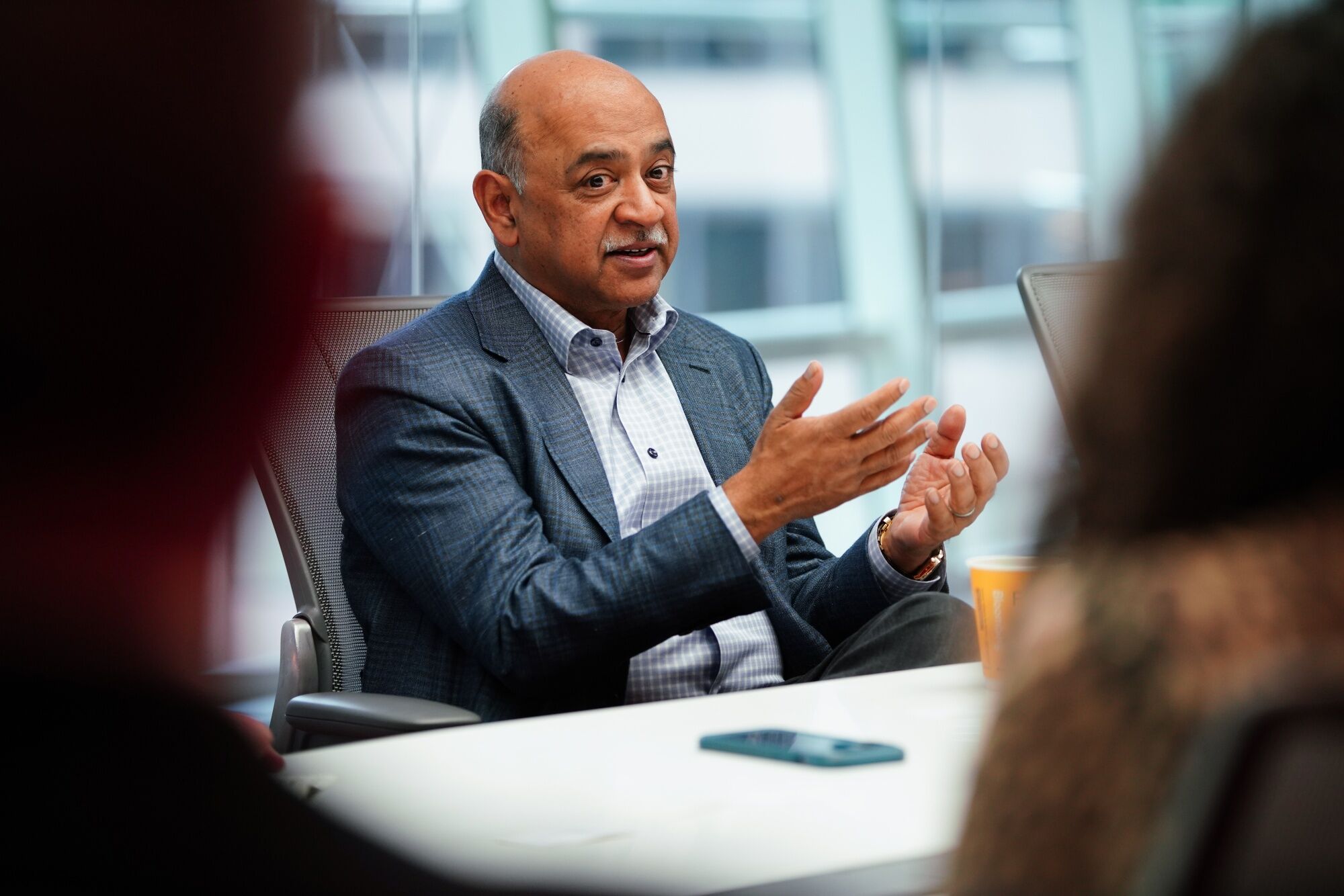
International Business Machines Corp. Chief Executive Officer Arvind Krishna said in an interview with Bloomberg on Monday that the company is going to stop or slow hiring for jobs it believes will be replaced by artificial intelligence. That amounts to about 30% of its 26,000 workers in non-customer facing roles over a five-year period, he said.
The Writers Guild of America, which represents more than 11,500 Hollywood writers, included the regulation of AI among their demands as they started their first strike in 15 years on Tuesday. While the union doesn't oppose using AI as a tool, it says it should not share writing credits, or get a chunk of the residuals.

Generative AI — software that can create text, images or videos based on prompts from a user — is starting to show how dramatically it will reshape the world's industries, markets and economies. Goldman Sachs Group Inc. said last month said that the technology could drive 7% growth in global GDP in the next decade and that nearly two-thirds of US jobs would be affected — some augmented, some replaced.
“These tools are going to really revolutionize how we do business in essentially all sectors of the economy,” Anton Korinek, fellow at the Brookings Institution, said in an interview. “There is indeed a risk that businesses don't quite appreciate the scale of the revolution that is going on. The impact will be really massive.”
ChatGPT, which was introduced to the public less than six months ago, touched off a race among the world's biggest technology companies to own the AI space, pitting Alphabet Inc., Meta Platforms Inc. and Microsoft Corp. against each other. Still, the rush to expand the availability of AI has also increased fears of what the technology could be used for.
Read more: The Tech Behind Those Amazing, Flawed New Chatbots: QuickTake
Samsung said this week it would ban employees from using generative AI tools such as ChatGPT, according to a memo that was reviewed by Bloomberg News and confirmed by the company. The company is concerned that data sent to AI platforms can be stored on external servers, making it difficult to delete and putting it at risk of being disclosed to other users. Samsung joins a number of Wall Street banks including JPMorgan Chase & Co., Bank of America Corp. and Citigroup Inc., which had also banned or restricted the technology.
Geoffrey Hinton, one of the pioneers of the “neural networks” that are the foundation of today's generative AI systems, said this week that he'd quit Google after a decade so that he could speak freely about what he sees as the dangers around its rapid rollout, according to an interview in the New York Times.
In March, more than 1,100 people in the AI industry signed a petition calling for a six-month break from training AI systems more powerful than the latest iteration behind ChatGPT in order to allow for the development of shared safety protocols. The signatories included Elon Musk, University of California Berkeley computer science professor Stuart Russell and Apple Inc. co-founder Steve Wozniak.

Wozniak said Tuesday in a Bloomberg Television interview the growing interest in the technology, and emerging concern around AI's use in spam and hoaxes, underscored the need for caution.
“New tech brings the pluses and minuses, and we've seen so many examples of that,” he said. “When new technology brings big changes — sometimes, it's ‘Be responsible, think about the pluses and minuses.”'
Chegg's difficulties can illustrate the disruption that's in store for education, as well as the need for guidance in the use of the new tools. Seattle education nonprofit Code.org has joined organizations including the World Economic Forum to form TeachAI, an effort that will guide schools on integrating AI safely in the classroom.
“There is going to be great disruption within education, technology and also in classrooms as we rethink not only the tools for education, but even how teaching is done and even the purpose of education,” Code.org CEO Hadi Partovi said in an interview on Bloomberg Television. “The real issue we need to talk about is not to view using new technology as cheating, but to figure out how do we move the goalposts of education.”
--With assistance from Jake Rudnitsky, Celia Bergin, Ed Ludlow, Caroline Hyde and Marguerite Gallorini.
More stories like this are available on bloomberg.com
©2023 Bloomberg L.P.

-
Ten Things I Learnt This Samvat

Patience can be a trap. Cheap stocks can stay cheap. Leverage can wipe you out. What did Samvat 2082 teach us? Niraj Shah writes on 10 lessons from the year gone by.
-
Talking Points This Week: Tech Nerves, FII Buying, And A Faraway Banking Shock
The global markets are not shining this Diwali. The exception in the large markets is, India.
-
Midterm Rally Lasted A Day. The Hard Reality Of A Divided US May Last Two Years | Opinion
Between a contested AI boom, a debt ceiling that arrives in 2027 and a president with every incentive to act alone, the next two years may prove more volatile than the first day's rally suggests.
-
Blue Wave Will Derail the AI Trade but Won't Dismantle the AI Era | Unhedged Position
The Democrats' sweep of the US Congress will see politics collide with economic forces both over the long and short term.
-
It's Time To Take The GST Council's Bet On Trust Global
Payment records can prove India's services exports, and clear, proportionate rules can bring foreign digital sellers into the tax net.
-
Opinion | India at 38: From Innovation Overperformer to Innovation Powerhouse
India now has 453 VC-backed deep science startups, 18 of them late-stage, after 117 percent growth since 2020. Laurus Labs, at USD 9.3 billion, is the most valuable deep science company in any middle-income economy outside China.
-
Navigating Energy Crossroads: S Jaishankar's Call For Diversified Supply Chains At G20 Ministerial Meeting
As geopolitical fault lines continue to test maritime trade routes and commodity flows, Jaishankar's message remains pertinent: true economic resilience requires open markets, protected transit lines, and a genuine commitment to multilateral cooperation rather than coercion.
-
Indians Are Travelling, But Not Every Journey Is A Holiday | The Week In Whys
Pilgrims, patients and working women are the real travellers, and the system hasn't quite caught up with them.
-
Getting To Work Costs Women More | The Reason Why
It is not just about women paying more than men. It is about women paying much more in cities than in villages.









