Agony for Wall Street Economists, Investors as Fed Meets
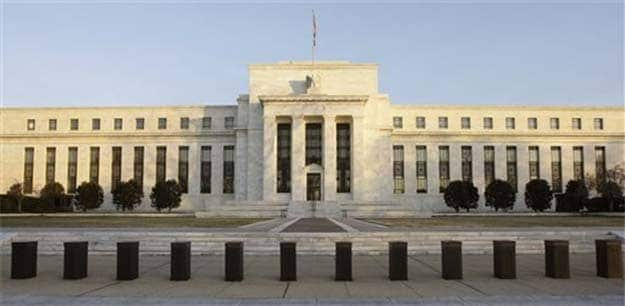
Washington/New York: Wall Street's top economists are on unfamiliar ground: as the Federal Reserve decides whether to raise interest rates, for the first time in years they are deeply divided on what will happen.
Some observers of the world's most powerful central bank, which will announce its decision on Thursday, blame the Fed for being unusually enigmatic and sending mixed signals. Is it truly "data-dependent" or has it been swayed by the recent China-induced market gyrations?
"I joke to colleagues, do I still have a job on Friday if I get it wrong on Thursday?" says Citigroup's William Lee, adding that no, his pay will not be cut if he blows the call.
Citi goes with a Fed hike and Lee said that investors read research from banks to "stress test" their positions; for that reason, even if he is right that the Fed raises rates but gets the why wrong, "I'm embarrassed." If he gets the rate call wrong, he will dissect what he might have missed.
JPMorgan, Societe Generale and Bank of America Merrill Lynch also expect the Fed to hike this week. Not likely, say Goldman Sachs, Morgan Stanley, Jefferies and others - a view that seems to have won over more investors in recent days.
The latest Reuters poll shows 45 of 80 economists expect the Fed to stay its hand while the one conducted on Friday had a narrow majority expecting a hike.
Money Bets
While economists are putting their reputations on the line, investors and fund managers bet with their or their clients' money.
"Both journalists and economists have that advantage - if the story changes you just change your story," said Axel Merk, chief investment officer of Merk Investments. "For us on the buy side, we have a track record that we can't escape."
A fund with a history of making the right calls can attract more clients, which translates to more fees and higher profits, while a few bad ones can spur investors to take their money elsewhere. Merk would not say what his call for this week is.
Financial markets on Wednesday show betting is still for a hike in October or December rather than this week.
Traders see a 29 per cent chance the Fed will end its seven-year experiment with near-zero interest rate policy this week, based on overnight indexed swaps rates; chances of a December hike stood at 83 per cent.
Even some economists working for the same institution seem unable to agree.
Deutsche Bank economist Peter Hooper and several of his colleagues published an 11-page report on Monday titled "Why the Fed should raise rates." However, the bank's chief U.S. economist, Joseph LaVorgna, did not sign it and last week shifted Deutsche's official view away from a September rate hike.
For years global investors have relied on Wall Street analysts, many former Fed economists like Citi's Lee, for guidance on the U.S. central bank's thinking and intentions.
Now even some former insiders complain they have trouble reading the central bank despite its repeated assurances that any move would be well signalled.
Former advisor to Fed Chair Janet Yellen, Andrew Levin, has published a paper in which he said that the Fed's strategy "has become so opaque" that analysts can only guess what lies ahead - suggesting the heightened uncertainty is undermining the central bank's years-long transparency push.
Levin also said that raising rates would be a "serious policy error."
In fact, rather than agonizing over what the Fed will do, many on Wall Street have shifted the debate to what it ought to do.
"We are looking for a hike this week but think it is a very close call," JPMorgan's Michael Feroli said. "We have more conviction that it is the right thing to do."
By contrast Jan Hatzius at Goldman Sachs, expects a rate rise later this year, but says the Fed probably should wait even longer, pointing both to low inflation and recently rising borrowing costs in bond markets.
Away from Wall Street, some U.S. executives sound far more relaxed about Thursday's nail-biter. For Neal J. Keating, chief executive of Kaman Corp in Bloomfield, Connecticut, the best argument for hiking this week is just to get it out of the way.

-
Unhedged Position: Can India See An Indonesia-Style Time Correction?

The Nifty is trading below levels it first clocked in 2024. Is there, then, as I have suggested in the headline, potential that the current time correction drags on painfully for the next three-five, even ten years?
-
Navigating Friction And Energy Realities: An Analysis Of Marco Rubio's October Visit To India
Occurring at a critical juncture marked by stalled trade negotiations and escalating geopolitical pressures over global energy supplies, the visit offers a profound window into modern US-India relations.
-
India Exports Capital. Why Not Export Trusteeship?
The big question, then, is whether India can build an institution that global borrowers, investors, banks, and lawyers can trust, even without an Indian connection.
-
France's Economy & Politics Are In Crisis | The Reason Why
Let's look at how the French economy and politics evolved under Nicolas Sarkozy, Franois Hollande and Emmanuel Macron.
-
You May Inherit The Business. You Must Earn Its Credibility.
Succession tests the founder's ability to share authority as much as it tests the next generation's readiness to assume it.
-
Signing Deals Is One Thing; Making Them Work Is Another | The Week In Whys
Sometimes, things don't turn out as planned. Indian companies have lost some bids to rivals, some projects won't produce until 2030.
-
FOMC Wall, PERM Suspension, Hospital Stocks | Talking Points This Week
A PERM suspension would directly affect green-card sponsorship rather than H-1B visas, so the near-term earnings impact could remain relatively limited. The key question is whether this marks a new phase in US scrutiny of Indian IT.
-
Everything, Everywhere, All At Once: Dalal Street's Week To Forget | Joining The Dots
Visa curbs, a Starlink spat and cancer drug caps: what connects this week's shocks for Indian markets
-
India Is Going Abroad For Critical Minerals. But It May Take Years To Pay Off | The Reason Why
Although India's steps are in the right direction, they remain modest compared with India's growing dependence.
-
When Everyone Has AI, What Gives You An Edge?
India's young workforce is entering an uncertain world of work where powerful AI tools are becoming widely accessible. The advantage will belong to those who combine deep expertise with digital fluency, and the distinctly human capabilities that technology cannot manufacture.









