Agnipath: Seminal Reset Now, But More Problems Later
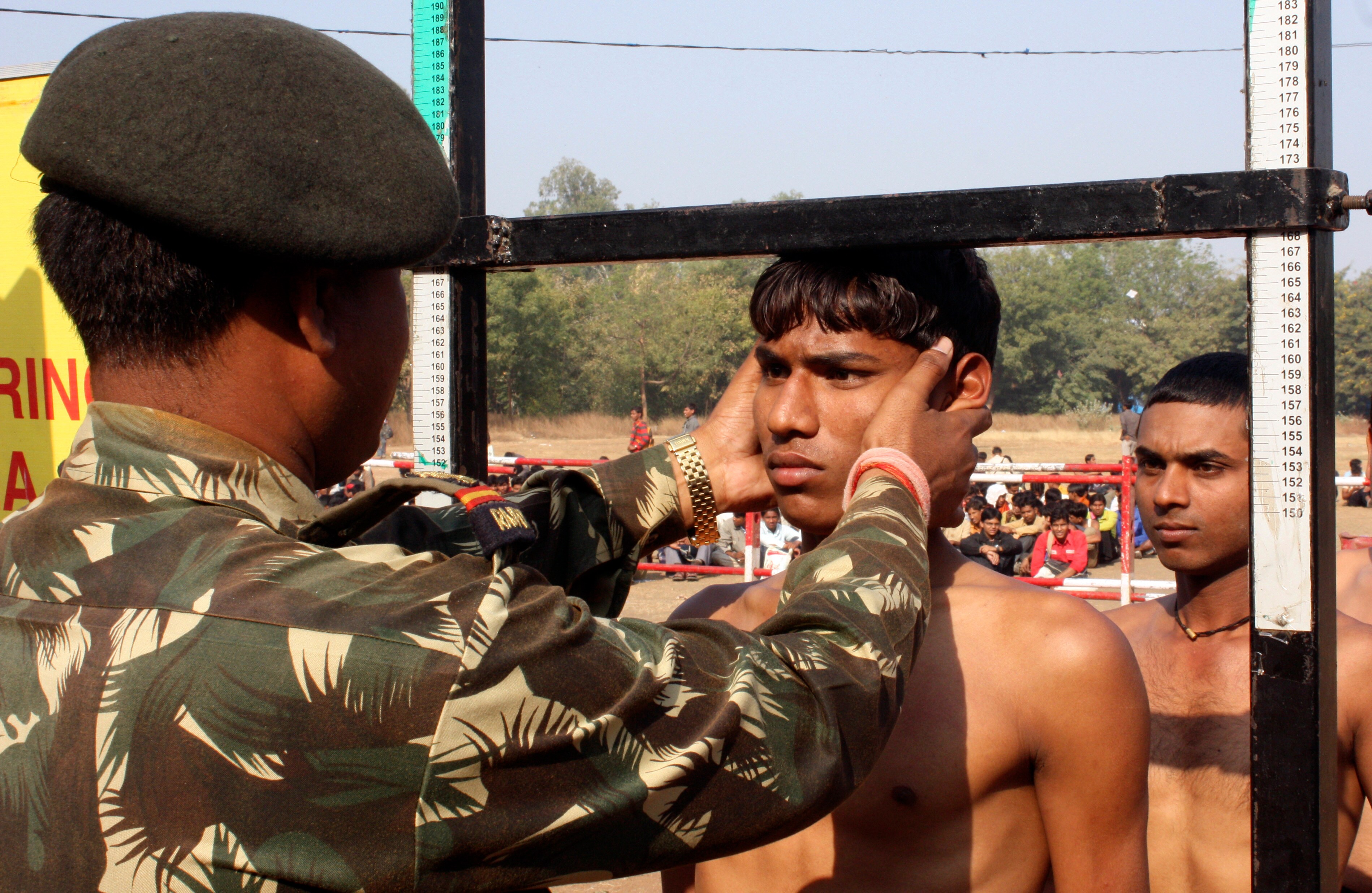
Agnipath – the scheme for a four-year ‘tour of duty' as the mainstay of recruitment into the military services announced by Defence Minister Rajnath Singh the other day, alas, has more negatives attending on it than clear-cut benefits.

Shedding Colonial Structures
The pros first: It is a seminal attempt at reconfiguring the imperial-era structured mercenary army that had won for the British their globe-girdling empire. In its post-1947 avatar, the Indian Army continued with its colonial institutions and affectations, such as the officers' mess and cantonment culture, that has long irked Prime Minister Narendra Modi and is, perhaps, the prompt for this underway policy to ‘Indianise' the military.
It will be intriguing, in any case, to see how the army chief, General Manoj Pande, a veteran sapper, proposes to re-engineer the infantry-heavy army dominated by proud, single class, regiments (Gurkha, Sikh, Jat, Madras, Maratha, etc.) deliberately designed during the British Raj on the politically astute but divisive myth of the ‘martial races' into an army of Agniveers.
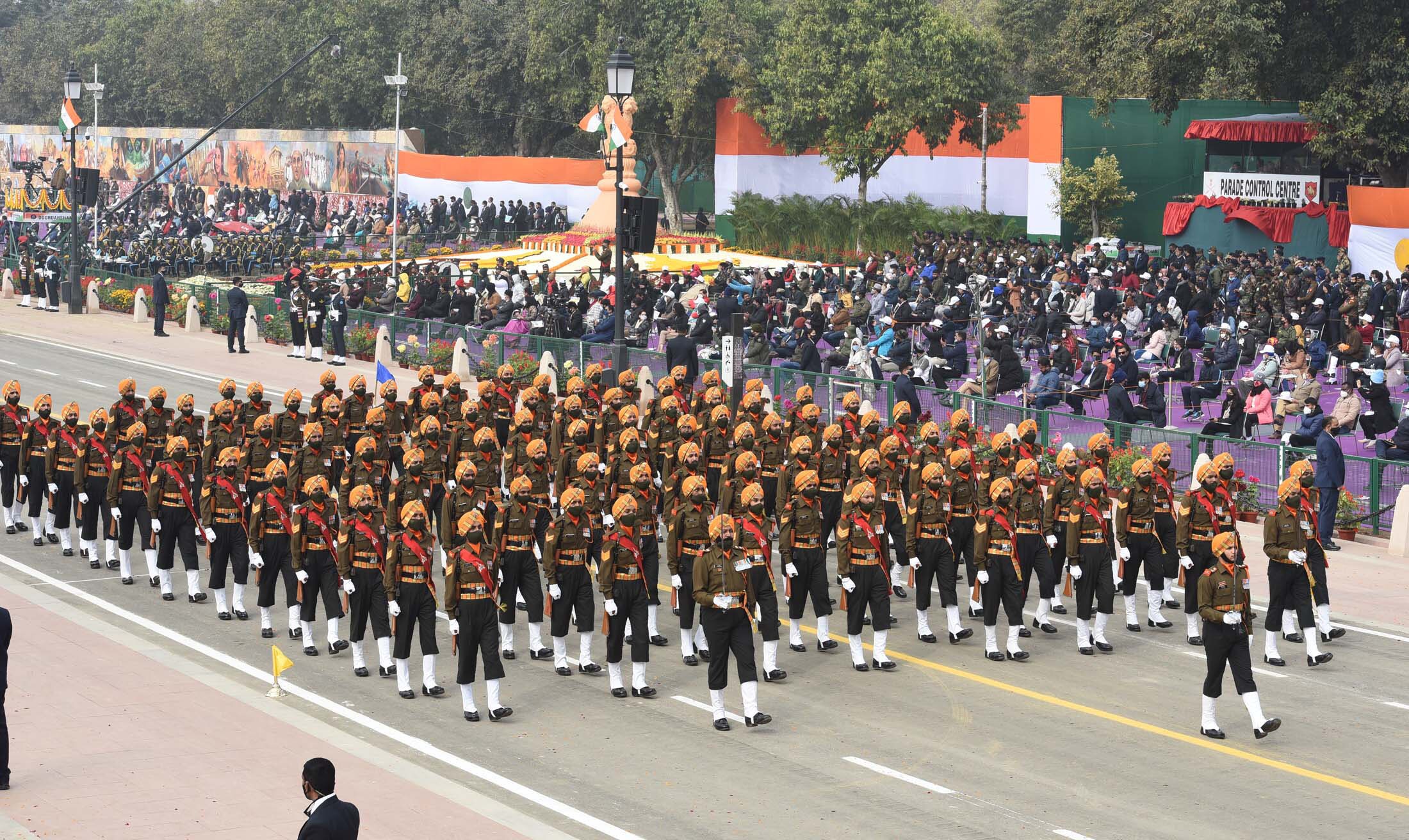
The Sikh Li Regiment Marching Contingent passes through the Rajpath, at the Republic Day Celebrations in New Delhi, on Jan. 26, 2022. (Photograph: PIB)
Three Vastly Different Services
Rajnath Singh was joined at the podium by the three services' Chiefs of Staff. But let's be clear that it is the infantry-heavy army – the least technical among them, that will mainly take in the short service recruits because the navy and air force simply cannot be expected to do so. Their relatively small manpower requirements coupled with technology-based wherewithal and war fighting concepts deter them from following Agnipath.
Ironically, it is precisely the technical expertise imparted to entrance-level sailors and airmen in esoteric technologies to enable them in peacetime and war, to operate systems of all kinds (sonar, avionics, radar, communications, etc.), to run and maintain warships and aircraft, to upkeep powerplants and weapons and secondary systems onboard varied platforms, and otherwise to keep the Indian Navy and the Air Force in play, that makes them more readily employable in the civilian world should any of them seek an early exit from military careers or a second career post-retirement.
In other words, many of the positives Rajnath Singh claimed for the Agnipath programme, such as producing technically competent, high-tech workers that industry would gladly offtake and who will end up increasing labour productivity, and spurring industrial and GDP growth, etc., are an exaggeration. Because it is certain that the 25% of the Agniveer cohort who show any talent for technology will be retained by the army to run its high-tech equipment.
The reason for this is because of the differing nature of warfare the three armed services prepare for. While air and naval warfighting are, as mentioned, machine-intensive, land wars are manpower weighted. An army needs unending hordes of preferably youthful ‘boots on the ground' to fight for and hold mountainous territory against a hostile China.

A naval officer directs a helicopter landing on the INS Cheetah. (Photograph: PIB)
What After The Four Years?
The average Agniveer may join with the idea of achieving some technical competence at the end of four years of service, but will soon discover he is only another passed-over infantry grunt with no marketable skills to sell, other than—as is the case now—as a hire for the proliferating private agencies in the business of providing ‘security' to buildings and compounds.
In the event, how much of an incentive is the Rs 12-14 lakh bounty promised the Agniveer at the end of his brief army tenure? Of course, Rs 12-14 lakh is not a sum to be sneezed at. For the masses of otherwise inadequately-educated and unemployable youth, this money is magnet enough. But as roughly 30,000 of each year's Agniveer cohort—the current level of army retirees—is disgorged into the society two things might happen, neither of them good.
Discontent will spread fast among them once they realise their job prospects are as bleak as ever. The frustrated among them, now trained to use small arms and chemical explosives, may choose to use these newly acquired skills for criminal, even insurrectionary, purposes and emerge as a major law and order-qua-internal security problem for the country.
This is the usual end-state of all supposedly ‘temporary' government workers ranging from clerks, school teachers, safai karamcharis to anganwadi helpers.
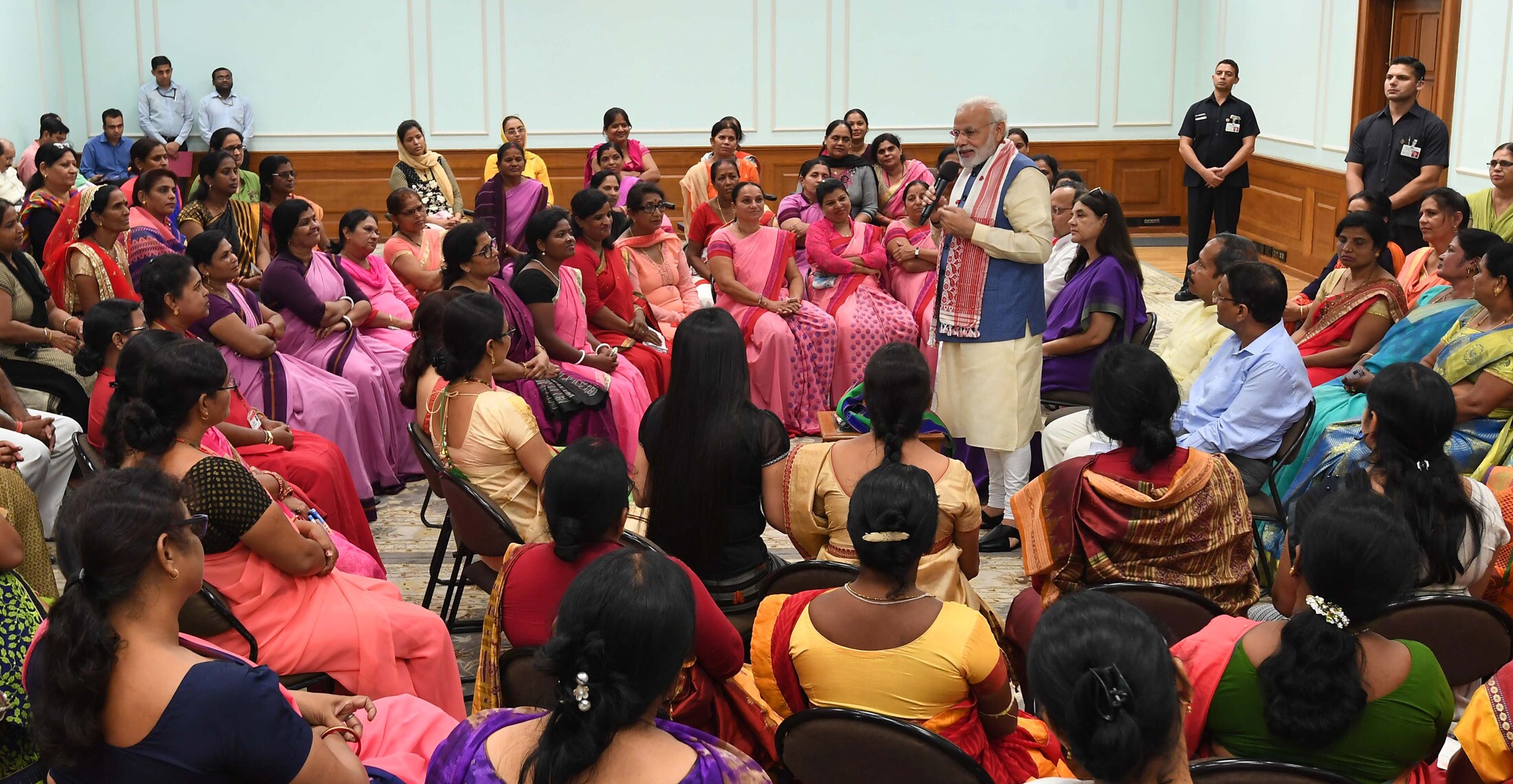
Prime Minister Narendra Modi interacts with Anganwadi workers, in New Delhi, on Sept. 19, 2018. (Photograph: PIB)
Compounding The Problem You Set Out To Solve
Is there a politician alive who will be able to resist such pressure, in an election year (which is nearly every year)? And, lo and behold, the army will become still more bloated, and the defence pensions budget more distended.
The Agnipath scheme designed to solve the problems of an aging army and ballooning defence pensions could end up, at best, only compounding them.
More immediately, assuming General Pande needs six months to firm up the new recruitment process, the Agniveer army could begin forming up only by next year or even by 2024 when the next Lok Sabha elections are due. Who is to say Agnipath won't win Modi yet another term in office with a bigger majority, even if it means succeeding governments and the Indian taxpayers are left holding the can?
Bharat Karnad is Distinguished Fellow, United Service Institution of India, and Emeritus Professor in national security studies at the Centre for Policy Research, Delhi. He is the author, most recently, of ‘Staggering Forward: Narendra Modi and India's Global Ambition'.
The views expressed here are those of the author and do not necessarily represent the views of BQ Prime or its editorial team.

-
Ten Things I Learnt This Samvat

Patience can be a trap. Cheap stocks can stay cheap. Leverage can wipe you out. What did Samvat 2082 teach us? Niraj Shah writes on 10 lessons from the year gone by.
-
Talking Points This Week: Tech Nerves, FII Buying, And A Faraway Banking Shock
The global markets are not shining this Diwali. The exception in the large markets is, India.
-
Midterm Rally Lasted A Day. The Hard Reality Of A Divided US May Last Two Years | Opinion
Between a contested AI boom, a debt ceiling that arrives in 2027 and a president with every incentive to act alone, the next two years may prove more volatile than the first day's rally suggests.
-
Blue Wave Will Derail the AI Trade but Won't Dismantle the AI Era | Unhedged Position
The Democrats' sweep of the US Congress will see politics collide with economic forces both over the long and short term.
-
It's Time To Take The GST Council's Bet On Trust Global
Payment records can prove India's services exports, and clear, proportionate rules can bring foreign digital sellers into the tax net.
-
Opinion | India at 38: From Innovation Overperformer to Innovation Powerhouse
India now has 453 VC-backed deep science startups, 18 of them late-stage, after 117 percent growth since 2020. Laurus Labs, at USD 9.3 billion, is the most valuable deep science company in any middle-income economy outside China.
-
Navigating Energy Crossroads: S Jaishankar's Call For Diversified Supply Chains At G20 Ministerial Meeting
As geopolitical fault lines continue to test maritime trade routes and commodity flows, Jaishankar's message remains pertinent: true economic resilience requires open markets, protected transit lines, and a genuine commitment to multilateral cooperation rather than coercion.
-
Indians Are Travelling, But Not Every Journey Is A Holiday | The Week In Whys
Pilgrims, patients and working women are the real travellers, and the system hasn't quite caught up with them.
-
Getting To Work Costs Women More | The Reason Why
It is not just about women paying more than men. It is about women paying much more in cities than in villages.









