After DHFL, Jaypee Infratech Promoter Submits A Settlement Plan To Creditors
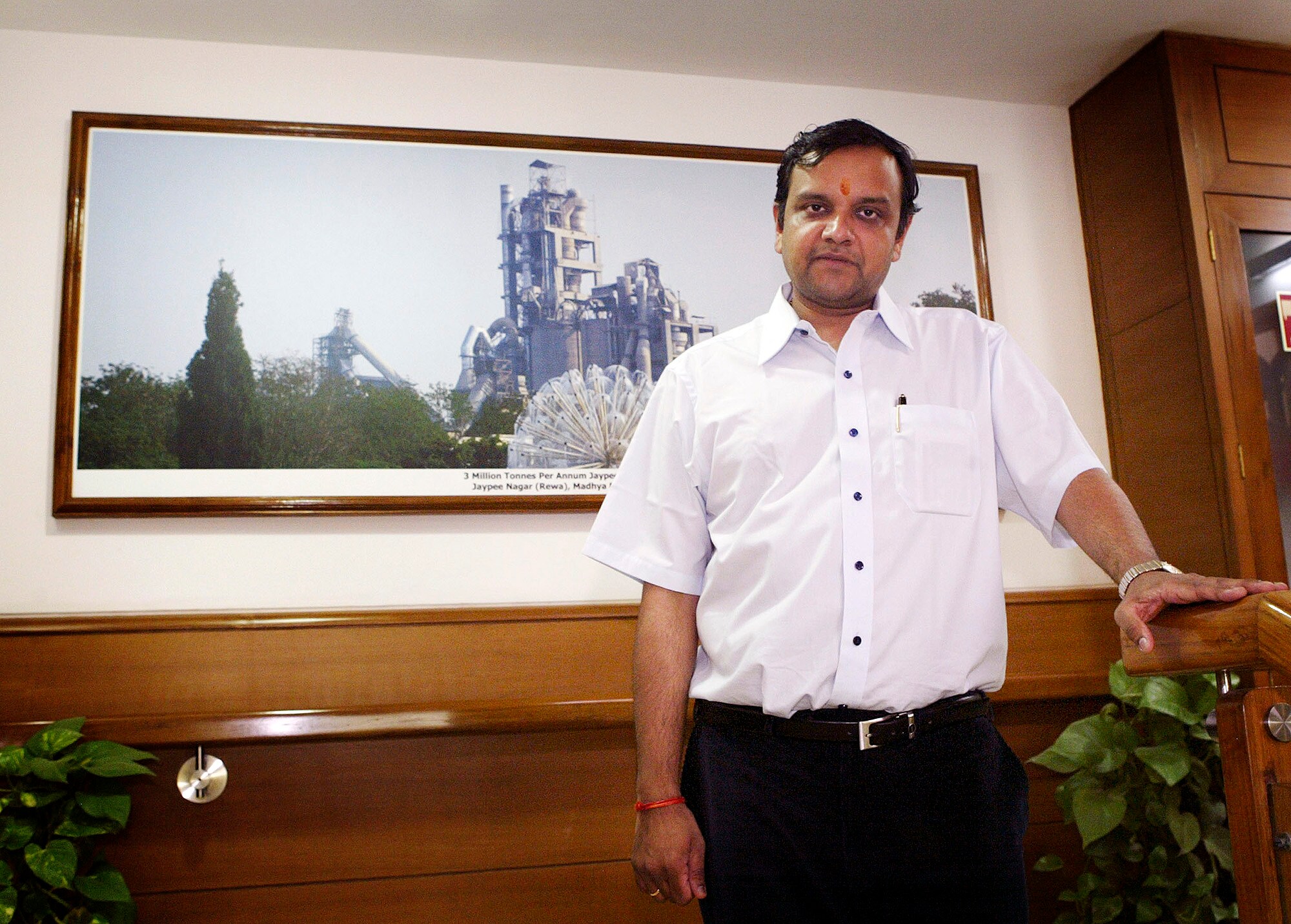
Manoj Gaur, executive chairman of Jaiprakash Associates Ltd., has written to the committee of creditors at Jaypee Infratech Ltd., proposing to settle the company's dues in full.
In a letter to the creditors on May 23, Gaur said that creditors must consider his settlement plan in the interest of homebuyers. BloombergQuint has reviewed a copy of the letter.
This is now at least the second instance of a promoter of a large bankrupt firm seeking to settle dues with creditors, after the resolution process has reached advanced stages. In December 2020, Kapil Wadhawan, promoter of Dewan Housing Finance Corp. had sought to do the same. While the National Company Law Tribunal had directed creditors to vote on Wadhawan's proposal, the appellate tribunal has stayed the order.
Gaur, in his letter, stated that his submission is based on the Supreme Court's recent decision with respect to personal guarantors of bankrupt firms. The apex court held that guarantors are not exempt from their liabilities, even if a bankrupt firm is resolved under the Insolvency and Bankruptcy Code. The order would allow creditors to go after promoter guarantees to recoup the haircuts they have had to take in the resolution process.
According to Gaur, the judgment simultaneously provides a legal right or entitlement to promoters of Jaypee Infratech to object to any resolution plan which calls for a haircut for the creditors. “...as it has the effect of impinging on the rights of the guarantors,” according to the letter.
The Jaypee Infratech insolvency process is currently in the midst of a fourth round of bids with two firms — NBCC India Ltd. and the Suraksha Group — in the fray. At first, creditors deemed NBCC's proposal as non-compliant with provisions of the IBC and decided to vote on Suraksha's plan. NBCC, however, challenged this and creditors are now set to review their decision.
Jaypee Infratech is a rarest of the rare cases where the assets of the company are higher than its liabilities, Gaur said.
“Therefore, it is not a case wherein the lenders by an involuntary process, i.e. by operation of law (insolvency proceedings), are compelled to accept one of the resolution plans and settle with their borrower (corporate debtor) after taking huge haircuts,” Gaur said.
Gaur intends to repay Rs 9,783 crore owed to banks and financial institutions through upfront payment, land swaps and long-term debentures worth Rs 12,500 crore. He proposes to deploy Rs 1,650 crore toward construction of homes, out of which, Rs 400 crore will paid upfront. The promoter also intends to spend up to Rs 2,987 crore toward compensation for delayed delivery of homes.
Additionally, Gaur has proposed to repay fixed depositors and Yamuna Expressway Infrastructure Development Authority in full.
The promoter said his proposal does not envisage any haircut for financial creditors. Even if any creditor feels that there is an implied haircut, Gaur said that it will be made good within five years of acceptance of the plan.
“Voting on a non-compliant plan of a resolution applicant and accepting haircut despite knowing the worth of assets of JIL and ignoring the offer of its promoters is not only imprudent but will set an extremely wrong precedence,” Gaur said in his letter.

-
High US Salaries, No Green Card Certainty: The Financial Calculation Facing Indian H-1B Families

The suspension of PERM processing at eight technology employers does not cancel existing H-1B visas. What it does is force a question many Indian families have been avoiding: is the US salary worth tying your career and family plans to one employer?
-
Unhedged Position: Can India See An Indonesia-Style Time Correction?
The Nifty is trading below levels it first clocked in 2024. Is there, then, as I have suggested in the headline, potential that the current time correction drags on painfully for the next three-five, even ten years?
-
Navigating Friction And Energy Realities: An Analysis Of Marco Rubio's October Visit To India
Occurring at a critical juncture marked by stalled trade negotiations and escalating geopolitical pressures over global energy supplies, the visit offers a profound window into modern US-India relations.
-
India Exports Capital. Why Not Export Trusteeship?
The big question, then, is whether India can build an institution that global borrowers, investors, banks, and lawyers can trust, even without an Indian connection.
-
France's Economy & Politics Are In Crisis | The Reason Why
Let's look at how the French economy and politics evolved under Nicolas Sarkozy, Franois Hollande and Emmanuel Macron.
-
You May Inherit The Business. You Must Earn Its Credibility.
Succession tests the founder's ability to share authority as much as it tests the next generation's readiness to assume it.
-
Signing Deals Is One Thing; Making Them Work Is Another | The Week In Whys
Sometimes, things don't turn out as planned. Indian companies have lost some bids to rivals, some projects won't produce until 2030.
-
FOMC Wall, PERM Suspension, Hospital Stocks | Talking Points This Week
A PERM suspension would directly affect green-card sponsorship rather than H-1B visas, so the near-term earnings impact could remain relatively limited. The key question is whether this marks a new phase in US scrutiny of Indian IT.
-
Everything, Everywhere, All At Once: Dalal Street's Week To Forget | Joining The Dots
Visa curbs, a Starlink spat and cancer drug caps: what connects this week's shocks for Indian markets
-
India Is Going Abroad For Critical Minerals. But It May Take Years To Pay Off | The Reason Why
Although India's steps are in the right direction, they remain modest compared with India's growing dependence.









