After 40 Years, India Set to Re-Open Commercial Coal Mining to Private Firms
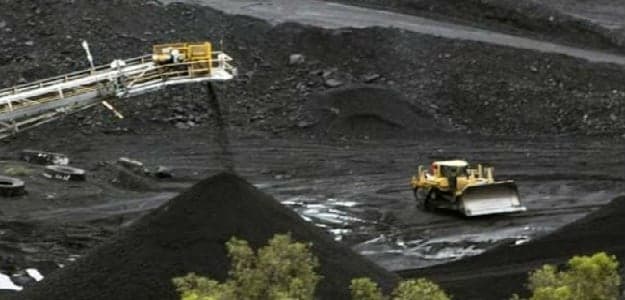
New Delhi: India is getting ready to open up commercial coal mining to private companies for the first time in four decades, with the aim of shifting the world's third-biggest coal importer towards energy self-sufficiency.
Anil Swarup, the country's top coal bureaucrat, told news agency Reuters on Friday that the government has identified mines it plans to auction, and is now finalising other terms such as eligibility criteria for companies to take part and whether and how to set up revenue sharing.
He said a plan should be ready in the 2-3 months, setting a clear timeline on a plan that has previously only been vaguely marked out.
India has an ambitious plan to double its coal production to 1.5 billion tonnes a year by 2020, as part of Prime Minister Narendra Modi's push to bring power to 300 million people who live without electricity, and give a boost to manufacturing.
It would also support the government's efforts to develop eastern parts of the country, which are resource-rich and hold most of India's coal reserves but have lagged the western states in development.
State-owned Coal India is on track to produce 1 billion tonnes a year by the end of this decade, and India is counting on private firms to produce the remaining 500 million tones - which may prove a tough target to achieve.
As of now, only Coal India and a small government-owned company are allowed to mine and sell coal in India.
"It's imperative that India opens up the sector so that private companies can bring in new technologies and the efficiencies that we keep talking about," said Dipesh Dipu at energy-focused Jenissi Management Consultants. "But I don't think private companies will be able to produce more than 100 million tonnes this decade as the process has yet to start."
The move is likely to attract coal block bids from Indian conglomerates such as the Adani Group and GVK, but the government may find it harder to lure big multinational miners such as Rio Tinto, BHP Billiton, Anglo American and Peabody Energy. Rio Tinto did not respond to requests for comment.
Coal prices are at multi-year lows amid global oversupply, and foreign companies have faced obstacles to investing in India, such as problems in getting land and environmental approvals. Some private companies also worry that the best quality mines would be left for Coal India.
Until last year, India spent around $16 billion a year importing foreign coal, even though it sits on the world's fifth-biggest reserves of more than 300 billion tonnes.
Mr Swarup declined to say where the identified mines were located and said there were still some aspects of the plan to bring in private players that needed to be examined carefully. The government, for example, has to make sure that companies do not under-report sales if a revenue-sharing model is adopted, he said. Companies can do that by selling coal to their units at discounted rates, and by calculating the government's share based on that instead of the market price.

-
Talking Points This Week: Tech Nerves, FII Buying, And A Faraway Banking Shock

The global markets are not shining this Diwali. The exception in the large markets is, India.
-
Midterm Rally Lasted A Day. The Hard Reality Of A Divided US May Last Two Years | Opinion
Between a contested AI boom, a debt ceiling that arrives in 2027 and a president with every incentive to act alone, the next two years may prove more volatile than the first day's rally suggests.
-
Blue Wave Will Derail the AI Trade but Won't Dismantle the AI Era | Unhedged Position
The Democrats' sweep of the US Congress will see politics collide with economic forces both over the long and short term.
-
It's Time To Take The GST Council's Bet On Trust Global
Payment records can prove India's services exports, and clear, proportionate rules can bring foreign digital sellers into the tax net.
-
Opinion | India at 38: From Innovation Overperformer to Innovation Powerhouse
India now has 453 VC-backed deep science startups, 18 of them late-stage, after 117 percent growth since 2020. Laurus Labs, at USD 9.3 billion, is the most valuable deep science company in any middle-income economy outside China.
-
Navigating Energy Crossroads: S Jaishankar's Call For Diversified Supply Chains At G20 Ministerial Meeting
As geopolitical fault lines continue to test maritime trade routes and commodity flows, Jaishankar's message remains pertinent: true economic resilience requires open markets, protected transit lines, and a genuine commitment to multilateral cooperation rather than coercion.
-
Indians Are Travelling, But Not Every Journey Is A Holiday | The Week In Whys
Pilgrims, patients and working women are the real travellers, and the system hasn't quite caught up with them.
-
Getting To Work Costs Women More | The Reason Why
It is not just about women paying more than men. It is about women paying much more in cities than in villages.
-
AI Bias In Investing Cannot Be Eliminated, But It Can Be Governed
Framing is a particularly important example as identical financial information presented in terms of gains rather than losses can lead an LLM to reach a different assessment.









