Aero India 2025: India Is A Market Like No Other In Capability, Says Boeing India President Salil Gupte
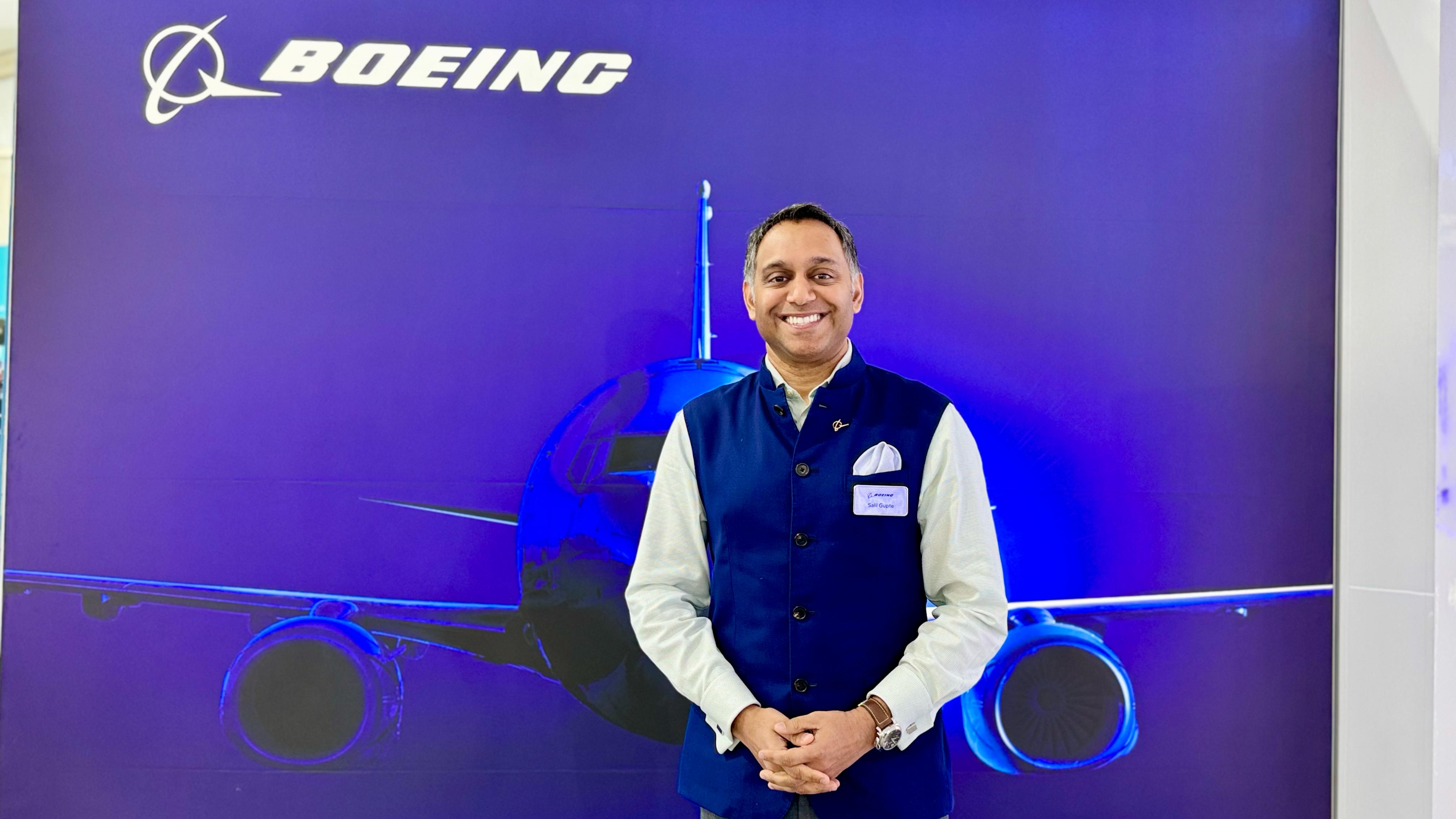
India is a market like no other in capability, said Salil Gupte, president at Boeing India and South Asia. "We have been in India for eight decades, but over the last 10 years is when our presence has really started to grow," the Boeing India President told NDTV Profit on the sidelines of Aero India 2025.
Boeing has been actively supporting civil aviation customers, and in defence, it has introduced several key platforms such as the C-17 cargo aircraft, P-8 maritime patrol aircraft, and Apache helicopters. "The head of the state fleet, where we get to fly the Prime Minister and the President of India, is also a Boeing fleet," he shared.
He dismissed the notion that high-tech aviation manufacturing was not happening in India. "That may have been true 10 years ago, but today, India has an interesting opportunity," he said.
Expanding Manufacturing And Supply Chain
Gupte highlighted Boeing's growing operations in India, which include a 43-acre site in Bengaluru with around 5,000 aeronautical engineers. “They are mostly looking at domestic work and also supporting some overseas projects,” he said.
Boeing also has an extensive supply chain in India, with suppliers in Bengaluru, Hyderabad, Gujarat, and northern India. "These suppliers export about Rs 10,000 crore worth of aerospace components every year, making us the largest foreign OEM in India," Gupte noted.
On the defence side, Boeing is working under the ‘Make in India' and ‘Atmanirbhar Bharat' initiatives. "For any large defence procurement, the final assembly commitment is already there as part of the deal. Now, we haven't been chosen for a fighter yet, but we hope to be in the future," he said.
A key factor in defence manufacturing is localisation. "Any final assembly for a defence contract today requires 50% indigenous content. That's why we have been investing in localisation efforts,” Gupte explained. He also stressed the importance of partner companies like GE, which is setting up an engine manufacturing unit with Hindustan Aeronautics Ltd. or HAL. "GE has a big place in a lot of our platforms for both civil and defence," he said.
Boeing's approach to civil aviation differs from defence because it requires a strong export market in addition to domestic demand. "A lot of our focus is on step-wise localisation," he said. "For final assembly in India, you need tier-1 suppliers and engine manufacturers already present. That is already happening."
Defence Deals, Orders And Expansion Plans
Boeing is in constant discussions with India's defence forces regarding their requirements. "There are six more Apaches yet to be delivered to the Army. We have already delivered 22 Apaches to the Air Force," Gupte said. He also mentioned ongoing discussions about additional reconnaissance aircraft. “There is a requirement for more P-8s, but it is up to the Navy to decide when and how procurement will happen,” he said.
Gupte stressed that Boeing's defence sales also support interoperability between India and the US in the Indo-Pacific region. "The more US equipment the Indian defence services acquire, the better the interoperability with US assets in the region, ensuring a strong, free Indo-Pacific force," he said.
Boeing currently has nearly 600 aircraft orders from Indian airlines, including Air India, Akasa, and SpiceJet. “These orders include both narrow-body and wide-body aircraft. We have a strong delivery schedule for the next couple of years,” he said.
Boeing's expansion in India is capability-driven rather than based on numerical targets. “Every single employee we have in India and every supplier supports what we do in India and the US,” he said. “When India orders aeroplanes, those orders support thousands of jobs in the US as well. It's a win-win.”

-
High US Salaries, No Green Card Certainty: The Financial Calculation Facing Indian H-1B Families

The suspension of PERM processing at eight technology employers does not cancel existing H-1B visas. What it does is force a question many Indian families have been avoiding: is the US salary worth tying your career and family plans to one employer?
-
Swiggy vs Eternal: Food Delivery's Two Rivals Are No Longer In The Same Race
Eternal is building a private AI assistant, dark.ai. Swiggy is still working out how to make Instamart pay, with an operating loss of Rs 895 crore in the July-September quarter while Blinkit stayed profitable.
-
Where You Live Shapes How You Get To Work | The Reason Why
Two-wheelers are the most popular way to get to work in India, accounting for nearly 43% of workplace commutes.
-
Unhedged Position: Can India See An Indonesia-Style Time Correction?
The Nifty is trading below levels it first clocked in 2024. Is there, then, as I have suggested in the headline, potential that the current time correction drags on painfully for the next three-five, even ten years?
-
Navigating Friction And Energy Realities: An Analysis Of Marco Rubio's October Visit To India
Occurring at a critical juncture marked by stalled trade negotiations and escalating geopolitical pressures over global energy supplies, the visit offers a profound window into modern US-India relations.
-
India Exports Capital. Why Not Export Trusteeship?
The big question, then, is whether India can build an institution that global borrowers, investors, banks, and lawyers can trust, even without an Indian connection.
-
France's Economy & Politics Are In Crisis | The Reason Why
Let's look at how the French economy and politics evolved under Nicolas Sarkozy, Franois Hollande and Emmanuel Macron.
-
You May Inherit The Business. You Must Earn Its Credibility.
Succession tests the founder's ability to share authority as much as it tests the next generation's readiness to assume it.
-
Signing Deals Is One Thing; Making Them Work Is Another | The Week In Whys
Sometimes, things don't turn out as planned. Indian companies have lost some bids to rivals, some projects won't produce until 2030.
-
FOMC Wall, PERM Suspension, Hospital Stocks | Talking Points This Week
A PERM suspension would directly affect green-card sponsorship rather than H-1B visas, so the near-term earnings impact could remain relatively limited. The key question is whether this marks a new phase in US scrutiny of Indian IT.









