Adani Group Prepares Massive $100 Billion Capex Plan
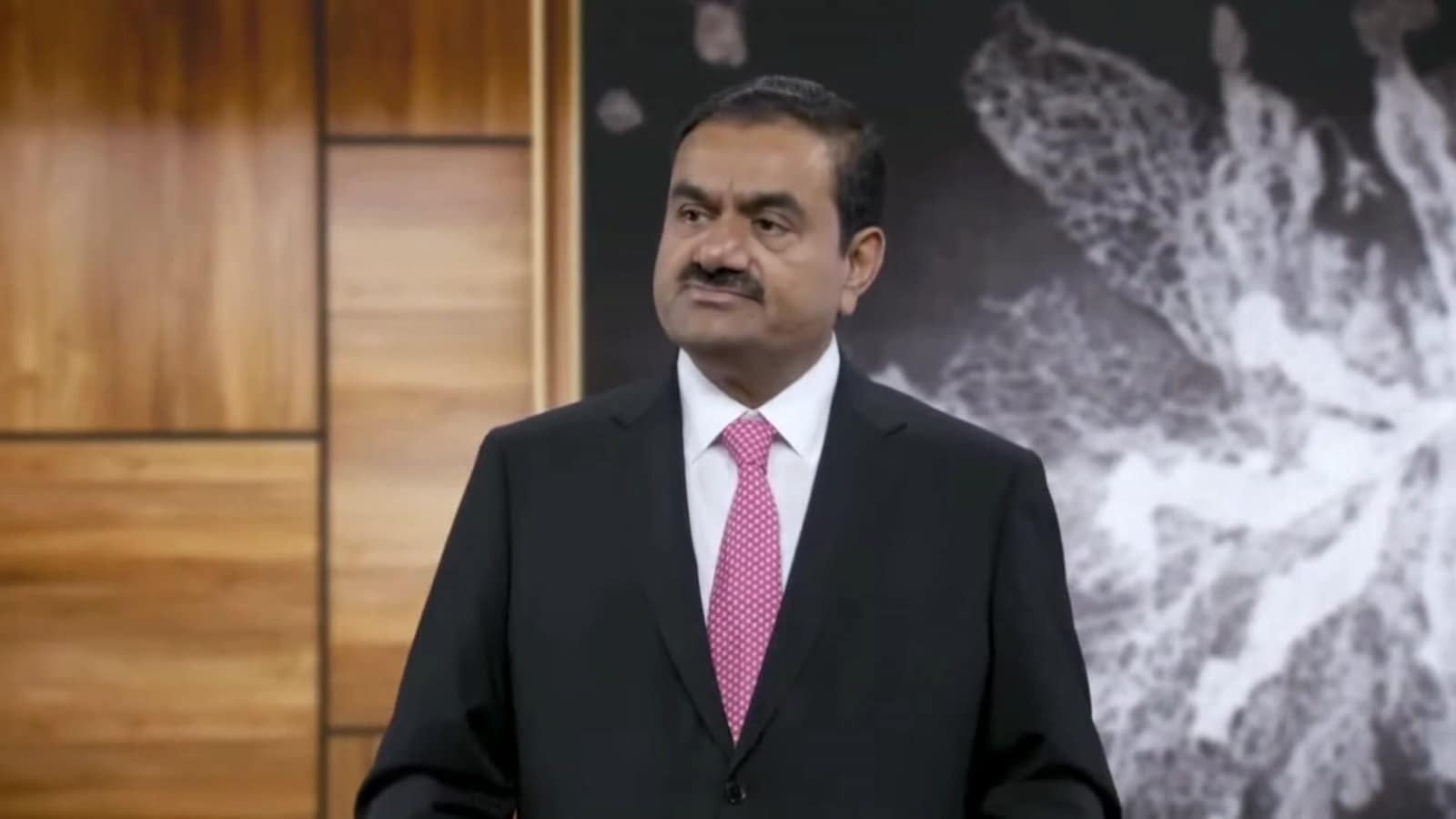
Gautam Adani-led Adani Group is preparing an ambitious $100 billion capital expenditure plan to be actioned over the next six years. This is the largest capex plan by any private group ever in India, said Jugshinder (Robbie) Singh, group Chief Financial Officer of Adani Group.
"We are not talking about acquisitions here; this is all greenfield on-ground capex..." We will ramp up our organisation significantly. "We want to take our investment to Rs 1.5-1.6 lakh crore every year (from Rs 1.1-1.2 lakh crore last year)," Singh said in an exclusive interview.
The capex is planned for three crucial sectors, where the energy business will take up 83-85% of the planned investments, according to the Adani Group CFO. About 10% of this capex will go into construction materials, and 6-7% will be toward the mining and metal business, Singh said.
Of the energy investments, a majority will go toward developing renewable energy capacity and storage. This investment will increase the group's renewable capacity and storage by seven times. The conventional energy capacity will also double, Singh said.
As of March 2025, Adani Green Energy's operational capacity stood at 14.2 GW, according to the company's investor presentation. Adani Power, the conventional energy company under the group, had a capacity of 16.54 GW as of March.
Around Rs 80,000 crore of this annual Rs 1.5-1.6 lakh crore capex plan will be generated through internal cash flows, while about Rs 15,000 crore will be through settlement payments. Roughly Rs 12,000-14,000 crore will be through the group's EPC profits.
"From a funding perspective, we are left with Rs 40,000-50,000 crore of external funding. Each year, on average, we repay Rs 24,000 crore of debt... so the net debt added will be around Rs 25,000 crore. Our debt is rising at a far lower rate than our growth," Singh said.
The nature of the debt changes on a project-to-project basis. But roughly 40% of the debt is domestic banks, 40% is global banks and financial institutions and 20% is domestic capital markets, Singh added.
"We will oscillate between 2.5 and 3 depending on which phase of the capex cycle we are in. "We will peak in our capex cycle at around 2028," Singh said, speaking about the net debt to Ebitda ratio. Eventually the net debt to Ebitda ratio will fall below 2.5 times, he added.
Whatever projects the group builds this year and next will start generating further cash flows, which will fund the capex plan after it peaks in 2028, he added.
The group expects to make around $16 billion in return on capital during the $100 billion capex plan.
This capex will be used to achieve three specific goals: enhancing organisational capability, improving technology and developing the vendor ecosystem.

-
Love, Sex Aur Dhokha: The Audacious Plot To Spy On Jensen Huang

A Taipei dinner, a Singapore chip buyer and a suspected Chinese asset: inside the alleged spy operation that got close to NVIDIA's Jensen Huang.
-
Ten Things I Learnt This Samvat
Patience can be a trap. Cheap stocks can stay cheap. Leverage can wipe you out. What did Samvat 2082 teach us? Niraj Shah writes on 10 lessons from the year gone by.
-
Talking Points This Week: Tech Nerves, FII Buying, And A Faraway Banking Shock
The global markets are not shining this Diwali. The exception in the large markets is, India.
-
Midterm Rally Lasted A Day. The Hard Reality Of A Divided US May Last Two Years | Opinion
Between a contested AI boom, a debt ceiling that arrives in 2027 and a president with every incentive to act alone, the next two years may prove more volatile than the first day's rally suggests.
-
Blue Wave Will Derail the AI Trade but Won't Dismantle the AI Era | Unhedged Position
The Democrats' sweep of the US Congress will see politics collide with economic forces both over the long and short term.
-
It's Time To Take The GST Council's Bet On Trust Global
Payment records can prove India's services exports, and clear, proportionate rules can bring foreign digital sellers into the tax net.
-
Opinion | India at 38: From Innovation Overperformer to Innovation Powerhouse
India now has 453 VC-backed deep science startups, 18 of them late-stage, after 117 percent growth since 2020. Laurus Labs, at USD 9.3 billion, is the most valuable deep science company in any middle-income economy outside China.
-
Navigating Energy Crossroads: S Jaishankar's Call For Diversified Supply Chains At G20 Ministerial Meeting
As geopolitical fault lines continue to test maritime trade routes and commodity flows, Jaishankar's message remains pertinent: true economic resilience requires open markets, protected transit lines, and a genuine commitment to multilateral cooperation rather than coercion.
-
Indians Are Travelling, But Not Every Journey Is A Holiday | The Week In Whys
Pilgrims, patients and working women are the real travellers, and the system hasn't quite caught up with them.