Adani Group Is "Deeply Overleveraged": Report
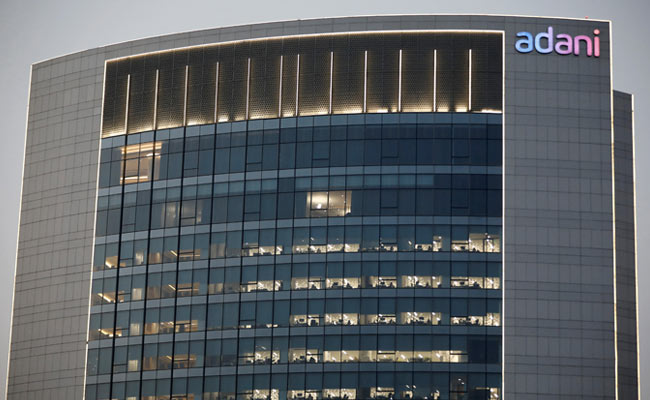
Richest Indian Gautam Adani's ports-to-power-to-cement conglomerate is "deeply overleveraged" with the group predominantly using debt to invest aggressively across existing as well as new businesses, CreditSights, a Fitch Group unit, said on Tuesday.
In a report titled 'Adani Group: Deeply Overleveraged', CreditSights said, "In the worst-case scenario, overly ambitious debt-funded growth plans could eventually spiral into a massive debt trap, and possibly culminate into a distressed situation or default of one or more group companies." Starting out as a commodities trader in the late 1980s, the Adani group has diversified from mines, ports and power plants into airports, data centers and defence.
Recently, it forayed into the cement sector with a USD 10.5 billion acquisition of Holcim's India units as well as into alumina manufacturing. Most of this expansion has been funded by debt.
"Over the past few years, the Adani Group has pursued an aggressive expansion plan that has pressurized its credit metrics and cash flows," CreditSights said. "The Adani Group is increasingly venturing into new and/or unrelated businesses, which are highly capital intensive and raises concerns regarding spreading execution oversight too thin," it added.
While there is evidence of promoter equity capital injection into group companies, the Adani Group is exposed to moderate levels of governance and environmental, social, and governance (ESG) risks.
"The Adani Group has a strong track record of churning out strong and stable companies through its Adani Enterprises arm, and boasts a portfolio of stable infrastructure assets tied to the healthy functioning of the Indian economy," the report said.
The Adani Group has six listed entities on the Indian stock exchanges, and a few of its group entities have US dollar bonds outstanding.
The six listed Adani group firms had a gross debt of Rs 2,309 billion as of FY22-end. Net debt after accounting for cash in hand was Rs 1,729 billion.
"In general, the Group has been investing aggressively across both existing and new businesses, predominantly funded with debt, resulting in elevated leverage and solvency ratios," it said.
This has caused concerns about the Group as a whole, CreditSights said, adding that it remains cautiously watchful of the Group's growing expansion appetite, which is largely debt-funded.
The Adani Group is the third largest conglomerate in India, after Reliance Industries and the Tata Group. It has a total market capitalization of over USD 200 billion.
In recent years, the Adani Group has become increasingly aggressive in expanding its existing businesses, as well as establishing new ones in different industries.
The rapid expansion has largely been fuelled by debt funding, which has caused the leverage (gross or net debt / EBITDA) of several group companies and hence of the overall consolidated group to soar in the past few years.
"We, as well as many clients and other investors, are becoming increasingly concerned about the group's rapid pace of growth and its high leverage levels.
"Excessive debt and overleveraging by the group could have a cascading negative effect on the credit quality of the bond issuing entities within the group and heightens contagion risk in case any entity falls into distress," the report said.
Citing expansion into areas where it has no prior experience or expertise such as copper refining, petrochemicals, telecom and aluminum production, it said the businesses typically dont have the ability to repay the debt immediately considering that they do not make profits in the initial few years.
And so, they will rely on "rolling-over/refinancing the obligations in the initial few years, which is, in turn, dependent on maintaining solid banking relationships and on strong capital market conditions," it said.
Being the primary incubator for Adani Group's new and developing businesses, Adani Enterprises Ltd (AEL) invariably incurs the highest capex amongst its sister entities.
Over the past five years, AEL has invested heavily in new growth sectors that include airports, cement, copper refining, data centers, green hydrogen, petrochemical refining, roads and solar cell manufacturing.
Looking ahead, it plans to foray into the enterprise data in telecom (for internal use at present) and has massive plans to grow its green hydrogen and airports businesses.
Earlier this month, the Group also announced plans to set up a 4.1 million tonnes per annum integrated alumina refinery and a 30 million tonnes iron ore beneficiation plant in Odisha that could cost over Rs 58,000 crore.
On governance, it said the promoter family sits on the boards of all the Adani entities.
Gautam Adani, 60, is the Chairman of all 6 listed Adani entities, and his family members are present on the Boards too, including brother Rajesh Adani (director at various entities), son Karan Adani (director and CEO of APSEZ), nephew Sagar Adani (director of AGEL), and another nephew Pranav Adani (director at AEL & Adani Total Gas).
"While the entrepreneurial vision of Gautam Adani is impressive, it also comes with high key-man risk, as the senior management capability in the group companies in his absence may prove to be inadequate," CreditSights said.
Adani, it said, may look to hand over the reins of his business empire to the next generation at some point in the next 10 years, as gauged by the senior management/director roles handed to his son or nephews in Adani entities.
"However, he has not publicly disclosed any succession plans for the future," it said.
(Except for the headline, this story has not been edited by NDTV staff and is published from a syndicated feed.)

-
High US Salaries, No Green Card Certainty: The Financial Calculation Facing Indian H-1B Families

The suspension of PERM processing at eight technology employers does not cancel existing H-1B visas. What it does is force a question many Indian families have been avoiding: is the US salary worth tying your career and family plans to one employer?
-
Swiggy vs Eternal: Food Delivery's Two Rivals Are No Longer In The Same Race
Eternal is building a private AI assistant, dark.ai. Swiggy is still working out how to make Instamart pay, with an operating loss of Rs 895 crore in the July-September quarter while Blinkit stayed profitable.
-
Where You Live Shapes How You Get To Work | The Reason Why
Two-wheelers are the most popular way to get to work in India, accounting for nearly 43% of workplace commutes.
-
Unhedged Position: Can India See An Indonesia-Style Time Correction?
The Nifty is trading below levels it first clocked in 2024. Is there, then, as I have suggested in the headline, potential that the current time correction drags on painfully for the next three-five, even ten years?
-
Navigating Friction And Energy Realities: An Analysis Of Marco Rubio's October Visit To India
Occurring at a critical juncture marked by stalled trade negotiations and escalating geopolitical pressures over global energy supplies, the visit offers a profound window into modern US-India relations.
-
India Exports Capital. Why Not Export Trusteeship?
The big question, then, is whether India can build an institution that global borrowers, investors, banks, and lawyers can trust, even without an Indian connection.
-
France's Economy & Politics Are In Crisis | The Reason Why
Let's look at how the French economy and politics evolved under Nicolas Sarkozy, Franois Hollande and Emmanuel Macron.
-
You May Inherit The Business. You Must Earn Its Credibility.
Succession tests the founder's ability to share authority as much as it tests the next generation's readiness to assume it.
-
Signing Deals Is One Thing; Making Them Work Is Another | The Week In Whys
Sometimes, things don't turn out as planned. Indian companies have lost some bids to rivals, some projects won't produce until 2030.
-
FOMC Wall, PERM Suspension, Hospital Stocks | Talking Points This Week
A PERM suspension would directly affect green-card sponsorship rather than H-1B visas, so the near-term earnings impact could remain relatively limited. The key question is whether this marks a new phase in US scrutiny of Indian IT.









