A Snapshot Of India-Russia Trade Relations In Fiscal 2024
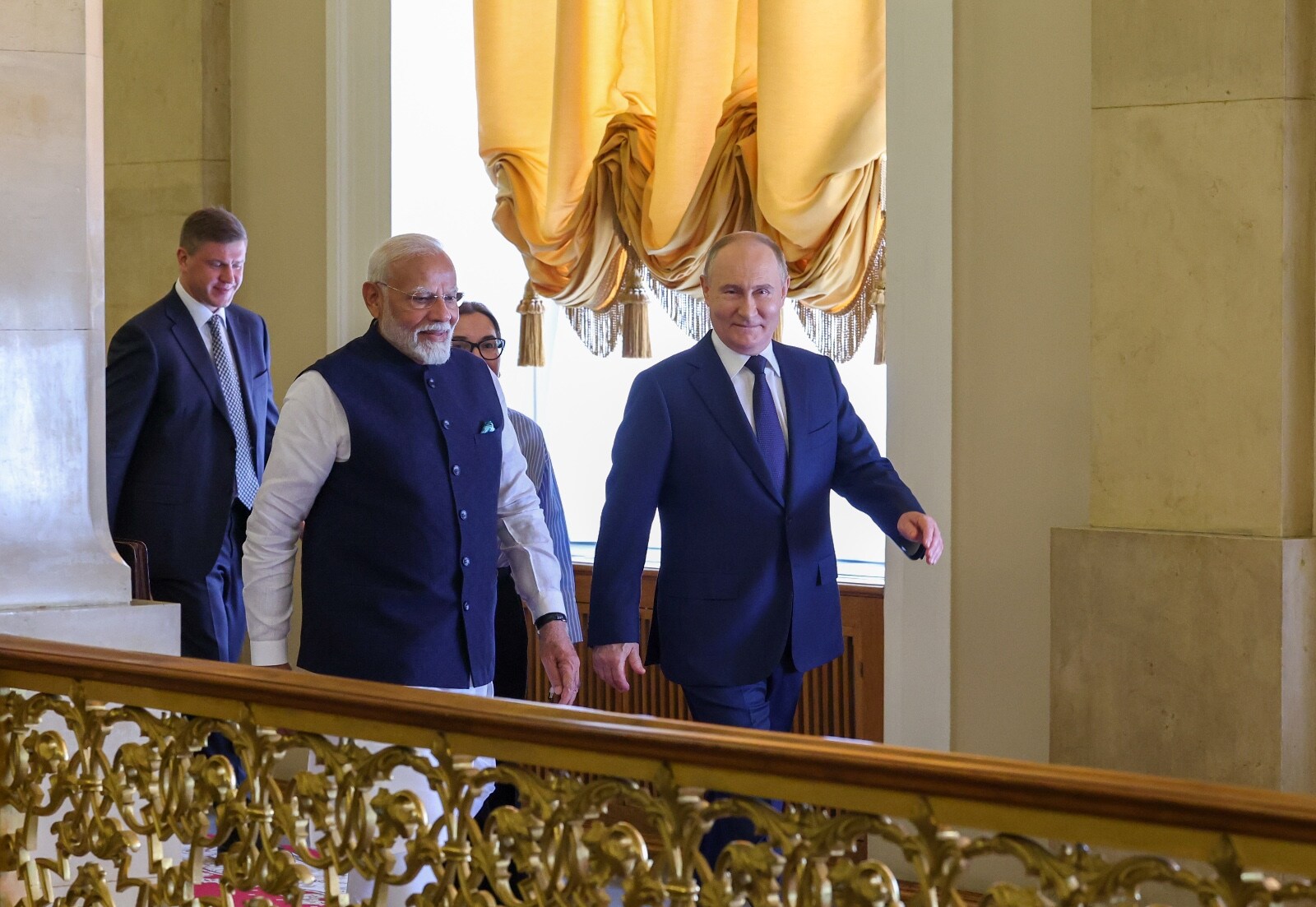
India and Russia have charted an ambitious path to elevate their bilateral trade by 2030, as discussed in the 22nd annual bilateral summit in Moscow on Tuesday. The discussion was propelled by significant trade flows in the year ended March that underscored both countries' economic interdependence.
The nations aim to boost their bilateral trade to $100 billion by 2030, as per a joint statement issued following the summit. The meeting featured discussions between Prime Minister Narendra Modi and Russian President Vladimir Putin on India and Russia's trade relations, among other significant topics.
Trade between India and Russia was predominantly characterised by Indian imports from Russia, which constituted nearly 94% of the bilateral trade in FY24. The principal import commodities were crude oil, accounting for 76% of Russia's exports to India, with other petroleum products and fertilisers also being significant. Conversely, India's exports to Russia were mainly pharmaceuticals, along with iron and steel.
PM @narendramodi and President Putin held productive discussions at the Kremlin. Their talks covered ways to diversify India-Russia cooperation in sectors such as trade, defence, agriculture, technology and deepening the people-to-people linkages. pic.twitter.com/R17wwDoDzh
July 9, 2024Here is a snapshot of bilateral trade between India and Russia, with the most traded principal commodities:
Imports From Russia
India's imports from Russia stood at $61.43 billion during the fiscal ended March 2024, a distant second to Chinese imports. Overall imports from around the world during FY24 stood at $675.43 billion.
The imports were predominantly driven by commodities including:
Crude And Other Petroleum Products: Leading the imports is crude oil, accounting for a substantial $46.5 billion, or 76% of total imports.
Flows on ships signalling destinations in India averaged about 1.75 million barrels a day, down from the revised figure of 1.78 million for the period to June 30. China is Asia's second-largest market for Russian crude, averaging 9,00,000 barrels a day.
Crude imports drastically rose after fiscal 2022, post the full-scale Russian invasion of Ukraine and the subsequent fall in crude prices. India's import of crude in fiscal 2022 had only been 25% of total imports at $2 billion, which rose to 67% at $31 billion in fiscal 2023.
Import of other petroleum products stood at $4.2 billion, which formed a distant second largest import.
Coal, Coke, And Briquettes: Significant imports worth $3.8 billion underscore India's need for these resources to support its energy and industrial sectors.
Fertilisers: Imports of manufactured fertilisers amounted to $2.1 billion, reflecting India's agricultural requirements. The two countries agreed to continue cooperation on the sustainable supply of fertilisers to India, in the recent summit, and emphasised company-to-company long-term contracts within the framework of the Joint India-Russia Committee on Fertilizers, as per their joint statement.
Additional significant imports included vegetable oils, precious stones, project goods, and iron and steel products, reflecting the diversified nature of India's procurement from Russia.
Exports To Russia
India's exports to Russia totalled approximately $4.26 billion in FY24, against the country's overall exports of $437.11 billion during the period. Here are the drivers for the country's exports.
Pharmaceuticals: India exported drug formulations and biologicals worth $376 million, highlighting its strength in the pharmaceutical sector.
Metals And Minerals: Iron and steel exports amounted to $282 million, indicating India's capacity in metallurgical industries.
Telecommunications Equipment: Valued at $179 million, it demonstrated India's expertise in providing telecommunications solutions.
Marine Products, Ceramics, And Others: Exports in these categories, include processed minerals, marine products, ceramics, and bulk drugs.
The current trade imbalance, where imports from Russia significantly outweigh exports, has prompted both nations to explore avenues for enhancing Indian exports.
To achieve balanced and sustainable bilateral trade, the leaders stressed the need to strengthen industrial cooperation, forge new technological and investment partnerships especially in advanced high-technology areas and finding new avenues and forms of cooperation.
Initiatives discussed include tackling non-tariff barriers, exploring regional free trade agreements, and promoting bilateral trade settlements in national currencies.
New avenues of trade including communication technologies and nuclear energy were a significant discussion in the summit for enhancing bilateral trade for future fiscals.

-
Where You Live Shapes How You Get To Work | The Reason Why

Two-wheelers are the most popular way to get to work in India, accounting for nearly 43% of workplace commutes.
-
High US Salaries, No Green Card Certainty: The Financial Calculation Facing Indian H-1B Families
The suspension of PERM processing at eight technology employers does not cancel existing H-1B visas. What it does is force a question many Indian families have been avoiding: is the US salary worth tying your career and family plans to one employer?
-
Unhedged Position: Can India See An Indonesia-Style Time Correction?
The Nifty is trading below levels it first clocked in 2024. Is there, then, as I have suggested in the headline, potential that the current time correction drags on painfully for the next three-five, even ten years?
-
Navigating Friction And Energy Realities: An Analysis Of Marco Rubio's October Visit To India
Occurring at a critical juncture marked by stalled trade negotiations and escalating geopolitical pressures over global energy supplies, the visit offers a profound window into modern US-India relations.
-
India Exports Capital. Why Not Export Trusteeship?
The big question, then, is whether India can build an institution that global borrowers, investors, banks, and lawyers can trust, even without an Indian connection.
-
France's Economy & Politics Are In Crisis | The Reason Why
Let's look at how the French economy and politics evolved under Nicolas Sarkozy, Franois Hollande and Emmanuel Macron.
-
You May Inherit The Business. You Must Earn Its Credibility.
Succession tests the founder's ability to share authority as much as it tests the next generation's readiness to assume it.
-
Signing Deals Is One Thing; Making Them Work Is Another | The Week In Whys
Sometimes, things don't turn out as planned. Indian companies have lost some bids to rivals, some projects won't produce until 2030.
-
FOMC Wall, PERM Suspension, Hospital Stocks | Talking Points This Week
A PERM suspension would directly affect green-card sponsorship rather than H-1B visas, so the near-term earnings impact could remain relatively limited. The key question is whether this marks a new phase in US scrutiny of Indian IT.
-
Everything, Everywhere, All At Once: Dalal Street's Week To Forget | Joining The Dots
Visa curbs, a Starlink spat and cancer drug caps: what connects this week's shocks for Indian markets









