A New RBI Governor Takes Charge
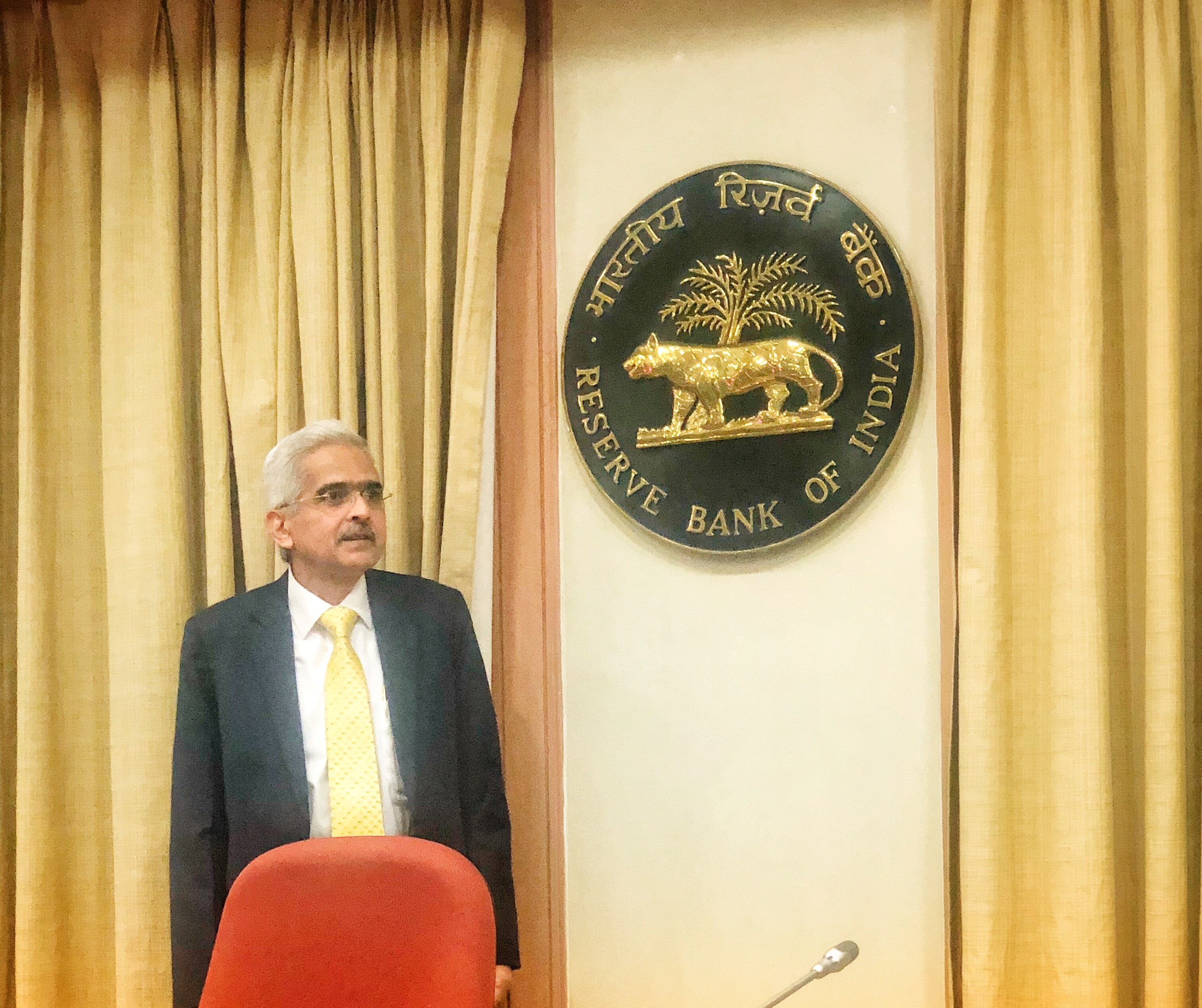
Each governor brings along his touch to the Reserve Bank of India.
Bimal Jalan was seen as quiet and pragmatic. YV Reddy had a way with words, leaving you wondering about the real meaning of what he said. D Subbarao was precise and concise. Raghuram Rajan took a professorial approach to many of the questions posed to him. Urjit Patel's answers were prepared and to-the-point.
In comes Shaktikanta Das.
After taking over on Wednesday morning, without the customary picture of the handover ceremony, Das quickly called for a press conference. The meet, perhaps, intended to send out a message that the RBI is open for discussion, deliberation and debate. On the table are a number of contentious issues ranging from governance of the Reserve Bank, the amount of capital the central bank holds and toughened banking regulations. The stand-off over these issues prompted an abrupt resignation from predecessor Urjit Patel. It is now up to Das to decide on whether to yield to the government's requests on some of these issues or stick to the position articulated by the RBI under Patel.
Das, used to all the flashbulbs and shout outs from photographers to pose, seemed ready to take all questions but gave away little in his answers.
A former bureaucrat, who is seen to be close to the government, Das started by saying that he will uphold the credibility and the autonomy of the Reserve Bank of India. When pressed on whether the RBI's independence has been compromised in the recent stand-off with the government, Das said that “every institution has its autonomy but also has to be accountable”.
Some quarters, particularly within the government, have argued that the RBI is not accountable enough. That is one reason why the government is keen on a new governance structure for the regulator. This new structure, if cleared, may lead a greater role for the central board. The matter will be discussed at the next board meeting on Dec.14. The meeting and discussions on items on the agenda will take place as planned, said Das.
Das also stressed on the need for consultations with stakeholders, saying that these add value and depth to policy making. The comment, perhaps, aimed at sending a message that complaints about the RBI becoming too closed to consultations under former Governor Patel will be addressed.
There is a need to have stakeholder consultation with "everybody", Das said. This includes the government. The government is not just a stakeholder but also runs the economy and the country, he added.
Consultations with bankers are also on the agenda.
Das will meet with public-sector bank chiefs on Thursday. Undoubtedly the conversation will turn to the grouse that bankers have against the RBI's Feb.12 circular and the toughened Prompt Corrective Action framework.
Will Das make changes to these rules? He declined to comment.
But analysts expect him to. “He (Das) is likely to be more communicative and consultative in his approach, which is a positive. On policy, it does appear that he is likely to relax regulatory norms for banks (make them more counter-cyclical) and he will be more proactive in injecting liquidity,” said Sonal Varma, chief India economist at Nomura, in a note soon after the press conference.
Das also stressed that growth is part of the RBI's mandate. Growth is in the preamble of the RBI, Das added right after saying that inflation targeting in an important part of the central bank's tasks.
With inflation low and growth slipping, analysts will undoubtedly parse the new governor's words to see whether a window for lower interest rates may open soon.
Some analysts are already predicting rate cuts in 2019. In light of the fall in inflation to 17-month lows, Rajeev Malik of River Valley Asset Management now sees a change in stance from the Monetary Policy Committee and predicts two rate cuts next year.
Government officials, in recent weeks, have also suggested that constrained credit flow is hurting the economy. The RBI has pushed back saying that at 15 percent, banking credit growth is strong. The government has also sought easier liquidity conditions to deal with the strains being faced by non-bank lenders. Everything within the ambit of the RBI will be looked at, Das said, suggesting that he will review matters with a fresh eye.
As Das prepared to leave the conference room on the 15th floor of the Reserve Bank of India building, a reporter shouted out a last and prickly question. Is Deputy Governor Viral Acharya still at the RBI?
Yes, I had tea with him a while back, Das said unfazed. Answering the question but making sure he gives nothing away.

-
High US Salaries, No Green Card Certainty: The Financial Calculation Facing Indian H-1B Families

The suspension of PERM processing at eight technology employers does not cancel existing H-1B visas. What it does is force a question many Indian families have been avoiding: is the US salary worth tying your career and family plans to one employer?
-
Swiggy vs Eternal: Food Delivery's Two Rivals Are No Longer In The Same Race
Eternal is building a private AI assistant, dark.ai. Swiggy is still working out how to make Instamart pay, with an operating loss of Rs 895 crore in the July-September quarter while Blinkit stayed profitable.
-
Where You Live Shapes How You Get To Work | The Reason Why
Two-wheelers are the most popular way to get to work in India, accounting for nearly 43% of workplace commutes.
-
Unhedged Position: Can India See An Indonesia-Style Time Correction?
The Nifty is trading below levels it first clocked in 2024. Is there, then, as I have suggested in the headline, potential that the current time correction drags on painfully for the next three-five, even ten years?
-
Navigating Friction And Energy Realities: An Analysis Of Marco Rubio's October Visit To India
Occurring at a critical juncture marked by stalled trade negotiations and escalating geopolitical pressures over global energy supplies, the visit offers a profound window into modern US-India relations.
-
India Exports Capital. Why Not Export Trusteeship?
The big question, then, is whether India can build an institution that global borrowers, investors, banks, and lawyers can trust, even without an Indian connection.
-
France's Economy & Politics Are In Crisis | The Reason Why
Let's look at how the French economy and politics evolved under Nicolas Sarkozy, Franois Hollande and Emmanuel Macron.
-
You May Inherit The Business. You Must Earn Its Credibility.
Succession tests the founder's ability to share authority as much as it tests the next generation's readiness to assume it.
-
Signing Deals Is One Thing; Making Them Work Is Another | The Week In Whys
Sometimes, things don't turn out as planned. Indian companies have lost some bids to rivals, some projects won't produce until 2030.
-
FOMC Wall, PERM Suspension, Hospital Stocks | Talking Points This Week
A PERM suspension would directly affect green-card sponsorship rather than H-1B visas, so the near-term earnings impact could remain relatively limited. The key question is whether this marks a new phase in US scrutiny of Indian IT.









