A Fed Held Hostage By Data Is Asking For Trouble

(Bloomberg Opinion) --
Don't get me wrong; high-frequency inputs are important in any assessment of economic conditions and policy responses. They give you a sense of how the economy is functioning. They should inform and influence how officials think but not in the absence of a strategic view of our economic prospects.
One way to think about this problem is to use the analogy of driving a car by looking in the rear-view mirror rather than through the windshield. This type of driving works for straight roads. It is problematic in other situations. Similarly, the threat of policy mistakes is particularly high during economic turning points.
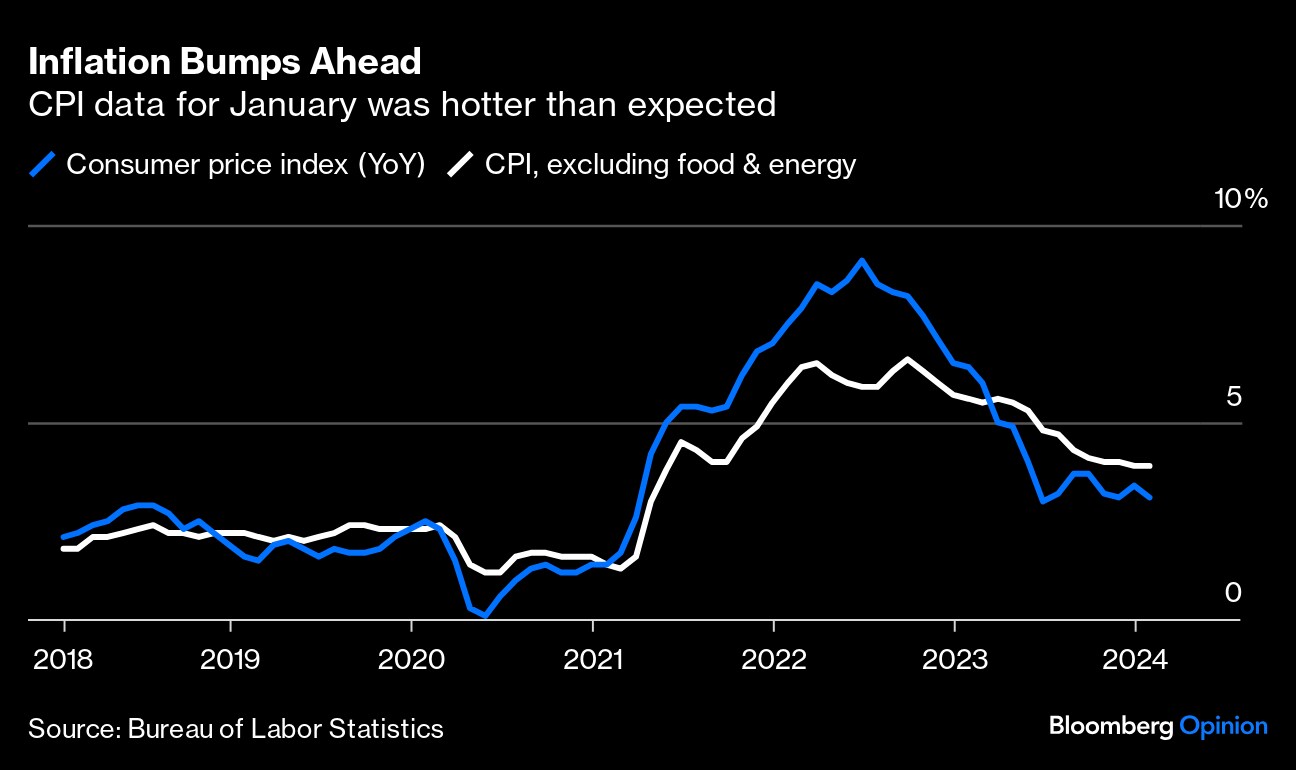
The Fed is highly unlikely to face a straight road from here given the current dynamics of inflation, including the time-variant tug of war between some outright goods deflation and high services inflation. There are also complications with defining some important determinants of its terminal fed funds rate, be they questions about the neutral rate, or r-star, or the appropriateness of a 2% inflation target for the US when the global economy, at the moment, is characterized by changing and insufficiently flexible supply.
The time has come to discard the excessive data dependency that risks making the Fed too backward looking in its thinking, overly reactive in policy implementation and too narrow in its discussions of economic and financial issues. Historic data should not be the sole determinant of policy making. This ongoing obsession with the numbers should give way to an approach that also incorporates strategic vision and forward-looking insights on where the economy is heading.
The extent to which the world's most powerful central bank succeeds at this may well be the difference between the much-desired soft landing for the US economy and yet another Fed policy mistake that undermines economic well-being.More From Bloomberg Opinion:
- Federal Reserve Flight 2024 Hasn't Landed Yet: Bill Dudley
- Inflation Selloff Is Wake-Up Call to Market: Mohamed A. El-Erian
- The Fed Is Not Political. Well, Not Exactly: Claudia Sahm
This column does not necessarily reflect the opinion of the editorial board or Bloomberg LP and its owners.
Mohamed A. El-Erian is a Bloomberg Opinion columnist. A former chief executive officer of Pimco, he is president of Queens' College, Cambridge; chief economic adviser at Allianz SE; and chair of Gramercy Fund Management. He is author of “The Only Game in Town.”
More stories like this are available on bloomberg.com/opinion
©2024 Bloomberg L.P.

-
Love, Sex Aur Dhokha: The Audacious Plot To Spy On Jensen Huang

A Taipei dinner, a Singapore chip buyer and a suspected Chinese asset: inside the alleged spy operation that got close to NVIDIA's Jensen Huang.
-
Ten Things I Learnt This Samvat
Patience can be a trap. Cheap stocks can stay cheap. Leverage can wipe you out. What did Samvat 2082 teach us? Niraj Shah writes on 10 lessons from the year gone by.
-
Talking Points This Week: Tech Nerves, FII Buying, And A Faraway Banking Shock
The global markets are not shining this Diwali. The exception in the large markets is, India.
-
Midterm Rally Lasted A Day. The Hard Reality Of A Divided US May Last Two Years | Opinion
Between a contested AI boom, a debt ceiling that arrives in 2027 and a president with every incentive to act alone, the next two years may prove more volatile than the first day's rally suggests.
-
Blue Wave Will Derail the AI Trade but Won't Dismantle the AI Era | Unhedged Position
The Democrats' sweep of the US Congress will see politics collide with economic forces both over the long and short term.
-
It's Time To Take The GST Council's Bet On Trust Global
Payment records can prove India's services exports, and clear, proportionate rules can bring foreign digital sellers into the tax net.
-
Opinion | India at 38: From Innovation Overperformer to Innovation Powerhouse
India now has 453 VC-backed deep science startups, 18 of them late-stage, after 117 percent growth since 2020. Laurus Labs, at USD 9.3 billion, is the most valuable deep science company in any middle-income economy outside China.
-
Navigating Energy Crossroads: S Jaishankar's Call For Diversified Supply Chains At G20 Ministerial Meeting
As geopolitical fault lines continue to test maritime trade routes and commodity flows, Jaishankar's message remains pertinent: true economic resilience requires open markets, protected transit lines, and a genuine commitment to multilateral cooperation rather than coercion.
-
Indians Are Travelling, But Not Every Journey Is A Holiday | The Week In Whys
Pilgrims, patients and working women are the real travellers, and the system hasn't quite caught up with them.









