A Different Kind Of Pivot From The Fed
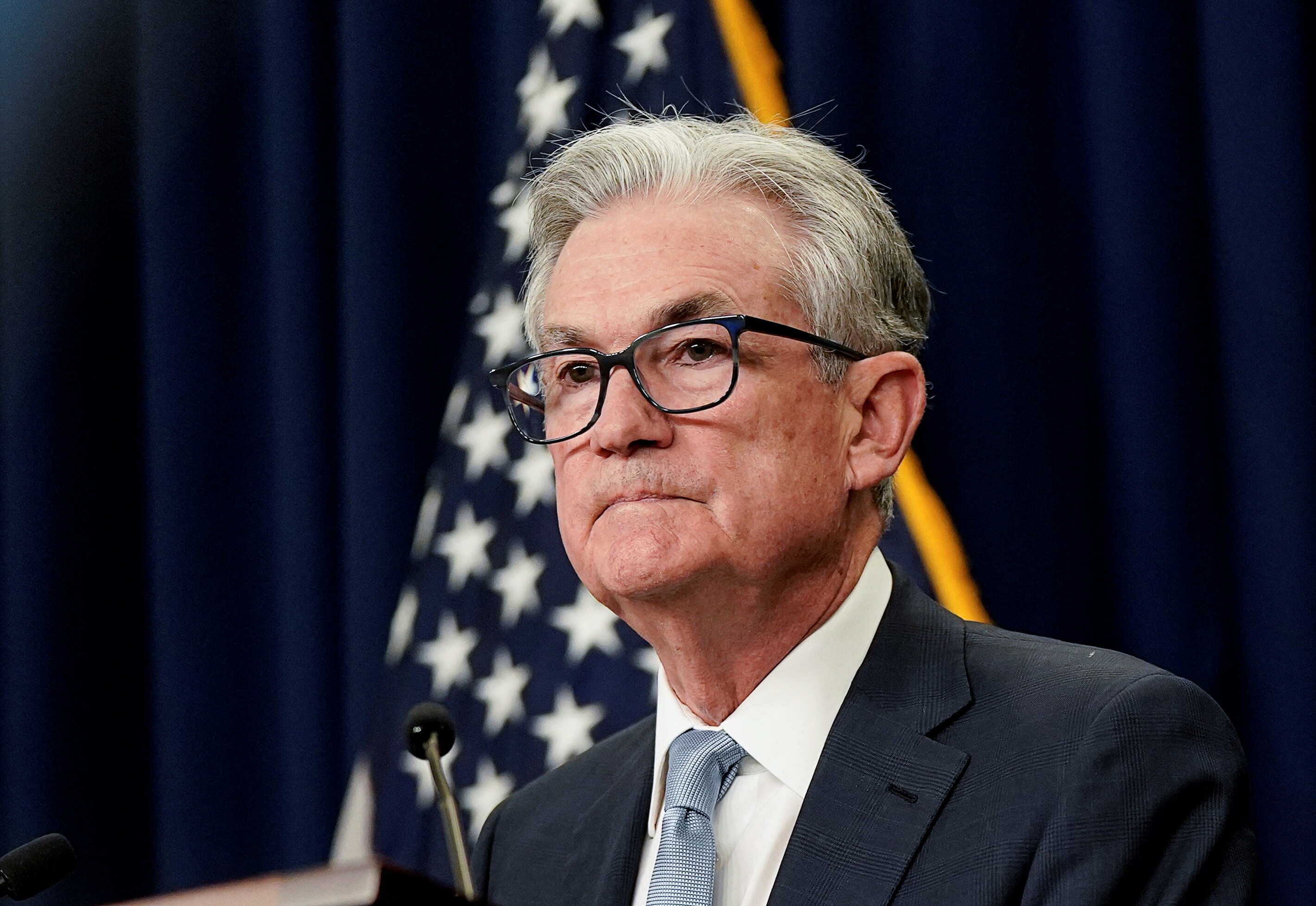
After the Nov. 1-2 Federal Open Market Committee meeting, markets must have wondered if Federal Reserve Chair Jerome Powell dressed as the Grinch this Halloween.
Financial markets went into this November Fed meeting hoping for a “pivot", a signal that after the expected 75-basis-point hike, the Fed would switch to a few smaller rate moves, then pause, and sometime next year start cutting rates again. Markets were convinced this would validate the drop in bond yields that took place last week, and turn it into the beginning of a steady decline. A fairly rosy and constructive scenario.
Powell snatched it away.
Asked about the December meeting, he left a glimmer of hope, saying we could see another 75 bps move or a smaller one, depending on the data. At this point of the press conference, market moves made it clear investors thought he was opening the door to a smaller hike.
Then came the cold shower—more like an ice-cold waterfall. Don't think about the pace of hikes, said Powell—what matters now is how high rates go. They will go higher than the Fed previously thought, he said, and they will stay higher for longer—it's very premature to even think about a pause. The Fed has not done nearly enough yet, he added. Inflation is still way too high and core inflation shows no sign of coming down. And the Fed is not worried about overtightening—policymakers know how to correct that if it happens. He said the Fed worries—a lot—about not tightening enough (or cutting too soon) because then inflation will become really entrenched.
All this confirms my long-standing view that the policy rate will go higher than markets think, it will stay higher for longer, and investors should not expect rate cuts in 2023. I got the distinct impression that Powell does not want to pause until he's comfortable that the policy rate is high enough—he does not want to pause and then have to resume hiking because inflation still does not come down. He wants to err on the high side.
I think the Fed funds rate will likely peak around 5.25%-5.50%.
Powell conceded that the policy rate needs to rise above the core inflation rate, because if the real policy rate is negative, clearly policy is not tight enough (as we argued very early on, when the Fed's own forecast assumed that inflation would come down even with negative policy rates).
The Franklin Templeton Fixed Income team projects the core Consumer Price Index to remain at 6.5% through the end of this year, and to still be above 6% in the first quarter 2023 and little below 6% in the second quarter. Core Personal Consumption Expenditures—the Fed's official target—will be somewhat lower, so that will allow the Fed some leeway, but Powell has previously acknowledged that the Fed does also look at CPI, because that is what matters to people. So, I think the Fed funds rate is headed toward 5.5%, and markets still need to absorb this across the yield curve. To be clear, looking further forward into 2023, my outlook for fixed income is also quite constructive; however, we will first continue to face bouts of volatility like we have seen in the past few months on the back of each new datapoint as the yield curve adjusts to this scenario of a more hawkish Fed.
I also feel confident that we are unlikely to see rate cuts next year—very much against what markets keep expecting. If our forecasts are correct, and core inflation remains stubbornly high into 2023, the energy-driven decline in headline inflation will not give the Fed much comfort. The Fed will want to feel confident that core inflation is coming down toward its 2% target in a sustained way. And if we are right in projecting that core CPI will still be uncomfortably elevated as we approach the end of next year, a fed funds rate of 5.5% would not seem excessively high. Remember, Powell said the Fed doesn't want to risk cutting too soon.
What about the impact on the economy? Powell admitted that a recession is more likely than not, but indicated it should be a mild one. I agree, for the same reasons Powell mentioned: the labor market is still extraordinarily tight, and consumer spending is well supported by high saving. A mild recession, if still accompanied by high inflation, is unlikely to move the Fed off its stated path.
And the impact on markets? The press conference provided a revealing experiment. Toward the end, Powell was asked how he felt about the fact that markets had rallied in response to the press conference. At that point, this was old news: markets had initially rallied, then sold off—but Powell would not have known it. In response, Powell just reiterated his message: rates will go higher than previously envisaged and stay higher for longer; the Fed is not afraid of tightening too much, it's afraid of tightening too little or loosening again too soon; and no-one should doubt the Fed's determination to bring inflation down.
We said this would happen, because high inflation would give no other choice.
The Fed that used to prioritise asset prices now will lean against markets to bring inflation under control.
That's indeed a pivot. Just a different kind of pivot than markets expected.
Sonal Desai is Chief Investment Officer of Franklin Templeton Fixed Income. She is also a member of Franklin Resources' Executive Committee, a small group of the company's top leaders responsible for shaping the firm's overall strategy.
This article was originally published on the Franklin Templeton website.
The views expressed here are those of the author, and do not necessarily represent the views of BQ Prime or its editorial team.

-
It's Time To Take The GST Council's Bet On Trust Global

Payment records can prove India's services exports, and clear, proportionate rules can bring foreign digital sellers into the tax net.
-
Opinion | India at 38: From Innovation Overperformer to Innovation Powerhouse
India now has 453 VC-backed deep science startups, 18 of them late-stage, after 117 percent growth since 2020. Laurus Labs, at USD 9.3 billion, is the most valuable deep science company in any middle-income economy outside China.
-
Navigating Energy Crossroads: S Jaishankar's Call For Diversified Supply Chains At G20 Ministerial Meeting
As geopolitical fault lines continue to test maritime trade routes and commodity flows, Jaishankar's message remains pertinent: true economic resilience requires open markets, protected transit lines, and a genuine commitment to multilateral cooperation rather than coercion.
-
Indians Are Travelling, But Not Every Journey Is A Holiday | The Week In Whys
Pilgrims, patients and working women are the real travellers, and the system hasn't quite caught up with them.
-
Getting To Work Costs Women More | The Reason Why
It is not just about women paying more than men. It is about women paying much more in cities than in villages.
-
AI Bias In Investing Cannot Be Eliminated, But It Can Be Governed
Framing is a particularly important example as identical financial information presented in terms of gains rather than losses can lead an LLM to reach a different assessment.
-
Joining The Dots | Dark Skies, Steady Diya: Why Hope Holds This Diwali
With war, a weak rupee and foreign outflows weighing on sentiment, policymakers at the NDTV World Summit and market veterans at NDTV Profit Ignite: Diwali Edition offered the same advice: stay invested and filter out the noise.
-
The Curious Case of Equitas Small Finance Bank And A CEO Who Quit For Stock
PN Vasudevan believes persistent investor concerns over a perceived conflict of interest had become a governance overhang on Equitas Small Finance Bank's stock, even as the lender improved profitability and asset quality.
-
Talking Points This Week: AI Cash Burn, A Tiger Comeback And An India That Still Finds Its Own Path
India is not immune to higher oil or tighter global liquidity, yet its earnings base is broader, its domestic policy levers are still available.










