A $190 Billion Clean-Up Needed As PM Modi Looks For Growth Booster
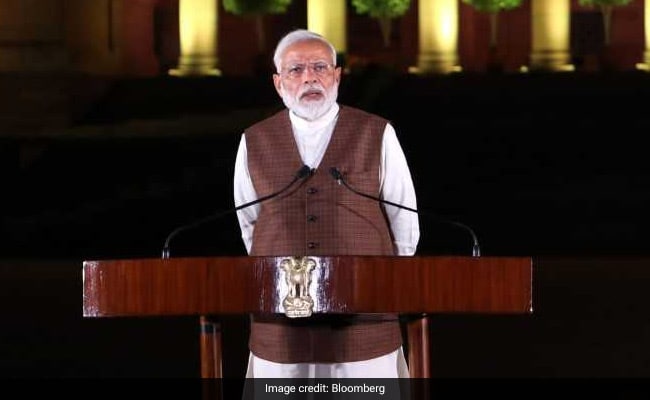
Reforms meant to clean up $190 billion of stressed bank loans will be crucial to reviving economic growth during Narendra Modi's second term as prime minister.
Just days after a landslide electoral victory, PM Modi is being forced to focus on the economy after the slowest expansion in five years. A crisis among shadow lenders has curbed advances from the sector and hit consumer spending in recent months, coming on top of years of sluggish credit growth at banks hamstrung by non-performing loans. Revitalizing lenders is essential to jump-starting private investments and consumer spending.
Investors expect PM Modi to complete reforms started during his first term when India instituted a time-bound bankruptcy process, putting the business community on notice by stripping assets off the biggest defaulters and selling them. While the two-and-a-half-year-old law has helped banks improve the rate and pace of bad-debt recovery, prolonged court battles have delayed transactions and deterred some foreign investors.

"We have to find a way to speed up the process," said Rajnish Kumar, chairman of State Bank of India Ltd., the country's largest bank. "The results so far -- despite the delays -- have been good for the system," he said in a recent interview, adding that the bankruptcy law needs to be periodically reviewed.
As of March, about a third of the country's bankruptcy cases had exceeded the 270-day deadline stipulated by law, according to government data.
In fact, of 12 large debtors -- the so-called dirty dozen -- that were pushed into bankruptcy courts in 2017 by the banking regulator, only five have been successfully sold with lenders recovering about 39 per cent of dues on average. The rest have been delayed by problems including a slew of challenges by previous owners, losing bidders, financial and operational creditors.

Potential bidders have also become wary of India's evolving insolvency process after court rulings in the past year allowed late bids to be considered in the interest of greater recovery. The top court also threw out a central bank circular, which mandated a timeline for recasting delinquent accounts or moving to bankruptcy court.
A shortage of judges and lack of adequate infrastructure will probably aggravate these problems as the case load builds further. There were already 1,143 insolvency proceedings at the end of the first quarter, up from 544 at the end of March last year.
"Not maintaining sanctity of resolution time lines and delays from court battles is a fundamental problem that has to be addressed if you want some serious investors to put in bids for stressed assets,'' said S. Sriniwasan, who heads Kotak Investment Advisors Ltd., with whom Abu Dhabi Investment Authority has partnered to invest in distressed assets in India. "If you have to revive the economy, you have to first solve the existing pestering problem."
So far, lenders have recovered the equivalent of about $11 billion, or about 43 per cent, of the $25 billion in dues admitted by courts in 94 cases of default, according to a Crisil report. How does that compare globally? The World Bank estimates that recovery rates -- accounting for the outcome, time taken and costs of proceedings -- range from 20.3 per cent for sub-Saharan Africa to 70.5 per cent for high-income members of the Organisation for Economic Co-operation and Development, according to its Doing Business report.

-
Navigating Energy Crossroads: S Jaishankar's Call For Diversified Supply Chains At G20 Ministerial Meeting

As geopolitical fault lines continue to test maritime trade routes and commodity flows, Jaishankar's message remains pertinent: true economic resilience requires open markets, protected transit lines, and a genuine commitment to multilateral cooperation rather than coercion.
-
Indians Are Travelling, But Not Every Journey Is A Holiday | The Week In Whys
Pilgrims, patients and working women are the real travellers, and the system hasn't quite caught up with them.
-
Getting To Work Costs Women More | The Reason Why
It is not just about women paying more than men. It is about women paying much more in cities than in villages.
-
AI Bias In Investing Cannot Be Eliminated, But It Can Be Governed
Framing is a particularly important example as identical financial information presented in terms of gains rather than losses can lead an LLM to reach a different assessment.
-
Joining The Dots | Dark Skies, Steady Diya: Why Hope Holds This Diwali
With war, a weak rupee and foreign outflows weighing on sentiment, policymakers at the NDTV World Summit and market veterans at NDTV Profit Ignite: Diwali Edition offered the same advice: stay invested and filter out the noise.
-
The Curious Case of Equitas Small Finance Bank And A CEO Who Quit For Stock
PN Vasudevan believes persistent investor concerns over a perceived conflict of interest had become a governance overhang on Equitas Small Finance Bank's stock, even as the lender improved profitability and asset quality.
-
Talking Points This Week: AI Cash Burn, A Tiger Comeback And An India That Still Finds Its Own Path
India is not immune to higher oil or tighter global liquidity, yet its earnings base is broader, its domestic policy levers are still available.
-
Foreign Investors Own Half Of HDFC Bank and ICICI Bank. An LTCG Cut Could Matter Most Here
Foreign portfolio investors have US$115 billion parked in HDFC Bank, ICICI Bank. If the government cuts long-term capital gains tax, Jefferies says returning foreign money could land here first.
-
'Never Seen This Level Of Negativity': Sandeep Tandon Says The Next Rally May Be Closer Than You Think
Veteran investor Sandeep Tandon says foreign selling is easing, large-caps are due a comeback and mid-caps are crowded, while he turns positive on gold, power and pharma this Diwali.
-
Indians Stay With Family, Not In Hotels | The Reason Why
India still lacks enough clean, reliable and affordable hotels for budget-conscious travellers.










