87% Of Indian Vehicle Owners Ready To Buy Electric Vehicles If That Reduces Pollution: Survey
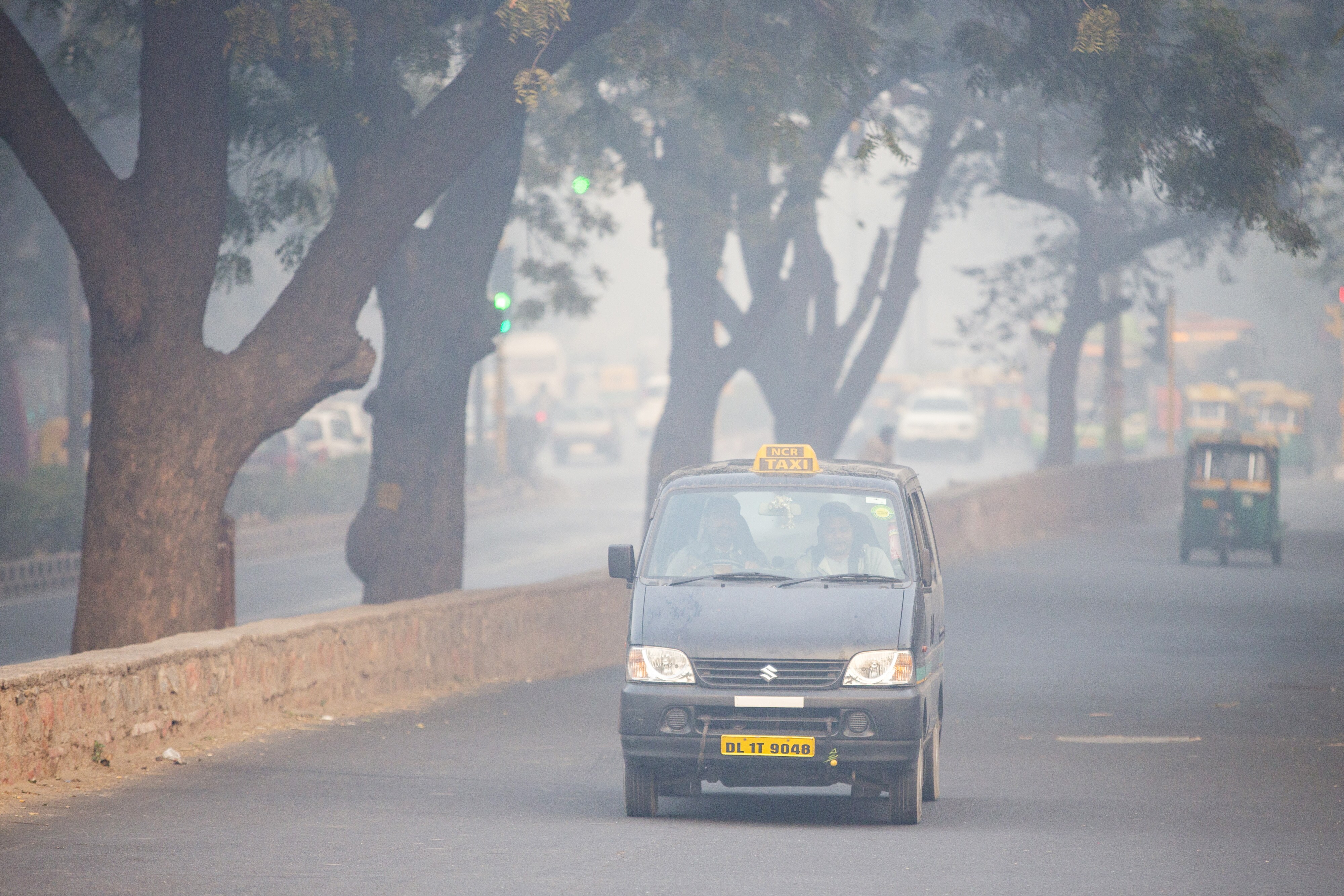
About 87 percent of Indian drivers and vehicle owners would buy an electric vehicle, if that helped reduce air pollution, according to a new survey.
Only 12 percent would switch to EVs to avoid using petrol and diesel, according to the survey commissioned by Climate Trends, a Bengaluru-based nonprofit, which polled more than 2,000 Indian drivers, owners and those who planned to buy a car. In 2017, India sold about 900,000 EVs, 4 percent of the volume of diesel and petrol vehicles sold.
Transportation accounts for about 11 percent of India's carbon emissions and is a major source for air pollution in several cities nationwide. As many as 14 of the world's top 20 most-polluted cities are in India, according to a 2018 World Health Organization report.
The findings of the Climate Trends survey were launched on Sept. 6, 2018, a day before the start of a two-day long conference organised by NITI Aayog, the central government's think-tank. Prime Minister Narendra Modi was expected to launch a policy on ‘Faster Adoption and Manufacturing of Hybrid and Electric vehicles' (FAME-II), the much-anticipated policy for the Indian electric mobility industry. The first phase, FAME-I, was released in 2015.
The launch, however, was postponed to rework the policy after the prime minister “indicated” a major change in the thrust of the policy, the Times Of India reported on Sept. 7. The policy will focus on reducing the price of batteries in vehicles, deviating from its earlier focus on reducing the price of the entire vehicle by providing subsidies, said the report.
EV manufacturers and sellers were waiting for a single policy that laid out a roadmap for creating an EV ecosystem, including charging stations and manufacturing and buying incentives, IndiaSpend reported on Mar. 5.
Most Drivers, Vehicle Owners Affected By Poor Air Quality
About 76 percent of drivers and owners surveyed said that they, their friends, family and neighbours, were suffering the effects of poor air quality, according to the survey.
The highest number of respondents who said they suffered from air pollution were from Delhi. About 91 percent of those surveyed said that either their health or that of someone in the family or neighbourhood was affected by air pollution, said the survey.
Similarly, high percentages were recorded in Hyderabad (78 percent), Chennai (75 percent), Mumbai (74 percent), Bengaluru (71 percent), and Kolkata (70 percent), according to the survey.
The most common symptoms of ill-health from poor air quality were shortness of breath, trouble breathing (55 percent), headaches (51 percent) and coughing (51 percent). These symptoms are more common in Delhi and urban areas and less common among 18- to 24-year-olds and in rural areas, said the survey.
The lack of charging stations near homes was identified as the biggest roadblock to buying the electric vehicles, according to 60 percent of respondents, followed by inadequate driving range, at 46 percent.
Electric vehicles take too long to recharge (31 percent), they are not available with the same features and styles as petrol or diesel vehicles (26 percent), and they are too expensive for the range they deliver (25 percent), were the other major objections.
Two-Wheelers Will Drive EV Market Growth In India
India is the world's third-largest market for automobiles, with about 25 million internal combustion engines sold in 2017. More than 80 percent, or about 20 million of those–more than any other country–were two-wheelers, said the survey release.
India, however, sold less than a million electric vehicles—4 percent of internal combustion engine vehicles sold—in 2017, according to the Society of Manufacturers of Electric Vehicles, an electric vehicle manufacturer's body. Of these, more than 93 percent were electric three-wheelers and 6 percent two-wheelers.
The two-wheeler segment is expected to lead the electric vehicle market in India, not cars or buses.
“We will see electric two-wheelers as a way to adapt proclivity of electric mobility in India, instead of forced adoption through four-wheelers,” Rebecca Lindland, senior director and executive analyst at Kelley Blue Book, a California-based vehicle valuation and auto research firm, told Mint on Feb. 13, 2018.
Two-wheeler manufacturers, however, were disappointed with the government focus on electric two-wheelers. The draft of FAME-II policy suggests that the subsidy given on the ex-factory price of EVs will be capped at 20 percent.
This will reduce the incentive to produce “affordable” electric two-wheelers, Sohinder Gill, director, SMEV, complained to the government, ET Auto reported on June 13, 2018.
(Tripathi is a principal correspondent with IndiaSpend.)
This copy has been published in arrangement with IndiaSpend.

-
High US Salaries, No Green Card Certainty: The Financial Calculation Facing Indian H-1B Families

The suspension of PERM processing at eight technology employers does not cancel existing H-1B visas. What it does is force a question many Indian families have been avoiding: is the US salary worth tying your career and family plans to one employer?
-
Swiggy vs Eternal: Food Delivery's Two Rivals Are No Longer In The Same Race
Eternal is building a private AI assistant, dark.ai. Swiggy is still working out how to make Instamart pay, with an operating loss of Rs 895 crore in the July-September quarter while Blinkit stayed profitable.
-
Where You Live Shapes How You Get To Work | The Reason Why
Two-wheelers are the most popular way to get to work in India, accounting for nearly 43% of workplace commutes.
-
Unhedged Position: Can India See An Indonesia-Style Time Correction?
The Nifty is trading below levels it first clocked in 2024. Is there, then, as I have suggested in the headline, potential that the current time correction drags on painfully for the next three-five, even ten years?
-
Navigating Friction And Energy Realities: An Analysis Of Marco Rubio's October Visit To India
Occurring at a critical juncture marked by stalled trade negotiations and escalating geopolitical pressures over global energy supplies, the visit offers a profound window into modern US-India relations.
-
India Exports Capital. Why Not Export Trusteeship?
The big question, then, is whether India can build an institution that global borrowers, investors, banks, and lawyers can trust, even without an Indian connection.
-
France's Economy & Politics Are In Crisis | The Reason Why
Let's look at how the French economy and politics evolved under Nicolas Sarkozy, Franois Hollande and Emmanuel Macron.
-
You May Inherit The Business. You Must Earn Its Credibility.
Succession tests the founder's ability to share authority as much as it tests the next generation's readiness to assume it.
-
Signing Deals Is One Thing; Making Them Work Is Another | The Week In Whys
Sometimes, things don't turn out as planned. Indian companies have lost some bids to rivals, some projects won't produce until 2030.
-
FOMC Wall, PERM Suspension, Hospital Stocks | Talking Points This Week
A PERM suspension would directly affect green-card sponsorship rather than H-1B visas, so the near-term earnings impact could remain relatively limited. The key question is whether this marks a new phase in US scrutiny of Indian IT.









