5 Union Budgets That Shaped India Through The Years
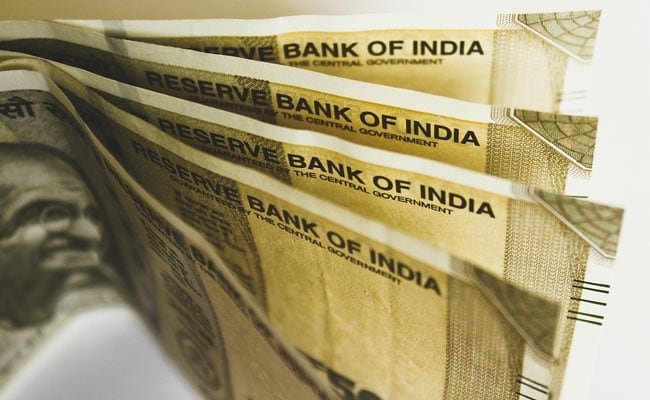
- 1991 Budget - This is the best-known Budget since independence. This Budget began the process of economic liberalisation in India. Dedicated to the memory of former Prime Minister Rajiv Gandhi, who then had recently been assassinated, the Budget came in the backdrop of a Balance of Payments crisis which threatened to bankrupt India. The Budget introduced changes in import-export policy, reduced import licensing and promoted exports. The budget encouraged foreign investment into Indian industry and laid the foundation for Indian companies to face global competition. "It would expose our industrial sector to competition from abroad in a phased manner," then Finance Minister Dr Manmohan Singh said.
- 1997 Budget - Dubbed the "Dream Budget" by the Indian media, the then Finance Minister P Chidambaram's first Budget was noted for its bold reforms amid the political uncertainty around the ruling United Front government. The Budget unleashed major tax reforms. The maximum marginal income tax rate was reduced to 30 per cent from 40 per cent. Taxes on domestic and foreign companies were reduced from 40 per cent and 55 per cent to 35 per cent and 48 per cent respectively. The surcharge on corporate tax was also abolished.
- 1986 Budget - The Union Budget presented by VP Singh is considered the starting point for reforms in India's indirect taxation. He introduced MODVAT (Modified Value Added Tax) scheme which allowed the manufacturer to obtain instant and complete reimbursement of the excise duty paid on the components and raw materials. The new tax also intended to help manufactuers avoid double taxation and tax burden. "MODVAT scheme provides a transparency which discloses the full taxation on the product and its introduction is an important measure of cost reduction," he had said.
- 1957 Budget - This Budget was presented by TT Krishnamachari and is known for introducing several taxes, especially the wealth tax, which remained in force till 2016. The tax on wealth was introduced with an eye to curb the possibility of evasion. "...The system of taxation on incomes has to be supplemented by taxation based on wealth. This (wealth tax) is more equitable," Krishnamachari had said. In addition, the Budget also imposed restriction on import through an import licensing system in a bid to improve the country's balance of payment situation.
- 1970 Budget - The Union Budget was presented by the then Prime Minister Indira Gandhi, who became the first woman to hold the finance portfolio. Though she broke the glass ceiling, the 1970 Budget is now known for increasing the tax burden. That year, the Budget increased the marginal tax rate by 11 percentage points to 93.5 percent on all incomes above Rs 2 lakh. In her speech, she stressed on the need for a larger tax base to continue the "requirements of growth and social welfare" and proposed to withdraw some of the concessions to restrict people from avoiding taxes.

-
Why Amazon And Flipkart Are Struggling To Beat Meesho In India's Smaller Cities

With 274 million users and lowest-cost logistics, Meesho is defending its value commerce crown against giants like Amazon and Flipkart.
-
High US Salaries, No Green Card Certainty: The Financial Calculation Facing Indian H-1B Families
The suspension of PERM processing at eight technology employers does not cancel existing H-1B visas. What it does is force a question many Indian families have been avoiding: is the US salary worth tying your career and family plans to one employer?
-
Swiggy vs Eternal: Food Delivery's Two Rivals Are No Longer In The Same Race
Eternal is building a private AI assistant, dark.ai. Swiggy is still working out how to make Instamart pay, with an operating loss of Rs 895 crore in the July-September quarter while Blinkit stayed profitable.
-
Where You Live Shapes How You Get To Work | The Reason Why
Two-wheelers are the most popular way to get to work in India, accounting for nearly 43% of workplace commutes.
-
Unhedged Position: Can India See An Indonesia-Style Time Correction?
The Nifty is trading below levels it first clocked in 2024. Is there, then, as I have suggested in the headline, potential that the current time correction drags on painfully for the next three-five, even ten years?
-
Navigating Friction And Energy Realities: An Analysis Of Marco Rubio's October Visit To India
Occurring at a critical juncture marked by stalled trade negotiations and escalating geopolitical pressures over global energy supplies, the visit offers a profound window into modern US-India relations.
-
India Exports Capital. Why Not Export Trusteeship?
The big question, then, is whether India can build an institution that global borrowers, investors, banks, and lawyers can trust, even without an Indian connection.
-
France's Economy & Politics Are In Crisis | The Reason Why
Let's look at how the French economy and politics evolved under Nicolas Sarkozy, Franois Hollande and Emmanuel Macron.
-
You May Inherit The Business. You Must Earn Its Credibility.
Succession tests the founder's ability to share authority as much as it tests the next generation's readiness to assume it.
-
Signing Deals Is One Thing; Making Them Work Is Another | The Week In Whys
Sometimes, things don't turn out as planned. Indian companies have lost some bids to rivals, some projects won't produce until 2030.










