34 Days After First Economic Package, India Waits For Much-Needed Aid
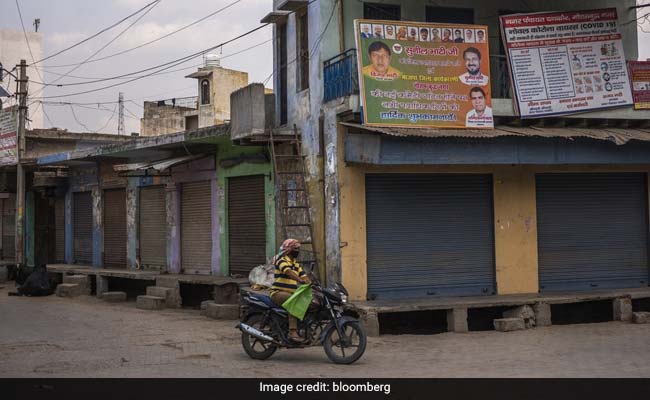
Prime Minister Narendra Modi's government isn't rushing to the aid of businesses in the country clamoring for fiscal support as a 40-day lockdown to contain the coronavirus threatens their survival.
On March 26, Finance Minister Nirmala Sitharaman announced Rs 1.7 lakh crore ($22.3 billion) of direct support to the poor to see them through the shutdown period, while promising more steps to shield the economy. Thirty-four days later, the government is yet to follow through with additional measures.
Ashokan Puthenpurackal is chief executive officer of Anntech Offshore Engineering Pvt., a Mumbai-based business providing offshore subcontracting services to state-owned oil companies. His main client has refused to make payments because there's no work, leaving Mr Puthenpurackal with very little to support his 85 employees.
"It's a hand-to-mouth situation," he said. "We are almost losing life without lines of credit."
From small and mid-sized businesses like Anntech to big brands like Hero MotoCorp Ltd., the country's top motorcycle maker by volume, companies are increasing their calls for aid including loan support, wage subsidies, tax deferrals and a moratorium on utility payments. As their cash-flow dries up, and in the absence of any fiscal support, many will be forced to cut jobs to curb costs.
Businesses like Anntech fall into the category of micro-, small- and medium-sized enterprises, or MSMEs, which account for a third of the country's economy and employ more than 11 crore people. These businesses are the most vulnerable to PM Modi's unprecedented shutdown of an economy of 130 crore people.
There are signs that some support is on the way. Officials are considering a proposal to guarantee as much as $39 billion of loans to small businesses, people familiar with the matter said this week. The government is also discussing deferring tax payments and providing other incentives to critically-affected sectors such as tourism and hospitality.
K.S. Dhatwalia, a spokesman for the administration, declined to comment on fiscal support measures for the industry, while a spokesman for the Finance Ministry didn't immediately respond to an email and a call to his mobile phone.
"A timely policy intervention to augment their cash situation is essential," said Sonal Varma, chief economist for India and Asia ex-Japan at Nomura Holdings Inc. in Singapore.
Wealthy countries like Germany and Italy have allocated fiscal stimulus, including bank guarantees, of more than 30 per cent of their gross domestic product. India's support so far adds up to less than 1 per cent of its GDP.
Economists like Soumya Kanti Ghosh of the State Bank of India and Sanjay Mathur of Australia & New Zealand Banking Group Ltd. estimate the government's support should be as big as Rs 8 lakh crore.
The economy is heading for a possible contraction in the current quarter, with an 18 per cent chance of a recession within the next 12 months, according to the median forecast in a Bloomberg survey of 10 economists.
Part of the reason for the government's lack of action is its limited fiscal room. Faced with a weakening economy before the virus outbreak, Ms Sitharaman widened the fiscal deficit target for this year to 3.5 per cent of GDP. An increase in fiscal spending to fight the virus could increase the shortfall to about 8 per cent, according to Citigroup.
Rating companies "might take an adverse view of the fiscal push and the consequent debt buildup," said Indranil Pan, an economist with IDFC First Bank. "Any ratings downgrade would lead India into a non-investment grade and could lead to outflows."
Global funds withdrew a record $16 billion from local shares and bonds in March and continued to dump the country's assets this month, making the rupee one of Asia's worst performing currencies since the beginning of April.
The Reserve Bank of India has taken the lead in providing support to the economy, but Governor Shaktikanta Das this week highlighted the importance of fiscal measures, saying fiscal slippage was unavoidable during a crisis like this one. The central bank has delivered rate cuts and more than $50 billion of liquidity injections since last month.
Even if the government announces a significant fiscal package now, it might be too late, said Shilan Shah, an economist with Capital Economics Ltd. in Singapore.
"Low-profile indicators suggest that parts of the economy are at a standstill," he said. "Unemployment and insolvencies will have risen. Non-performing loans are likely to surge."

-
High US Salaries, No Green Card Certainty: The Financial Calculation Facing Indian H-1B Families

The suspension of PERM processing at eight technology employers does not cancel existing H-1B visas. What it does is force a question many Indian families have been avoiding: is the US salary worth tying your career and family plans to one employer?
-
Swiggy vs Eternal: Food Delivery's Two Rivals Are No Longer In The Same Race
Eternal is building a private AI assistant, dark.ai. Swiggy is still working out how to make Instamart pay, with an operating loss of Rs 895 crore in the July-September quarter while Blinkit stayed profitable.
-
Where You Live Shapes How You Get To Work | The Reason Why
Two-wheelers are the most popular way to get to work in India, accounting for nearly 43% of workplace commutes.
-
Unhedged Position: Can India See An Indonesia-Style Time Correction?
The Nifty is trading below levels it first clocked in 2024. Is there, then, as I have suggested in the headline, potential that the current time correction drags on painfully for the next three-five, even ten years?
-
Navigating Friction And Energy Realities: An Analysis Of Marco Rubio's October Visit To India
Occurring at a critical juncture marked by stalled trade negotiations and escalating geopolitical pressures over global energy supplies, the visit offers a profound window into modern US-India relations.
-
India Exports Capital. Why Not Export Trusteeship?
The big question, then, is whether India can build an institution that global borrowers, investors, banks, and lawyers can trust, even without an Indian connection.
-
France's Economy & Politics Are In Crisis | The Reason Why
Let's look at how the French economy and politics evolved under Nicolas Sarkozy, Franois Hollande and Emmanuel Macron.
-
You May Inherit The Business. You Must Earn Its Credibility.
Succession tests the founder's ability to share authority as much as it tests the next generation's readiness to assume it.
-
Signing Deals Is One Thing; Making Them Work Is Another | The Week In Whys
Sometimes, things don't turn out as planned. Indian companies have lost some bids to rivals, some projects won't produce until 2030.
-
FOMC Wall, PERM Suspension, Hospital Stocks | Talking Points This Week
A PERM suspension would directly affect green-card sponsorship rather than H-1B visas, so the near-term earnings impact could remain relatively limited. The key question is whether this marks a new phase in US scrutiny of Indian IT.









