10 Charts That Show Global Economy's Stormy Course Over 2022

Above all, it was the year of inflation.
The cost of living soared all over the world in 2022. Pandemic price pressures, dismissed as transitory, turned out to be enduring with Russia's war in Ukraine causing a fresh spike in food and energy costs.
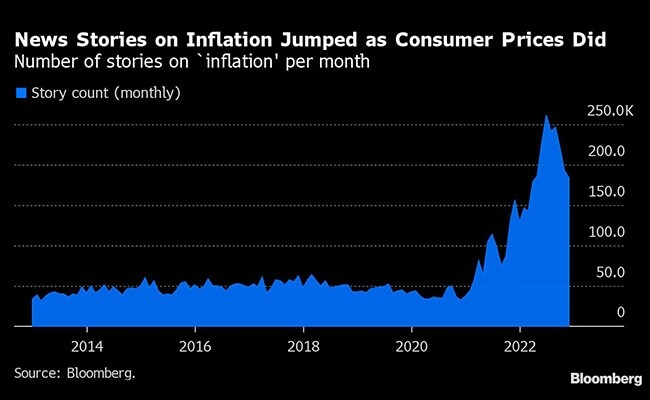
In June alone, inflation was mentioned in more than 250,000 news stories on the Bloomberg Terminal.
Initially slow to react, the Federal Reserve and its fellow central banks were forced to play catch-up. They raised interest rates at the fastest pace in decades.
By the year's end, inflation appeared to be past its peak - but economies were stalling, as tight money began to bite.
While, still-tight labor markets have provided some support, recession risks are mounting into 2023 for some of the world's major economies, including the US and Europe.
The coming months are expected to see more rate increases - and a cooling in inflation, though perhaps not by as much as central banks would like. Next year is likely to turn tougher for workers, with unemployment forecast to rise.
The following charts highlight some of the key developments in the global economy over the past year.
Price Shock
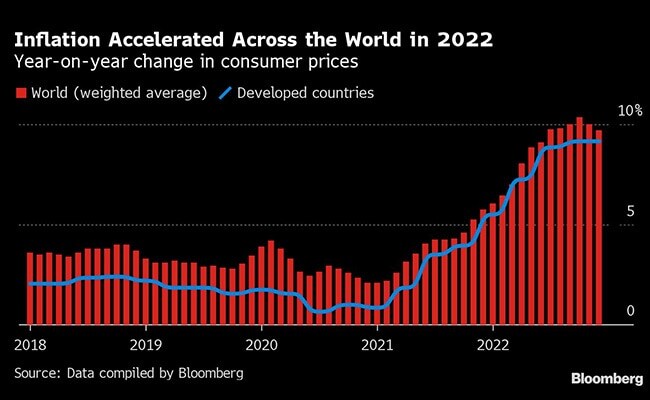
The global surge in inflation led to double-digit price increases in some industrial economies. Economists reckon it was driven by a combination of pandemic disruptions to supply chains and labor markets, commodity spikes after Russia's invasion of Ukraine, and government stimulus that shored up consumer spending.
Tight Money
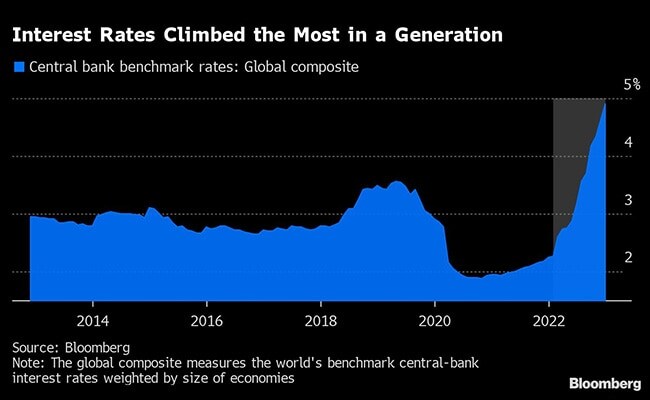
Central banks responded to high inflation with rapid interest-rate hikes to cool their economies, ending an era of cheap money in the developed world. Most of the major banks say there's more to come. "We are not at a sufficiently restrictive policy stance yet," Federal Reserve Chair Jerome Powell said at his last press conference of the year. "We will stay the course until the job is done."
Stalling Recovery
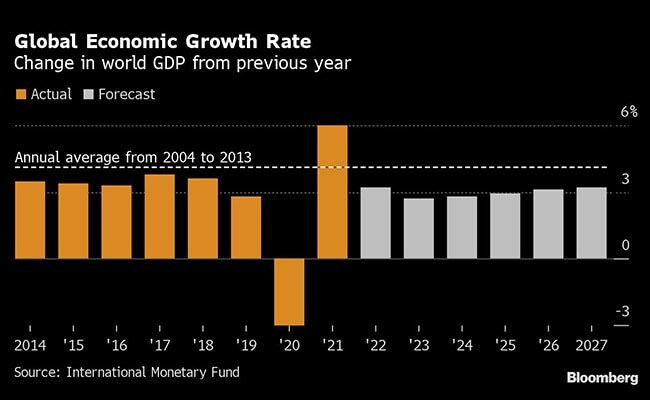
With household spending under pressure from the soaring cost of living, and higher interest rates starting to have an impact, pandemic recoveries lost momentum in 2022 - and next year will likely be even worse. The International Monetary Fund is forecasting an extended period of sub-par growth for the world economy.
War Impact
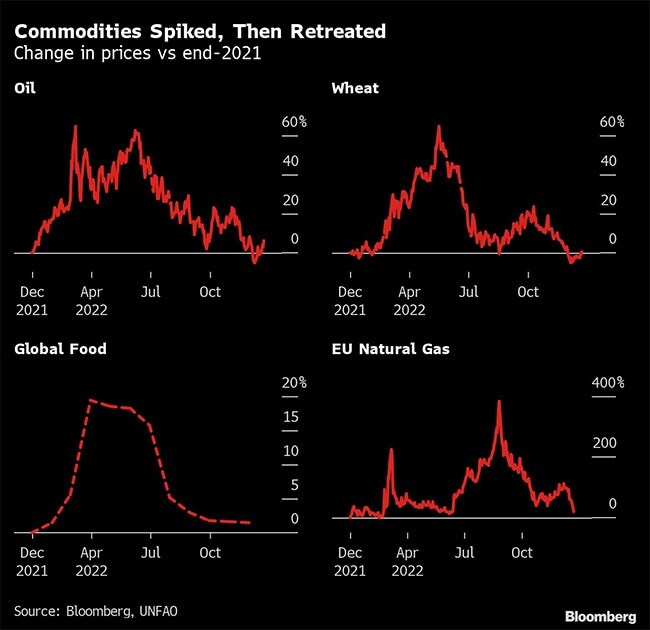
Russia's invasion of Ukraine in February, and the sweeping sanctions against Moscow that followed, set off a surge in the prices of key commodities from oil to wheat. Poor countries dependent on food and energy imports - like Sri Lanka, which was forced to default on debt - were hit especially hard. Europe, which had relied on Russian pipelines before the war, saw the cost of natural gas and electricity spiral to record highs. By the year's end, many of these prices had retreated.
Strong Dollar
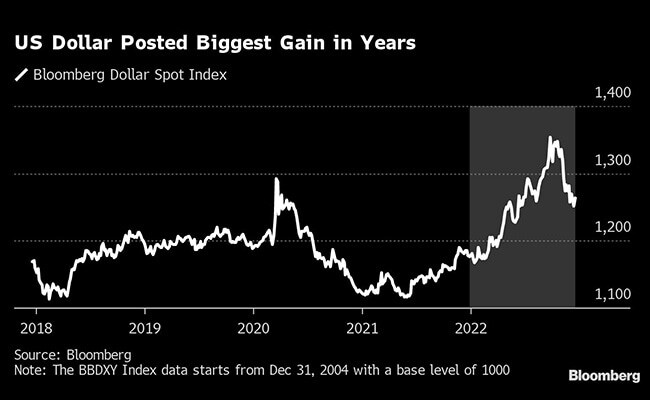
As the Fed raised interest rates at a rapid clip, the US dollar posted its biggest advance in years - easing some of the inflationary pressures at home, but adding to them elsewhere. The greenback gave up some of the gains in the closing months of 2022.
Debt Distress
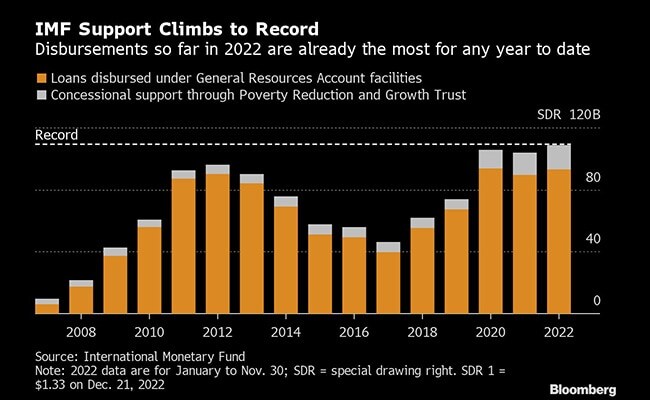
Some emerging economies were tipped into debt trouble by the combined effect of soaring import bills, higher borrowing costs, and a strong dollar. Global lenders estimated that more than half of the developing world is either already in debt distress, or close to it. As governments from Egypt to Pakistan sought help, the International Monetary Fund was poised to break its lending record in 2022.
Supply Strains
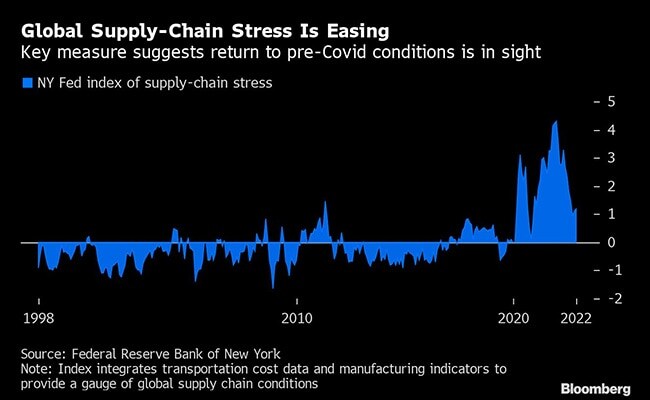
The worldwide snarl-up in supply chains that was brought on by the pandemic - as factories shut down and transit routes suffered from bottlenecks - eased significantly this year. That offers hope for better trade conditions and fewer price pressures next year - although one big unknown is the prospect for the world's manufacturing powerhouse China after it dropped its Covid Zero policy.
Labor Strength
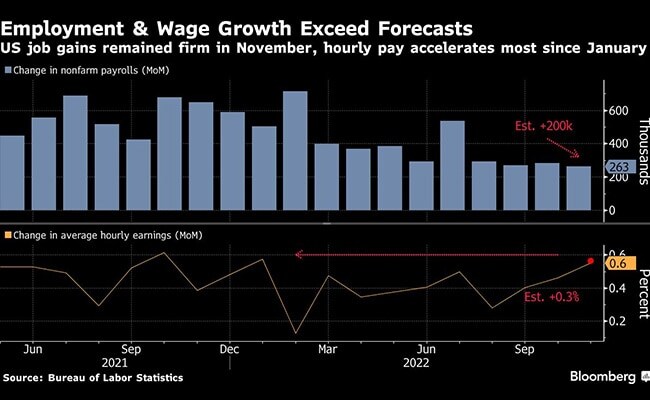
One surprise has been the resilience of labor markets worldwide. The US, for example, recorded an unemployment rate of just 3.7% in November. A headache for central bankers is this is fueling higher wages with workers increasingly seeking more pay to offset the inflation spike, in turn risking a wage-price spiral as companies seek to compensate for the higher employment costs. Strikes are also more prevalent.
Housing Bust?
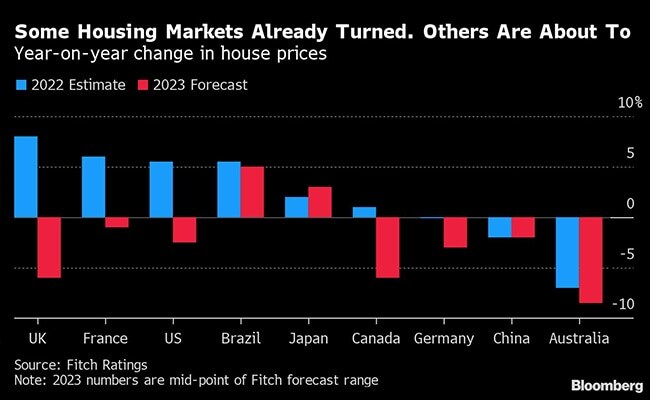
After a run-up during the pandemic, house prices in some countries turned downward in 2022 - and many analysts expect a broader housing bust next year, as high interest rates make mortgages expensive. That's a risk for economic growth, which typically benefits from a so-called wealth effect when homeowners feel richer in a booming market - and suffers when the opposite conditions take hold.
What's Next?
One striking feature of the world economy at the end of 2022 is the difficulty of seeing what's coming next. In the period from the arrival of Covid to the Russian invasion of Ukraine, a much-cited gauge of policy uncertainty has been at the highest levels on record.
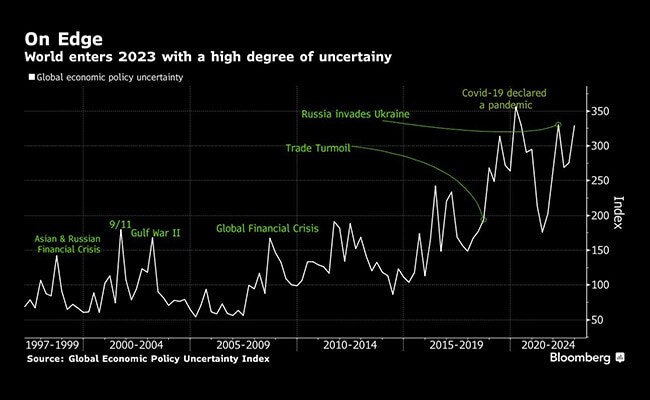
That suggests caution is in order for anyone trying to figure out how the past year's trends will extend into 2023.

-
Unhedged Position: Can India See An Indonesia-Style Time Correction?

The Nifty is trading below levels it first clocked in 2024. Is there, then, as I have suggested in the headline, potential that the current time correction drags on painfully for the next three-five, even ten years?
-
Navigating Friction And Energy Realities: An Analysis Of Marco Rubio's October Visit To India
Occurring at a critical juncture marked by stalled trade negotiations and escalating geopolitical pressures over global energy supplies, the visit offers a profound window into modern US-India relations.
-
India Exports Capital. Why Not Export Trusteeship?
The big question, then, is whether India can build an institution that global borrowers, investors, banks, and lawyers can trust, even without an Indian connection.
-
France's Economy & Politics Are In Crisis | The Reason Why
Let's look at how the French economy and politics evolved under Nicolas Sarkozy, Franois Hollande and Emmanuel Macron.
-
You May Inherit The Business. You Must Earn Its Credibility.
Succession tests the founder's ability to share authority as much as it tests the next generation's readiness to assume it.
-
Signing Deals Is One Thing; Making Them Work Is Another | The Week In Whys
Sometimes, things don't turn out as planned. Indian companies have lost some bids to rivals, some projects won't produce until 2030.
-
FOMC Wall, PERM Suspension, Hospital Stocks | Talking Points This Week
A PERM suspension would directly affect green-card sponsorship rather than H-1B visas, so the near-term earnings impact could remain relatively limited. The key question is whether this marks a new phase in US scrutiny of Indian IT.
-
Everything, Everywhere, All At Once: Dalal Street's Week To Forget | Joining The Dots
Visa curbs, a Starlink spat and cancer drug caps: what connects this week's shocks for Indian markets
-
India Is Going Abroad For Critical Minerals. But It May Take Years To Pay Off | The Reason Why
Although India's steps are in the right direction, they remain modest compared with India's growing dependence.
-
When Everyone Has AI, What Gives You An Edge?
India's young workforce is entering an uncertain world of work where powerful AI tools are becoming widely accessible. The advantage will belong to those who combine deep expertise with digital fluency, and the distinctly human capabilities that technology cannot manufacture.