'Star Wars' Soldier Recruited to Fight Patent Trolls
(Bloomberg View) -- Some of the greatest stories reach their climax when a hero who has been hounded by a villain doubles back to give chase, turning the hunter into the hunted. That's what's going on now in a fight between Cloudflare, an Internet content-delivery and security company, and Blackbird Technologies, a company that amasses patents for the sake of bringing lawsuits.
While a patent battle might not pump out adrenaline like Luke's duel with Vader in “Return of the Jedi,” this one might still go down in history – especially since there's a “Star Wars” bounty hunter involved.
Blackbird bills itself as no mere patent troll, but as a new, more efficient type of patent assertion entity. It doesn't represent inventors, or even third-party patent-holding companies. Instead, it appears that Blackbird's lawyers own the company, so they're effectively representing themselves. (If you think that taking inventors out of the litigation process seems like a strange way to promote innovation, you're right – although since Blackbird's patent purchases involve what Blackbird has cryptically called “other good and valuable consideration,” it's likely that the original inventors get some cut of Blackbird's profits. )
In March, Blackbird sued Cloudflare for infringement of a vague 1998 patent that covers technology used to add information to electronic communications, such as inserting error messages when something goes wrong with a transmission. Instead of settling the lawsuit, as most targets of patent trolls do, Cloudflare vowed to fight in court. But that's not all it did. Cloudflare also launched a frontal attack on Blackbird's business.
A patent can be invalidated if someone can find clear evidence that the claimed invention wasn't new at the time of patenting. But this isn't easy. The evidence has to be pretty specific, and can't have been cited and distinguished in the patent itself.
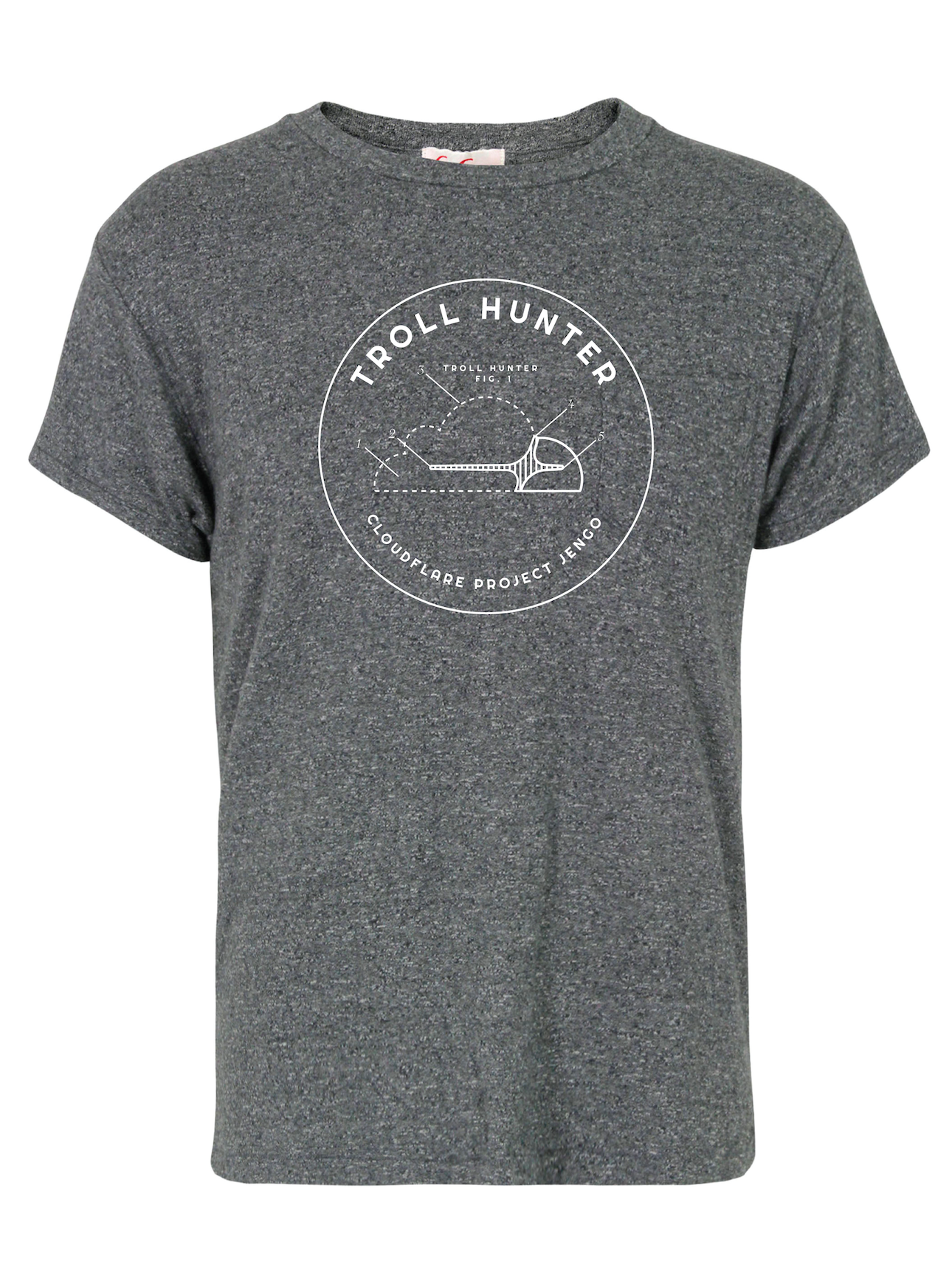
In “Project Jengo,” named after that Star Wars bounty hunter, Cloudflare announced a $50,000 bounty (plus T-shirts) for this kind of ammunition to shoot down Blackbird's patents. It's apparently working: Patent bounty hunters have submitted documentation that can be used to make a case against the communications patent Blackbird asserted against Cloudflare, as well as a number of Blackbird's other patents. Meanwhile, an anonymous donor has matched the $50,000 bounty offer, bringing the total war chest up to $100,000.
Why is Cloudflare doing this? When companies settle with patent trolls instead of fighting back, the trolls' patents don't get tested. Then – even if their patents are junk – the trolls can keep targeting companies. By standing and fighting, Cloudflare hopes to provide a public good, eliminating some low-quality patents that would otherwise be used against startups and others. Cloudflare's response should also deter trolls from targeting Cloudflare in the future.
If this strategy becomes more common, it could provide some broader deterrence against patent trolling. But there's something of a “swatting flies” problem: The U.S. Patent and Trademark Office issues so many low-quality patents that nobody can reasonably hope to kill all of them – at least not without a bounty as big as the Ritz.
So in the long run, legislative action will be needed to kill opportunistic patent trolling. But until that happens, Cloudflare is producing a compelling new hope in the “Patent Wars.”
This column does not necessarily reflect the opinion of the editorial board or Bloomberg LP and its owners.
Scott Duke Kominers is a junior fellow in economics at the Harvard University Society of Fellows. Previously, he was the inaugural research scholar at the Becker Friedman Institute at the University of Chicago.
Fortune wrote that Blackbird's chief executive, Wendy Verlander explained "that the company is not a law firm and doesn't use contingency fee arrangements for the patents it buys," but said she conceded, "It's a similar arrangement."
As Joe Mullin pointed out at Ars Technica, the idea that this was an “invention” in 1998 seems (ahem) patently absurd. Such systems date back at least to the telegraph.
The vowel swap from “Jango” to “Jengo” is presumably to avoid infringement on Lucasfilm's trademarks
To contact the author of this story: Scott Duke Kominers at kominers@fas.harvard.edu.
To contact the editor responsible for this story: Jonathan Landman at jlandman4@bloomberg.net.
For more columns from Bloomberg View, visit http://www.bloomberg.com/view.

-
Navigating Energy Crossroads: S Jaishankar's Call For Diversified Supply Chains At G20 Ministerial Meeting

As geopolitical fault lines continue to test maritime trade routes and commodity flows, Jaishankar's message remains pertinent: true economic resilience requires open markets, protected transit lines, and a genuine commitment to multilateral cooperation rather than coercion.
-
Indians Are Travelling, But Not Every Journey Is A Holiday | The Week In Whys
Pilgrims, patients and working women are the real travellers, and the system hasn't quite caught up with them.
-
Getting To Work Costs Women More | The Reason Why
It is not just about women paying more than men. It is about women paying much more in cities than in villages.
-
AI Bias In Investing Cannot Be Eliminated, But It Can Be Governed
Framing is a particularly important example as identical financial information presented in terms of gains rather than losses can lead an LLM to reach a different assessment.
-
Joining The Dots | Dark Skies, Steady Diya: Why Hope Holds This Diwali
With war, a weak rupee and foreign outflows weighing on sentiment, policymakers at the NDTV World Summit and market veterans at NDTV Profit Ignite: Diwali Edition offered the same advice: stay invested and filter out the noise.
-
The Curious Case of Equitas Small Finance Bank And A CEO Who Quit For Stock
PN Vasudevan believes persistent investor concerns over a perceived conflict of interest had become a governance overhang on Equitas Small Finance Bank's stock, even as the lender improved profitability and asset quality.
-
Talking Points This Week: AI Cash Burn, A Tiger Comeback And An India That Still Finds Its Own Path
India is not immune to higher oil or tighter global liquidity, yet its earnings base is broader, its domestic policy levers are still available.
-
Foreign Investors Own Half Of HDFC Bank and ICICI Bank. An LTCG Cut Could Matter Most Here
Foreign portfolio investors have US$115 billion parked in HDFC Bank, ICICI Bank. If the government cuts long-term capital gains tax, Jefferies says returning foreign money could land here first.
-
'Never Seen This Level Of Negativity': Sandeep Tandon Says The Next Rally May Be Closer Than You Think
Veteran investor Sandeep Tandon says foreign selling is easing, large-caps are due a comeback and mid-caps are crowded, while he turns positive on gold, power and pharma this Diwali.