Porsche, Mercedes Face $3.7 Billion Hit From Trump Tariffs
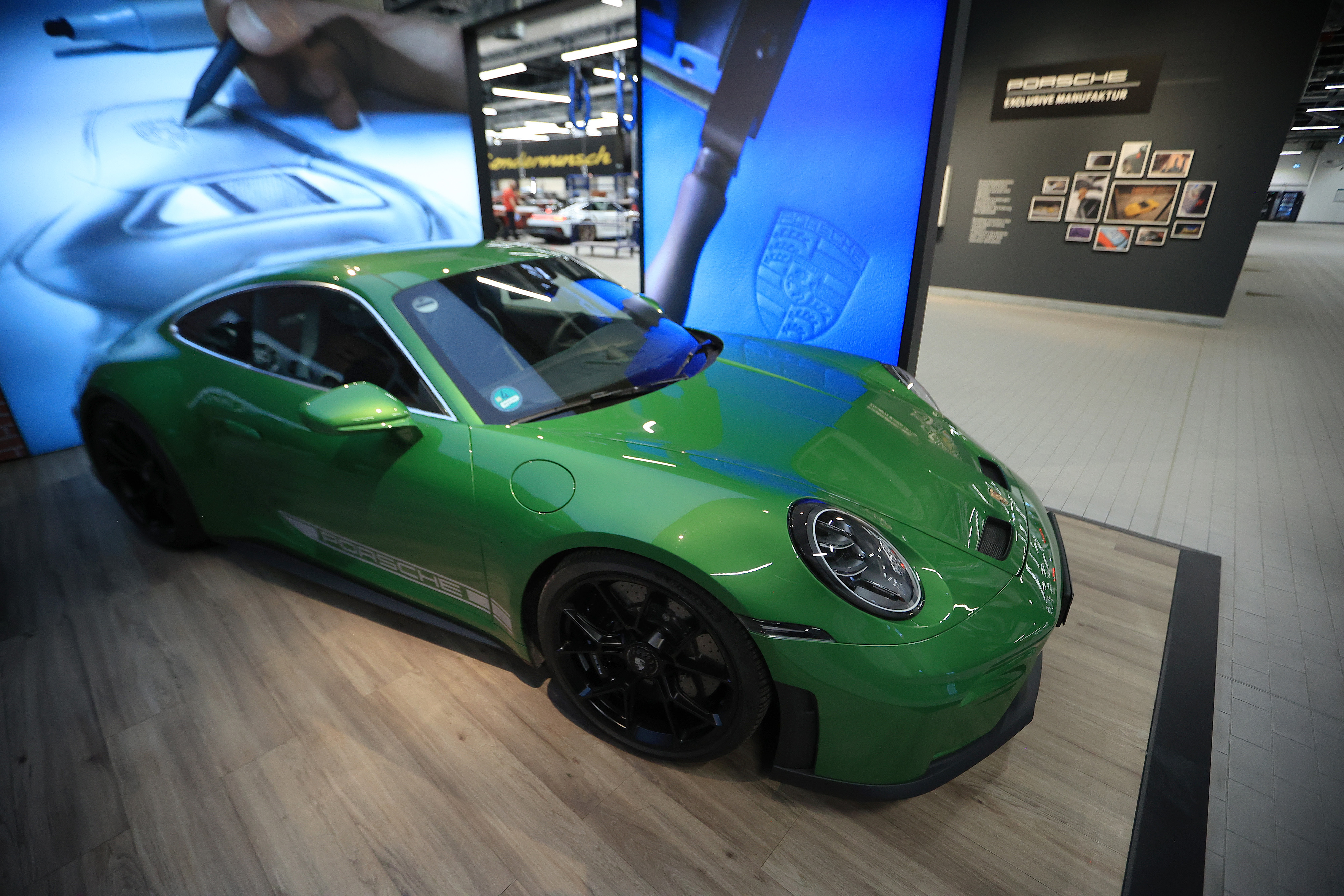
Porsche AG and Mercedes-Benz Group AG will be hit hardest by President Donald Trump's latest trade salvo, facing a potential €3.4 billion ($3.7 billion) blow from new US tariffs on imported cars.
Trump's additional 25% duties, to be collected from April 3, could wipe out around a quarter of Porsche and Mercedes' projected 2026 operating earnings, according to Bloomberg Intelligence. To offset the impact, manufacturers may have to raise prices or shift more production to the US.
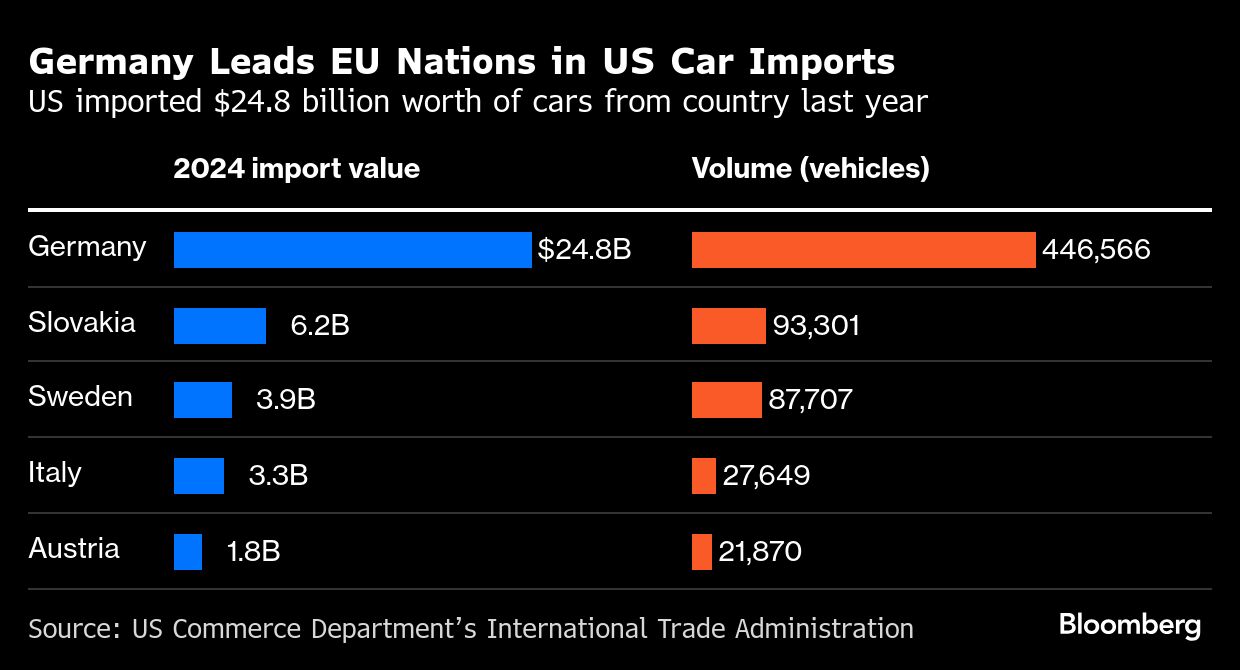
The levies threaten to upend the European auto industry's reliance on exports to the lucrative US market. German carmakers are most at risk as they send more vehicles to the US than to any other country, including many of their higher-margin combustion-engine models like Porsche's 911 sports car and Mercedes' S-Class luxury sedan.
Porsche and Mercedes shares both declined as much as 5.7% in Frankfurt, with BMW AG dropping 4.9%. Volkswagen AG, which also owns Audi and Lamborghini, fell as much as 4.3%, while Aston Martin Lagonda Global Holdings Plc slumped 8.9% in London.
Trump's latest move is “a fatal sign for free and rules-based trade,” said Germany's VDA cars lobby, urging Brussels to negotiate with Washington for a deal. Beyond the country's biggest automakers, the levies also threaten to hurt parts makers including Robert Bosch GmbH and Continental AG.
Most German automakers operate factories in the US where they produce cars both for local buyers and export. With the European Union weighing a response, any escalation of the trade war could further damage an industry already grappling with rising costs and muted demand.
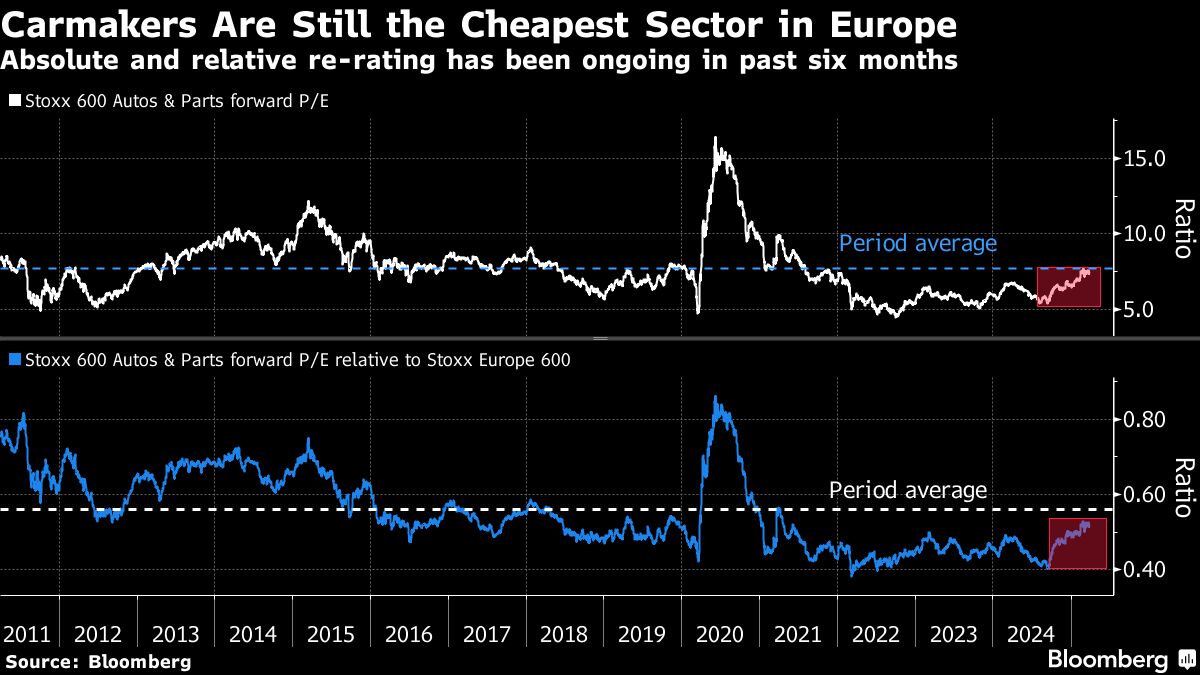
The MSCI ACWI Automobiles Index has shed $364 billion this year through Wednesday's close. In Europe, carmakers erased around €43 billion in market capitalization since their last peak in February including Thursday's drop, as Trump's tariff push overshadowed optimism over greater German spending and an economic recovery in Europe.
Still, a lot of bad news may already be priced in. Autos remain the cheapest sector in Europe, trading at just 7.3 times forward earnings, a 50% discount to the broader European stock market.
Porsche, which is struggling with lower sales in China, may be most exposed. The luxury-car maker has steadily grown the last 15 years in the US, which just overtook China as its top market. But Porsche's US dealers are entirely reliant on imports as the manufacturer operates no factory there.
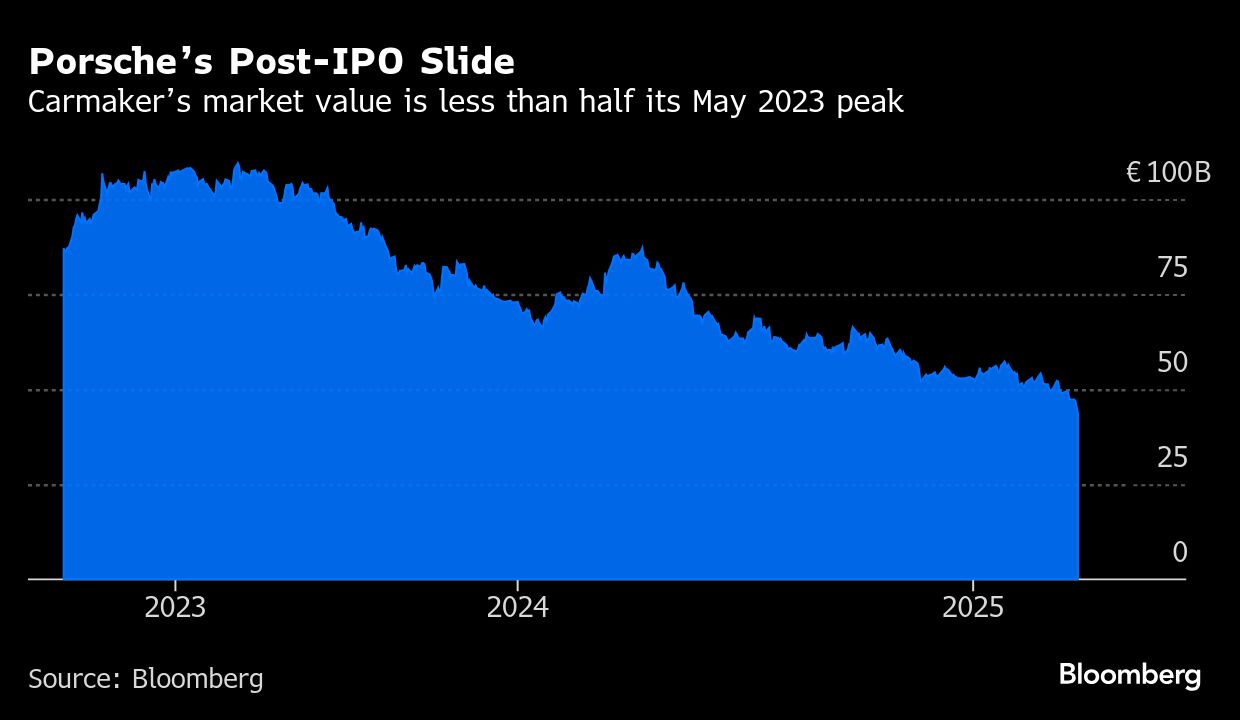
At around €44 billion, Porsche's market value is now less than half what it was in May 2023, when the stock peaked after one of Europe's biggest IPOs in years. The steep decline heaps more pressure on Chief Executive Officer Oliver Blume, who runs both Porsche and Volkswagen.
While disappointing demand for Porsche EVs has dogged the company in China, where deliveries fell 28% last year, this is less of an issue in the US. Plug-in car adoption has been slower there, and American consumers have bought more Porsches in all years but one since 2009. Its lone down year was 2020, when the Covid-19 pandemic began.
Stellantis NV has an established US production network that makes Jeep, Dodge, Chrysler and Ram models, with Renault SA least impacted as its sales are mainly in Europe. BMW earlier this month said it expects escalating trade conflicts between the US, Europe and China to cost the carmaker about €1 billion this year, but that estimate didn't take into account Trump's latest levies.
While auto-industry executives have long lobbied against tariffs — including those the EU imposed on made-in-China EVs — most of them are currently in wait-and-see mode as negotiations between Brussels and Washington continue. Still, even a short period with duties will hurt automakers.
“The tariffs place a heavy burden on companies and the industry's tightly interwoven global supply chains,” said VDA President Hildegard Müller. The move has “negative consequences for consumers, especially in North America.”

-
Talking Points This Week: Tech Nerves, FII Buying, And A Faraway Banking Shock

The global markets are not shining this Diwali. The exception in the large markets is, India.
-
Midterm Rally Lasted A Day. The Hard Reality Of A Divided US May Last Two Years | Opinion
Between a contested AI boom, a debt ceiling that arrives in 2027 and a president with every incentive to act alone, the next two years may prove more volatile than the first day's rally suggests.
-
Blue Wave Will Derail the AI Trade but Won't Dismantle the AI Era | Unhedged Position
The Democrats' sweep of the US Congress will see politics collide with economic forces both over the long and short term.
-
It's Time To Take The GST Council's Bet On Trust Global
Payment records can prove India's services exports, and clear, proportionate rules can bring foreign digital sellers into the tax net.
-
Opinion | India at 38: From Innovation Overperformer to Innovation Powerhouse
India now has 453 VC-backed deep science startups, 18 of them late-stage, after 117 percent growth since 2020. Laurus Labs, at USD 9.3 billion, is the most valuable deep science company in any middle-income economy outside China.
-
Navigating Energy Crossroads: S Jaishankar's Call For Diversified Supply Chains At G20 Ministerial Meeting
As geopolitical fault lines continue to test maritime trade routes and commodity flows, Jaishankar's message remains pertinent: true economic resilience requires open markets, protected transit lines, and a genuine commitment to multilateral cooperation rather than coercion.
-
Indians Are Travelling, But Not Every Journey Is A Holiday | The Week In Whys
Pilgrims, patients and working women are the real travellers, and the system hasn't quite caught up with them.
-
Getting To Work Costs Women More | The Reason Why
It is not just about women paying more than men. It is about women paying much more in cities than in villages.
-
AI Bias In Investing Cannot Be Eliminated, But It Can Be Governed
Framing is a particularly important example as identical financial information presented in terms of gains rather than losses can lead an LLM to reach a different assessment.