BYD Slashes Prices As Much As 34%, Triggers Fall In Chinese EV Stocks
BYD Co. led Chinese electric vehicle stocks lower in Hong Kong on Monday, as investors digested the auto giant's sweeping price cuts of as much as 34% late last week.
Shares of China's No. 1 selling car brand tumbled as much as 8.3%, while peers Li Auto Inc., Great Wall Motor Co. and Geely Automobile Holdings Ltd. dropped more than 5% amid investor concern about intensifying competition in the sector.
BYD offered discounts on 22 of its electric and plug-in hybrid models that it sells in China until the end of June, fanning the flames of a renewed sector-wide price war. While EV sales have overall reached new annual highs, growth has been decelerating.
To kickstart sluggish consumer demand — made worse by China's broader economic malaise — automakers in the world's biggest car market have slashed sticker prices. Even so, stock levels at dealerships last month reached 3.5 million cars, or 57 inventory days, the highest since December 2023, according to data shared last week by the China Passenger Car Association.
Revisions by BYD include paring the price of its Seagull hatchback to 55,800 yuan ($7,780), a 20% reduction to a model that was already the carmaker's cheapest and one that had garnered global attention for its sub-$10,000 price tag. The Seal dual-motor hybrid sedan saw the biggest price cut at 34%, or by 53,000 yuan to 102,800 yuan.

A BYD Seagull.
In recent months, BYD has attempted to clear inventory of older models, including ones without the new driver assist features — which the automaker announced in February would be added to its models for free. The pivot hasn't been without problems, further hurting the struggling dealerships it does business with.
“While some of these discounts have been in place since April, the official announcement sends a strong signal of how tough the end market is,” Morgan Stanley analysts including Tim Hsiao wrote in a note.
BYD's latest cuts are expected to have a knock-on effect, as rival automakers further trim their prices, slicing deeper into already thin margins. The intense pricing pressure is straining many carmakers' bottom lines, leading to mounting financial losses and industry consolidation.
“We anticipate peers to follow BYD's price cut,” analysts at Citi Research wrote, noting that Chongqing Changan Automobile Co. announced a cash discount of 25,000 yuan for its Deepal S07 model over the weekend while Zhejiang Leapmotor Technologies Ltd. adjusted prices for its C16 full-size crossover sport utility vehicle and mid-sized SUV C11.

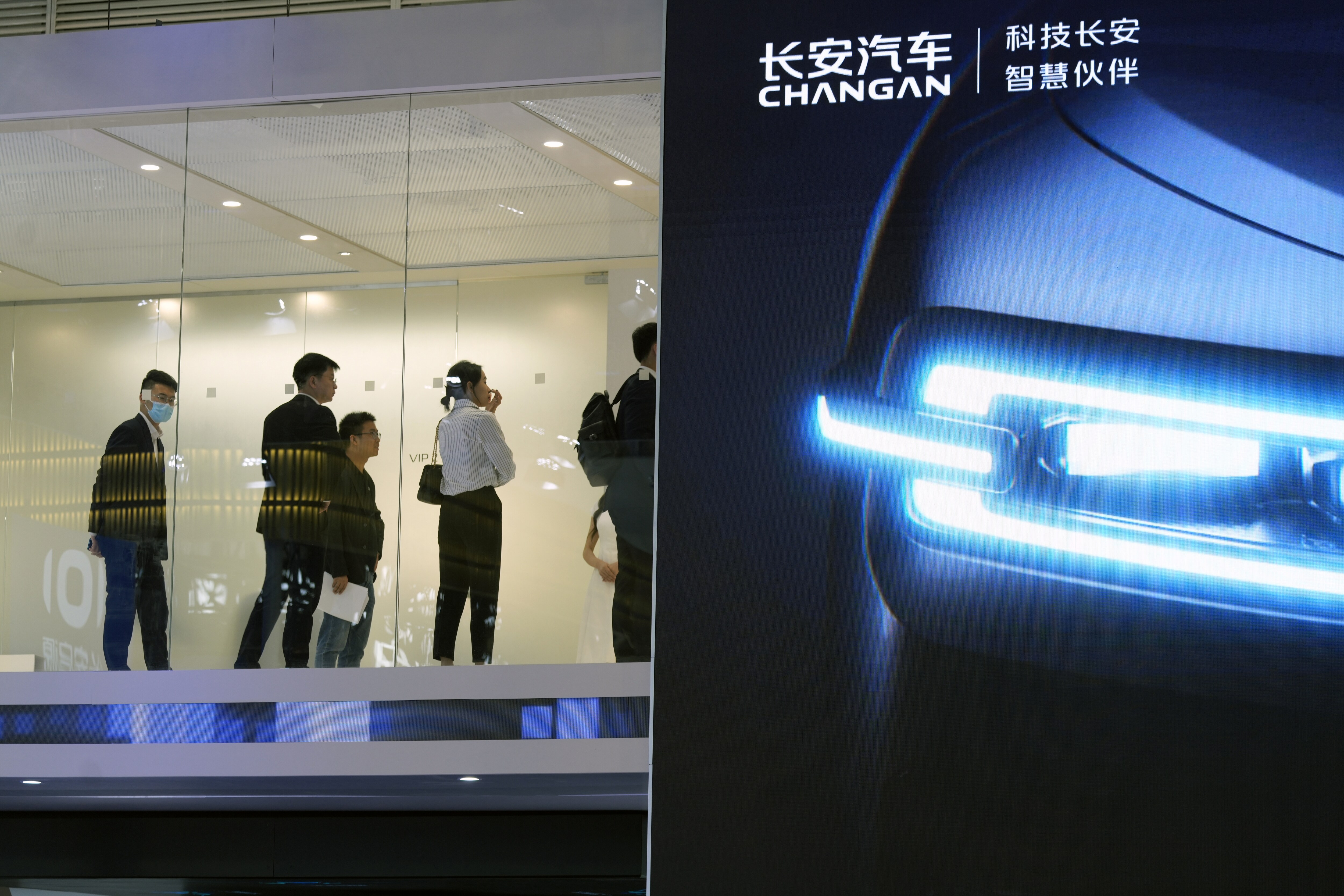
The Changan booth during last year's Beijing auto show.
Citi estimated that after the weekend's discounts, BYD dealership traffic may have surged between 30% to 40% week-on-week.
Should that foot traffic translate into sales, BYD's May volumes could keep their upward trajectory. The Shenzhen-based group posted its best month of sales yet for 2025 in April, a further sign that despite the broader industry pain, it's on track to hit its full-year target of 5.5 million deliveries.

BYD is also gaining ground overseas. It sold more EVs in Europe than Tesla Inc. for the first time last month, overtaking the American brand that long led the continent's EV segment.
Thanks to BYD's vertically integrated supply chain — it makes its own batteries and many of its own semiconductors — and domestic scale, which helps reduce production costs, the impact of China's car price wars on its balance sheet is more muted than for some other automakers.
Its gross margin for the quarter ended March 31 was around 20% versus about 16% for Tesla, for example. And BYD's net income in the first quarter jumped to 9.15 billion yuan, overtaking Tesla on another key metric.

-
High US Salaries, No Green Card Certainty: The Financial Calculation Facing Indian H-1B Families

The suspension of PERM processing at eight technology employers does not cancel existing H-1B visas. What it does is force a question many Indian families have been avoiding: is the US salary worth tying your career and family plans to one employer?
-
Swiggy vs Eternal: Food Delivery's Two Rivals Are No Longer In The Same Race
Eternal is building a private AI assistant, dark.ai. Swiggy is still working out how to make Instamart pay, with an operating loss of Rs 895 crore in the July-September quarter while Blinkit stayed profitable.
-
Where You Live Shapes How You Get To Work | The Reason Why
Two-wheelers are the most popular way to get to work in India, accounting for nearly 43% of workplace commutes.
-
Unhedged Position: Can India See An Indonesia-Style Time Correction?
The Nifty is trading below levels it first clocked in 2024. Is there, then, as I have suggested in the headline, potential that the current time correction drags on painfully for the next three-five, even ten years?
-
Navigating Friction And Energy Realities: An Analysis Of Marco Rubio's October Visit To India
Occurring at a critical juncture marked by stalled trade negotiations and escalating geopolitical pressures over global energy supplies, the visit offers a profound window into modern US-India relations.
-
India Exports Capital. Why Not Export Trusteeship?
The big question, then, is whether India can build an institution that global borrowers, investors, banks, and lawyers can trust, even without an Indian connection.
-
France's Economy & Politics Are In Crisis | The Reason Why
Let's look at how the French economy and politics evolved under Nicolas Sarkozy, Franois Hollande and Emmanuel Macron.
-
You May Inherit The Business. You Must Earn Its Credibility.
Succession tests the founder's ability to share authority as much as it tests the next generation's readiness to assume it.
-
Signing Deals Is One Thing; Making Them Work Is Another | The Week In Whys
Sometimes, things don't turn out as planned. Indian companies have lost some bids to rivals, some projects won't produce until 2030.
-
FOMC Wall, PERM Suspension, Hospital Stocks | Talking Points This Week
A PERM suspension would directly affect green-card sponsorship rather than H-1B visas, so the near-term earnings impact could remain relatively limited. The key question is whether this marks a new phase in US scrutiny of Indian IT.









