World’s Biggest Toilet-Building Spree Is Windfall For Companies
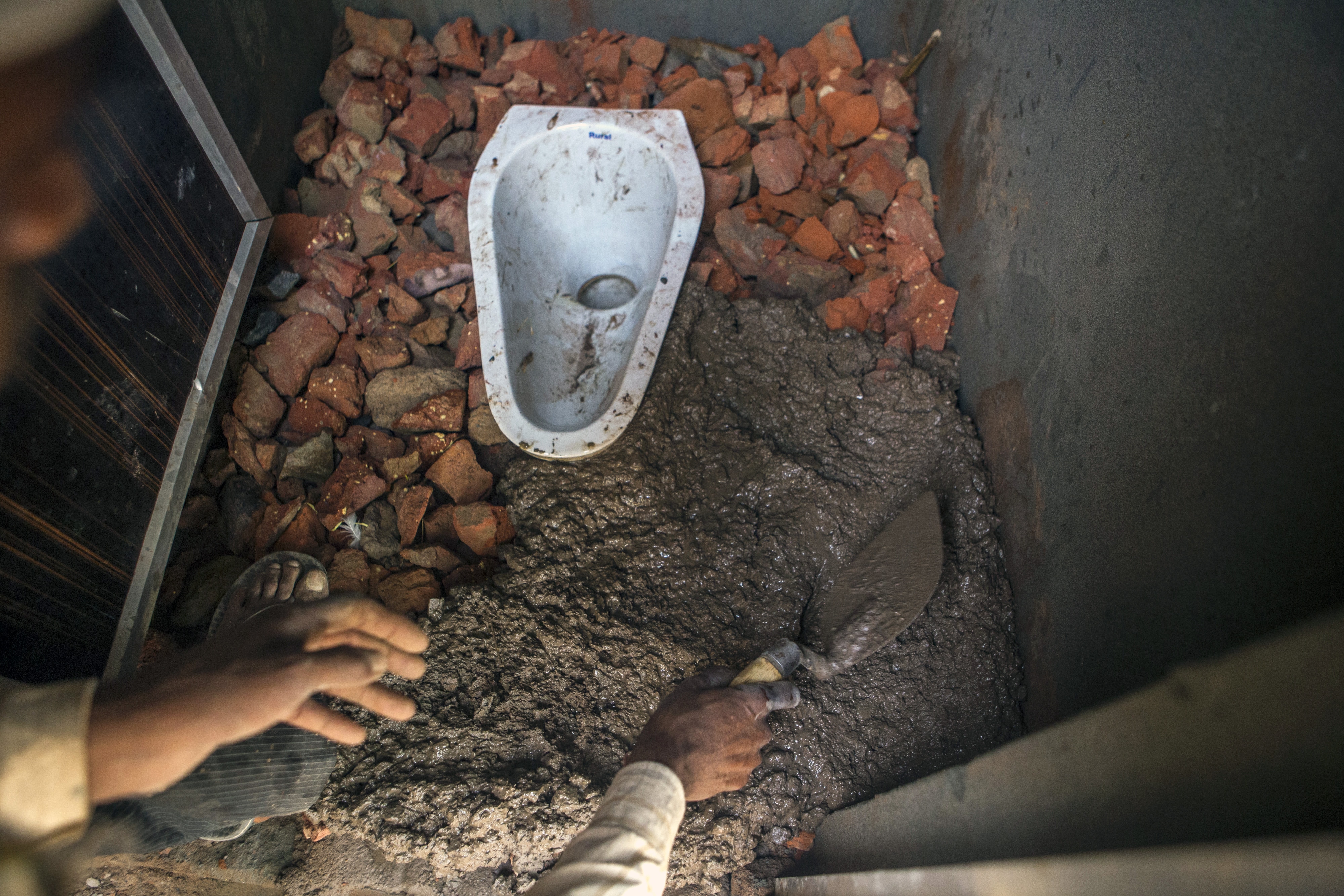
(Bloomberg) -- India is on the greatest toilet-building spree in human history, and it's a windfall for companies.
Prime Minister Narendra Modi's $20 billion “Clean India” mission aims to construct 111 million latrines in five years. Besides promising to improve the health, safety and dignity of hundreds of millions of Indians, the national hygiene drive has spurred an 81 percent jump in sales of concrete building materials and 48 percent increase in bathroom and sanitaryware sales, according to Euromonitor International. That's benefiting firms from Tata Group, the nation's largest conglomerate, to cleaning-products maker Reckitt Benckiser Group Plc.

Almost 80 million household toilets are estimated to have been built since Modi's 2014 pledge to ensure universal sanitation coverage by October 2019, which will mark 150 years since the birth of independence leader Mahatma Gandhi. The scale-up of latrines and a nationwide campaign to encourage their use is driving a market for toilet-related products and services that's predicted to double to $62 billion by 2021.
“It's the biggest, most successful behavior-change campaign in the world,” said Val Curtis, director of the London School of Hygiene and Tropical Medicine's Environmental Health Group, who has worked on the program in India. “Every time I go there, I feel like I can't sit down for weeks after because I'm excited about what they're doing. It's incredible.”

Bollywood Star
Bollywood celebrity Akshay Kumar, star of the sanitation-promoting movie “Toilet: Ek Prem Katha” (or “Toilet: A Love Story”), was appointed brand ambassador this month for Harpic, the bowl-cleaner made by Reckitt Benckiser. The Slough, England-based company, which also sells the disinfectant Dettol, dominates the toilet-care market in India, with sales climbing 11 percent to $105.7 million last year, Euromonitor data show.

“We are one of the most trusted brands in India, and we've always managed to outperform the market with Dettol,” Rakesh Kapoor, Reckitt Benckiser's India-born chief executive officer, said on a conference call in April. The company has been able to increase awareness of its cleaning products by working with open-defecation-free communities and households to promote sanitation and hygiene.
That's a common theme across suppliers of home-care products, according to Sowmya Adiraju, a research analyst at Euromonitor in Bengaluru. For example, Hindustan Unilever Ltd. entered the low-cost toilet cleaner market with a new powdered product, and has been trying to make toilets accessible and affordable through its Domex Toilet Academy.
Hygiene Awareness
Companies are investing heavily on spreading awareness about better hygiene products, aiding the penetration of home care products in India, which is still low by global standards, Adiraju said in an email.
The “Clean India” mission has had a “largely positive” impact on suppliers of sanitaryware and tiles, sales of which are predicted to expand about 11 percent annually through 2022, according to Adiraju. The sanitation campaign was anticipated initially to provide a bigger sales boost, but some companies have partnered with governments more as a social initiative than a business opportunity, she said.
Before Modi began the Clean India program, known locally as the Swachh Bharat Abhiyan mission, the country accounted for more than half of the world's 1.1 billion people who routinely relieve themselves in fields, beaches and other open spaces.

Economic Impediment
So-called open defecation contaminates food and drinking water, and spreads diarrheal diseases that cause chronic malnutrition and childhood stunting -- a burden the World Bank estimated costs India 6.4 percent of its gross domestic product.

“Sanitation is a basic need that is denied to a majority of the Indian population,” said Rajeev Kher, chief executive officer of SaraPlast Pvt Ltd., a closely-held manufacturer, supplier and cleaner of restrooms, including portable toilets for rent. Kher has also converted aged buses into mobile toilets to provide a “clean and safe toilet experience” for women in a collaboration with municipal authorities in the western city of Pune.
For individual households, Japan's LIXIL Group has supplied tens of thousands of twin pit toilet systems that costs $10 or less apiece to facilitate the safe management of excreta in the absence of a sewage connection.
$300 Million Orders
Increased government spending on toilets and sanitation augers well for Indian Hume Pipe Co., according to Pallav Agarwal, an analyst with Antique Stock Broking Ltd. in Mumbai, who rates the pipe company a buy. It secured a dozen major work orders for water supply and sewerage projects across six states in the 2018 fiscal year, totaling 20.9 billion rupees ($300 million), Agarwal said in a July 5 report.
Mumbai-based Tata Group's steel division makes Nest-In, a modular toilet that comes with an option for a bio-digester. The company has been focusing on products for end-users, including modular housing and toilets, and in March opened public toilet blocks at rest stops along a national highway.
“Private sector enterprises have to pitch in to make the Swachh Bharat Abhiyan successful,” said Prabhat Pani, head of partnerships and technology at Tata Trusts, which owns two-thirds of Tata Sons, the apex company of Tata Group.
--With assistance from Jason Clenfield.
©2018 Bloomberg L.P.

-
Getting To Work Costs Women More | The Reason Why

It is not just about women paying more than men. It is about women paying much more in cities than in villages.
-
AI Bias In Investing Cannot Be Eliminated, But It Can Be Governed
Framing is a particularly important example as identical financial information presented in terms of gains rather than losses can lead an LLM to reach a different assessment.
-
Joining The Dots | Dark Skies, Steady Diya: Why Hope Holds This Diwali
With war, a weak rupee and foreign outflows weighing on sentiment, policymakers at the NDTV World Summit and market veterans at NDTV Profit Ignite: Diwali Edition offered the same advice: stay invested and filter out the noise.
-
The Curious Case of Equitas Small Finance Bank And A CEO Who Quit For Stock
PN Vasudevan believes persistent investor concerns over a perceived conflict of interest had become a governance overhang on Equitas Small Finance Bank's stock, even as the lender improved profitability and asset quality.
-
Talking Points This Week: AI Cash Burn, A Tiger Comeback And An India That Still Finds Its Own Path
India is not immune to higher oil or tighter global liquidity, yet its earnings base is broader, its domestic policy levers are still available.
-
Foreign Investors Own Half Of HDFC Bank and ICICI Bank. An LTCG Cut Could Matter Most Here
Foreign portfolio investors have US$115 billion parked in HDFC Bank, ICICI Bank. If the government cuts long-term capital gains tax, Jefferies says returning foreign money could land here first.
-
'Never Seen This Level Of Negativity': Sandeep Tandon Says The Next Rally May Be Closer Than You Think
Veteran investor Sandeep Tandon says foreign selling is easing, large-caps are due a comeback and mid-caps are crowded, while he turns positive on gold, power and pharma this Diwali.
-
Indians Stay With Family, Not In Hotels | The Reason Why
India still lacks enough clean, reliable and affordable hotels for budget-conscious travellers.
-
The Economic Imperative: Analysing The Material Driving Force Behind India-Canada Strategic Reset
This economic complementarity is further reinforced by deep institutional investment ties and talent mobility, which form the bedrock of the bilateral framework.
-
Medicine Pricing: Where Must Profit Stop?
India must confront excessive margins, hidden incentives and regulatory gaps that threaten the integrity of medicine.










