WHO Calls Mpox Outbreak In Africa A Global Health Emergency
(Bloomberg) -- The World Health Organization has declared a fast-spreading mpox outbreak in Africa a global health emergency as the agency seeks to contain the spread of the potentially deadly virus.
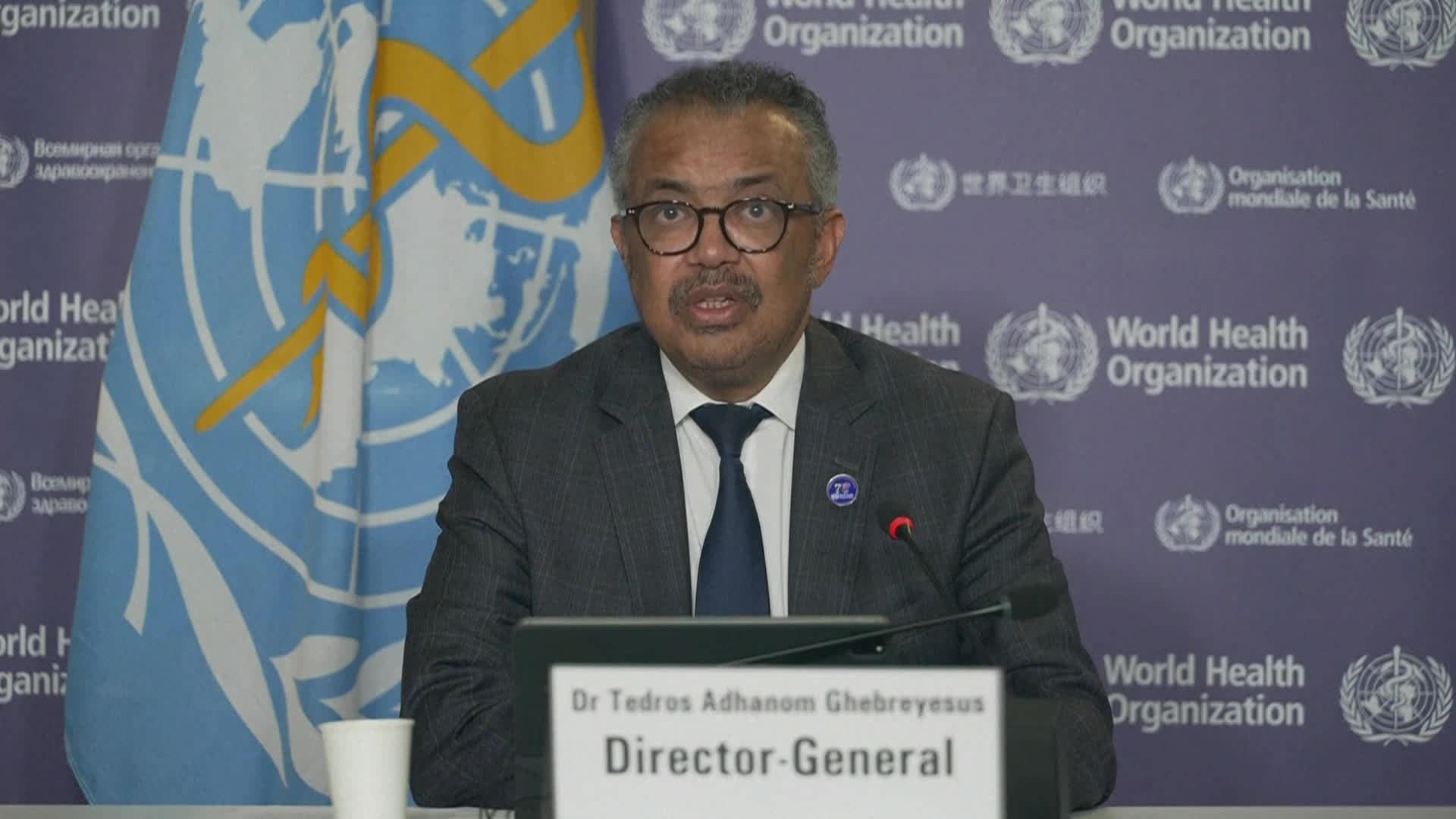
The spread of the new strain of mpox in the Democratic Republic of Congo, “its detection in neighboring countries that had not previously reported, and the potential for further spread within Africa and beyond is very worrying,” WHO Director-General Tedros Adhanom Ghebreyesus said in a briefing Wednesday.
Tedros last called mpox a public health emergency of international concern in May 2022, when cases of a milder strain erupted globally. When the WHO lowered its alert level a year later, cases in Africa continued to increase.
Now a mutated strain of mpox — a virus that causes unsightly, painful rashes and lesions — has spread to at least six African countries, infecting about 15,000 people and killing more than 500 in the DRC this year alone. The variant was first reported in the DRC less than 12 months ago.
A public health emergency of international concern applies to an extraordinary event that carries a risk via the spread of a disease across borders — one that potentially requires a coordinated response. It can be used to encourage nations to cooperate on countermeasures such as procuring vaccines.
The decision came after a panel was convened to evaluate the outbreak and the recommendation was unanimous. The declaration drove up US-traded shares of mpox vaccine maker Bavarian Nordic A/S 45% as of 2:53 p.m. in New York.
WHO officials and advisers are drafting guidance for affected countries, said Maria Van Kerkhove, the head of emerging diseases and zoonoses in the agency's emergency program. WHO has developed a regional response plan requiring an initial $15 million. It's already released about $1.5 million from a contingency fund for emergencies, and plans to release more in the coming days as it appeals to donors to fund the rest of the response plan.
The Africa Centres for Disease Control and Prevention declared a continent-wide public health emergency Tuesday, as the region's main health advisory body moved to marshal resources. It was the first time the regional body declared an emergency since receiving the power from its member states last year.
Mpox is a less contagious cousin of smallpox with generally milder symptoms, although it still kills about 3% to 6% of patients in reported cases. It can cause blindness and disfigurement and poses high risks to children, pregnant people and people with weak immune systems, such as those infected with HIV.
Close contact with the virus from an infected person or animal — such as touching a lesion or contaminated object — is the main pathway of transmission. While it can be spread through sexual contact, it isn't considered a sexually transmitted disease as there are other avenues of spread. There are no confirmed instances of airborne transmission, although multiple modes of spread are being investigated and better surveillance and data on this variant is needed, Van Kerkhove said.
“WHO is committed in the days and weeks ahead to coordinate the global response, working closely with each of the affected countries and leveraging our on-the-ground presence to prevent transmission, treat those infected and save lives,” Tedros said.
--With assistance from Sophia Vahanvaty.
(Updates with Africa CDC declaration in eighth paragraph.)
More stories like this are available on bloomberg.com
©2024 Bloomberg L.P.

-
'Never Seen This Level Of Negativity': Sandeep Tandon Says The Next Rally May Be Closer Than You Think

Veteran investor Sandeep Tandon says foreign selling is easing, large-caps are due a comeback and mid-caps are crowded, while he turns positive on gold, power and pharma this Diwali.
-
Indians Stay With Family, Not In Hotels | The Reason Why
India still lacks enough clean, reliable and affordable hotels for budget-conscious travellers.
-
The Economic Imperative: Analysing The Material Driving Force Behind India-Canada Strategic Reset
This economic complementarity is further reinforced by deep institutional investment ties and talent mobility, which form the bedrock of the bilateral framework.
-
Medicine Pricing: Where Must Profit Stop?
India must confront excessive margins, hidden incentives and regulatory gaps that threaten the integrity of medicine.
-
Why Amazon And Flipkart Are Struggling To Beat Meesho In India's Smaller Cities
With 274 million users and lowest-cost logistics, Meesho is defending its value commerce crown against giants like Amazon and Flipkart.
-
High US Salaries, No Green Card Certainty: The Financial Calculation Facing Indian H-1B Families
The suspension of PERM processing at eight technology employers does not cancel existing H-1B visas. What it does is force a question many Indian families have been avoiding: is the US salary worth tying your career and family plans to one employer?
-
Swiggy vs Eternal: Food Delivery's Two Rivals Are No Longer In The Same Race
Eternal is building a private AI assistant, dark.ai. Swiggy is still working out how to make Instamart pay, with an operating loss of Rs 895 crore in the July-September quarter while Blinkit stayed profitable.
-
Where You Live Shapes How You Get To Work | The Reason Why
Two-wheelers are the most popular way to get to work in India, accounting for nearly 43% of workplace commutes.
-
Unhedged Position: Can India See An Indonesia-Style Time Correction?
The Nifty is trading below levels it first clocked in 2024. Is there, then, as I have suggested in the headline, potential that the current time correction drags on painfully for the next three-five, even ten years?
-
Navigating Friction And Energy Realities: An Analysis Of Marco Rubio's October Visit To India
Occurring at a critical juncture marked by stalled trade negotiations and escalating geopolitical pressures over global energy supplies, the visit offers a profound window into modern US-India relations.










