White House Limits Newswires In Press Pool Takeover
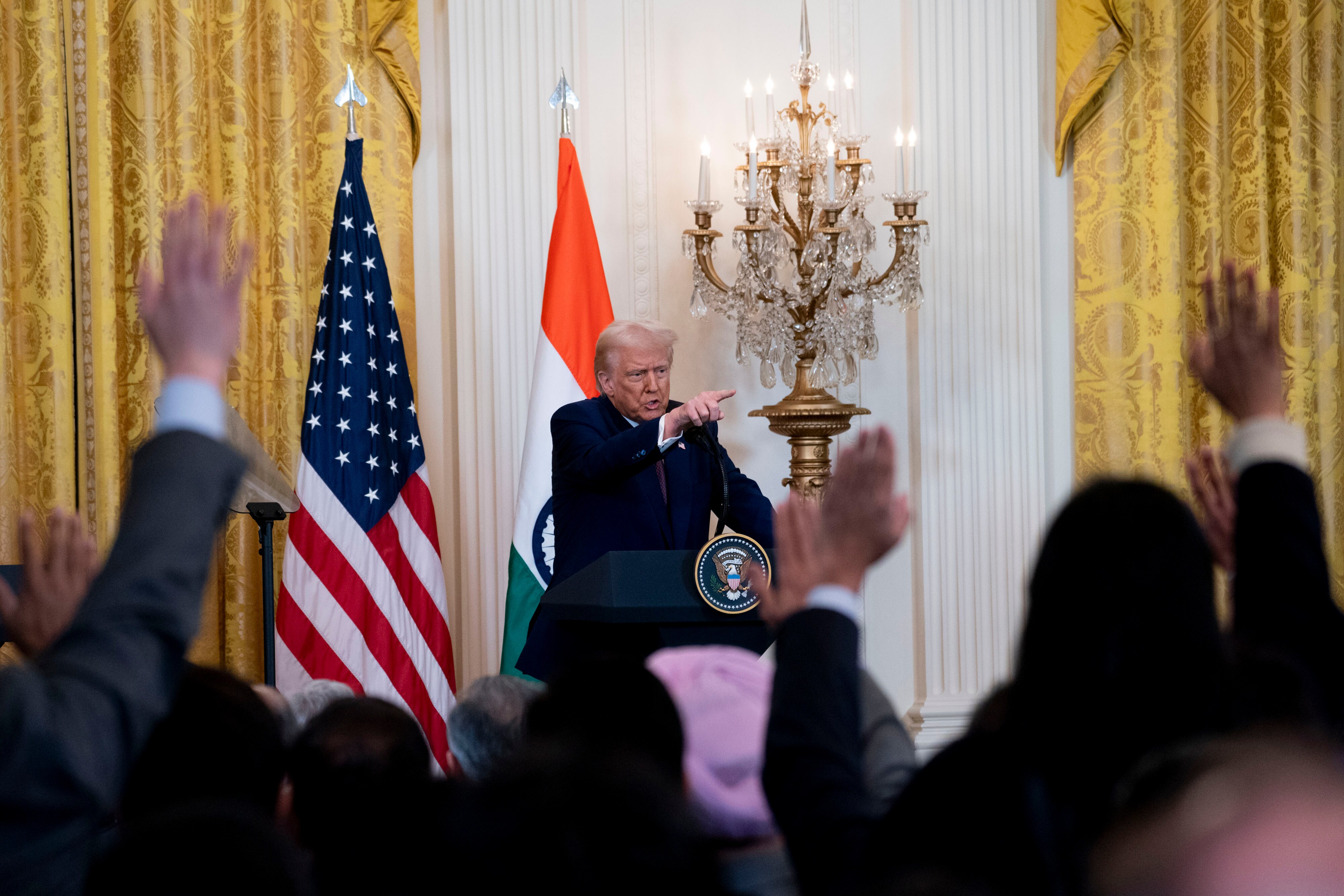
The White House handpicked the first group of outlets for a new system of media access in which it chooses who is able to cover President Donald Trump in certain settings, limiting the role of the three main newswires that traditionally distribute news of the presidency around the world.
Using slots that traditionally would be assigned to the Associated Press and Reuters, the White House added Newsmax and Blaze Media to the so-called press pool for Wednesday. And instead of the HuffPost, which was next up in the rotation of print outlets, the administration invited Axios to serve as the print representative.
Bloomberg News was the wire service chosen for the first day of the new pooling system, according to a schedule released by the White House. Traditionally, the AP, Reuters and Bloomberg are all included every day. The White House has not said how the pool will be chosen going forward.
The editors of the three news agencies - Julie Pace of The Associated Press, Alessandra Galloni of Reuters and John Micklethwait of Bloomberg News - released a joint statement on Wednesday objecting to the decision.
“The three permanent wires in the White House pool, The Associated Press, Bloomberg News and Reuters, have long worked to ensure that accurate, fair and timely information about the presidency is communicated to a broad audience of all political persuasions, both in the United States and globally. Much of the White House coverage people see in their local news outlets, wherever they are in the world, comes from the wires,” the statement said.
“It is essential in a democracy for the public to have access to news about their government from an independent, free press. We believe that any steps by the government to limit the number of wire services with access to the president threatens that principle. It also harms the spread of reliable information to people, communities, businesses and global financial markets that heavily depend on our reporting.”
For decades the White House Correspondents' Association, which represents hundreds of journalists covering the presidency, has managed the selection and rotation of reporters who are allowed into environments with limited space, like the Oval Office and Air Force One. Being in the pool often gives outlets the opportunity to ask the president questions directly.
On Tuesday, the White House said that it was taking control of who would have that access.
White House Press Secretary Karoline Leavitt said that going forward, her staff would determine the pool and include “legacy outlets who have participated in the press pool for decades” as well as “well-deserving outlets who have never been allowed to share in this awesome responsibility.”
“This move tears at the independence of a free press in the United States,” WHCA president Eugene Daniels said in an emailed statement Tuesday. “It suggests the government will choose the journalists who cover the president. In a free country, leaders must not be able to choose their own press corps.”
Leavitt said the pool would continue to have a rotation that also includes at a minimum a print outlet, a radio outlet and one major television network. She offered few details on how participation would be determined.
The new system, announced at a White House press briefing, came a day after a federal court hearing in which the Associated Press asked for a temporary restraining order seeking to halt White House efforts to block them from the press pool. The federal judge hearing the case denied that request, but warned the government that case law suggested it would struggle to defend excluding the AP under the existing system. By taking control of the pool system, the White House may avoid legal challenges to excluding certain outlets.
The dispute between the White House and the AP stems from the Trump administration's move to block the nearly 180-year-old newswire from participating in pool events because its style guide continues to use the “Gulf of Mexico” while acknowledging the name “Gulf of America,” which is what Trump ordered federal officials to use.

-
Getting To Work Costs Women More | The Reason Why

It is not just about women paying more than men. It is about women paying much more in cities than in villages.
-
AI Bias In Investing Cannot Be Eliminated, But It Can Be Governed
Framing is a particularly important example as identical financial information presented in terms of gains rather than losses can lead an LLM to reach a different assessment.
-
Joining The Dots | Dark Skies, Steady Diya: Why Hope Holds This Diwali
With war, a weak rupee and foreign outflows weighing on sentiment, policymakers at the NDTV World Summit and market veterans at NDTV Profit Ignite: Diwali Edition offered the same advice: stay invested and filter out the noise.
-
The Curious Case of Equitas Small Finance Bank And A CEO Who Quit For Stock
PN Vasudevan believes persistent investor concerns over a perceived conflict of interest had become a governance overhang on Equitas Small Finance Bank's stock, even as the lender improved profitability and asset quality.
-
Talking Points This Week: AI Cash Burn, A Tiger Comeback And An India That Still Finds Its Own Path
India is not immune to higher oil or tighter global liquidity, yet its earnings base is broader, its domestic policy levers are still available.
-
Foreign Investors Own Half Of HDFC Bank and ICICI Bank. An LTCG Cut Could Matter Most Here
Foreign portfolio investors have US$115 billion parked in HDFC Bank, ICICI Bank. If the government cuts long-term capital gains tax, Jefferies says returning foreign money could land here first.
-
'Never Seen This Level Of Negativity': Sandeep Tandon Says The Next Rally May Be Closer Than You Think
Veteran investor Sandeep Tandon says foreign selling is easing, large-caps are due a comeback and mid-caps are crowded, while he turns positive on gold, power and pharma this Diwali.
-
Indians Stay With Family, Not In Hotels | The Reason Why
India still lacks enough clean, reliable and affordable hotels for budget-conscious travellers.
-
The Economic Imperative: Analysing The Material Driving Force Behind India-Canada Strategic Reset
This economic complementarity is further reinforced by deep institutional investment ties and talent mobility, which form the bedrock of the bilateral framework.
-
Medicine Pricing: Where Must Profit Stop?
India must confront excessive margins, hidden incentives and regulatory gaps that threaten the integrity of medicine.










