What Next For Oil After Surprise OPEC+ Cuts? Try $100 A Barrel

(Bloomberg) -- Sunday's surprise OPEC+ production cuts have redefined the outlook for crude prices, bringing $100 a barrel back into the frame.
Prior to the announcement, the cartel's own numbers suggested the group would need to pump more oil, not less, in the second half. With the International Energy Agency expecting a demand surge later this year, there's now renewed risk of a fresh inflationary impetus for the global economy.
“There's a bullish narrative,” Bob McNally, president of Rapidan Energy Group and a former White House energy official, said in a Bloomberg TV interview on Monday. “If they cut into a bullish narrative, then $100 — we'll go through it at high speed.”
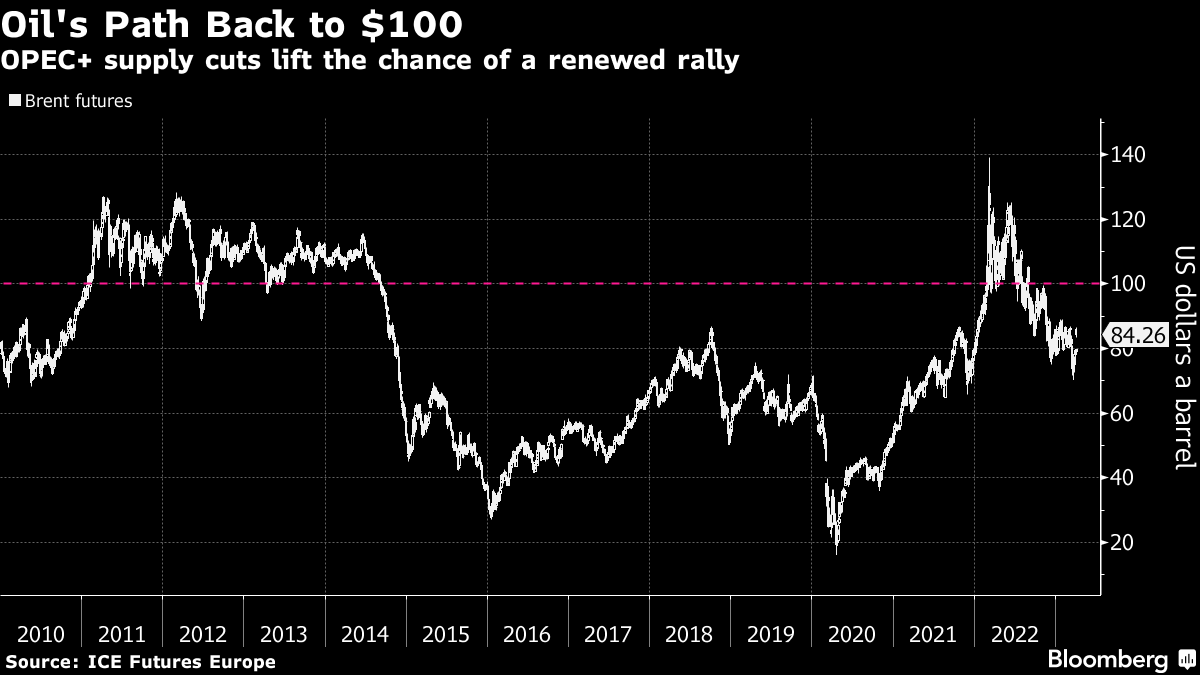
The supply curbs announced over the weekend shocked traders and analysts, spooking any remaining short-sellers left in the market. Brent crude, the international benchmark, surged as much as 8.4% on Monday, before paring gains to trade about 5% higher at $83.94 a barrel as of 10:22 a.m. in London.
It wasn't just a surprise because the decision to cut had been so tightly guarded. It also also came at a time when the oil price was turning higher after a sluggish first quarter, and OPEC+ ministers were giving public assurances that they would stick to their production targets for the entire year.
Plot Twists
Still, the Organization of Petroleum Exporting Countries and its allies have caught oil markets unawares before. RBC Capital Markets Chief Commodities Strategist Helima Croft has even dubbed Saudi Energy Minister Abdulaziz bin Salman as the “prince of plot twists.”
The last time OPEC+ drew criticism for an unexpected production cut, its approach was ultimately vindicated. The supply reduction of 2 million barrels a day agreed in October pre-empted a soft patch in global demand. Oil stockpiles built steadily in the months that followed, suggesting there could have been larger price declines without the curbs.
This time around, the producer group's move has been spurred in part by a deteriorating global economy and banking crisis, two things closely linked to high inflation and rising interest rates.
“We see a lot of uncertainties today, and that was noted at the meeting,” Russian Deputy Prime Minister Alexander Novak said in an interview with Rossiya 24 TV after online talks of the OPEC+ Joint Ministerial Monitoring Committee. “We see that the banking crisis in Europe and the United States strongly affects the oil market.”
The decision to cut production would reduce the potential for a slump if a full-blown recession hits later in the year. Yet it also increases the chances of a short-term crude price spike, which would stoke the inflationary forces that have wreaked such havoc in the global economy.
“OPEC+'s actions are clearly focused on shoring up a market that was looking increasingly weaker,” Citigroup Inc. analysts including Ed Morse wrote in a report. “Given market positioning and short covering, a spike now seems inevitable, but could be followed by realization that the market is a lot weaker than people think.”
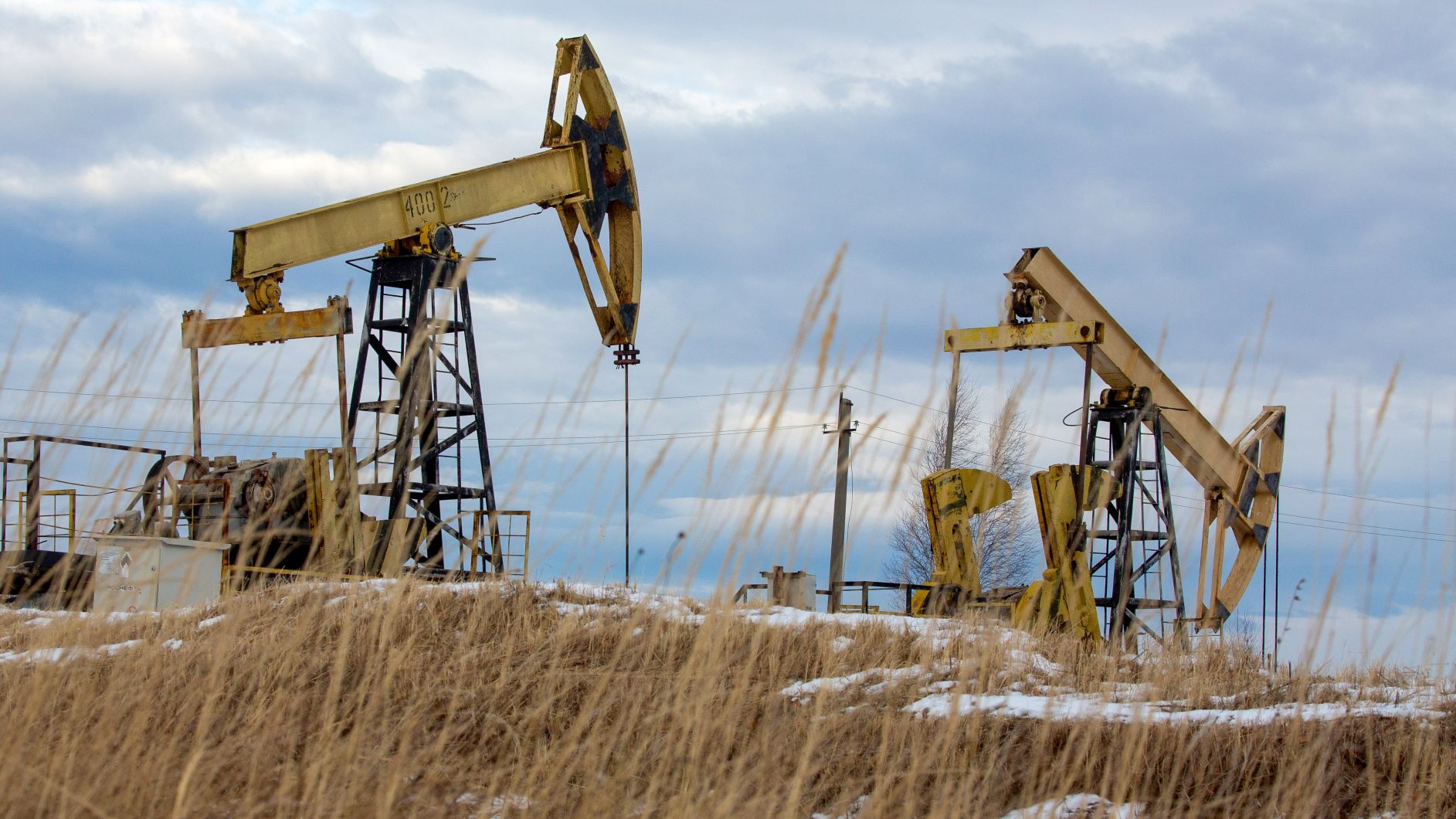
The OPEC+ agreement is likely to deter speculators from betting against higher prices in the short-term.
Just two weeks ago, money managers had their largest short position in Brent and West Texas Intermediate crude since November 2020. The last time they made such a big bet against oil prices, Saudi Arabia's Prince Abdulaziz said he wanted those leave those speculators “ouching like hell.”
Options markets are now showing a bullish shift in sentiment. The most-held Brent crude options contract over the next 12 months allows the holder to buy futures at $100, with the equivalent of almost 140 million barrels of open interest, according to ICE Futures Europe data.
Stockpile Surplus
Beyond the initial market reaction in the hours after the OPEC+ announcement, the key marker for the physical impact of the cuts and the price trends in the coming months will be oil inventories.
There had been signs that stockpiles were in decline in recent weeks. In the US — where official figures are most visible because they are published weekly — oil stocks dropped by more than 20 million barrels over the last two weeks. Global onshore inventories had fallen in seven of the last nine weeks, according to Vortexa.
But there is still a long way to go. At the start of April, global onshore crude stockpiles were still about 140 million barrels above the level seen a year earlier, Kayrros data show. Taking an extra million barrels a day of supply out of the market in a period when demand should steadily ramp up will erode that surplus.
“The move is extremely bullish as draws on inventories will be immediate,” said Nadia Martin Wiggen, an analyst at Pareto Securities. “This cut proves again that OPEC+ is proactive in managing the supply-demand balance and requires $90 to $100 a barrel.”
Read More: $100 Oil to Tighter Markets: Top Analysts Weigh In on OPEC+ Cuts
--With assistance from Manus Cranny.
(Updates with comment from Russia's Novak in ninth paragraph.)
More stories like this are available on bloomberg.com
©2023 Bloomberg L.P.

-
The Economic Imperative: Analysing The Material Driving Force Behind India-Canada Strategic Reset

This economic complementarity is further reinforced by deep institutional investment ties and talent mobility, which form the bedrock of the bilateral framework.
-
Medicine Pricing: Where Must Profit Stop?
India must confront excessive margins, hidden incentives and regulatory gaps that threaten the integrity of medicine.
-
Why Amazon And Flipkart Are Struggling To Beat Meesho In India's Smaller Cities
With 274 million users and lowest-cost logistics, Meesho is defending its value commerce crown against giants like Amazon and Flipkart.
-
High US Salaries, No Green Card Certainty: The Financial Calculation Facing Indian H-1B Families
The suspension of PERM processing at eight technology employers does not cancel existing H-1B visas. What it does is force a question many Indian families have been avoiding: is the US salary worth tying your career and family plans to one employer?
-
Swiggy vs Eternal: Food Delivery's Two Rivals Are No Longer In The Same Race
Eternal is building a private AI assistant, dark.ai. Swiggy is still working out how to make Instamart pay, with an operating loss of Rs 895 crore in the July-September quarter while Blinkit stayed profitable.
-
Where You Live Shapes How You Get To Work | The Reason Why
Two-wheelers are the most popular way to get to work in India, accounting for nearly 43% of workplace commutes.
-
Unhedged Position: Can India See An Indonesia-Style Time Correction?
The Nifty is trading below levels it first clocked in 2024. Is there, then, as I have suggested in the headline, potential that the current time correction drags on painfully for the next three-five, even ten years?
-
Navigating Friction And Energy Realities: An Analysis Of Marco Rubio's October Visit To India
Occurring at a critical juncture marked by stalled trade negotiations and escalating geopolitical pressures over global energy supplies, the visit offers a profound window into modern US-India relations.
-
India Exports Capital. Why Not Export Trusteeship?
The big question, then, is whether India can build an institution that global borrowers, investors, banks, and lawyers can trust, even without an Indian connection.
-
France's Economy & Politics Are In Crisis | The Reason Why
Let's look at how the French economy and politics evolved under Nicolas Sarkozy, Franois Hollande and Emmanuel Macron.










