Western Alliance Falls On Lack Of Details On Deposit Balance
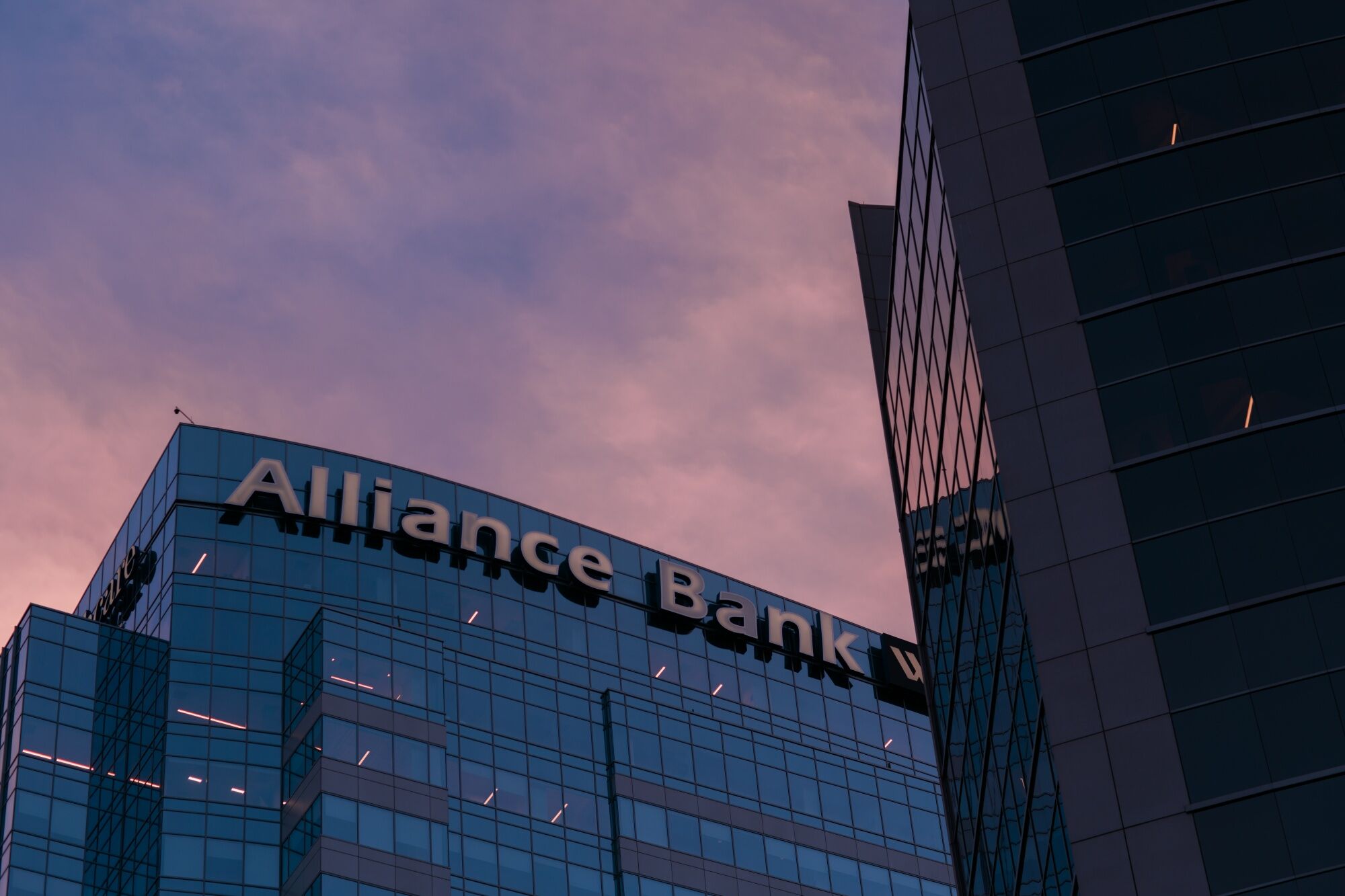
(Bloomberg) -- Western Alliance Bancorp fell as much as 12% after the regional bank updated its financial disclosures without saying more about its deposit balance.
“Investors are likely to come to the conclusion that management didn't provide a deposit balance because it's not good news,” Casey Haire, an analyst at Jefferies Financial Group Inc., said in a note to clients. “This is the fourth update since March 10 and the only one that does not explicitly address deposits.”
Investors have been focused on the metric after a run on deposits contributed to the collapse of three lenders last month. Deposits at smaller US banks slumped $120 billion in the week through March 15 while those for the 25 largest firms rose almost $67 billion, Federal Reserve data show. Outflows at US lenders more broadly continued the following week, with $125.7 billion withdrawn, though smaller banks posted a slight increase. Many customers are also shifting their funds to higher-yielding alternatives, adding to the pressure on regional banks.
Western Alliance's insured deposits represented about 68% of the bank's total as of March 31, the Phoenix-based company said in a statement after the market closed Tuesday. That was higher than the 55% the bank disclosed as of March 16, according to Bloomberg Intelligence, which also pointed to liquidity levels sufficient to cover a “healthy” 140% of uninsured deposits.

But without giving an explicit deposit balance, the update raises more questions than answers and is likely to “frustrate investors,” Haire at Jefferies said.
Shares of the company, which are down 50% this year, slid 10% to $30.06 at 9:48 a.m. in New York, after earlier dropping as much as 12%.
A representative for Western Alliance didn't immediately respond to a request for comment left before normal business hours.
Deposit Estimate
David Chiaverini, an analyst at Wedbush Securities Inc., estimated that deposits at Western Alliance could have dropped about 15% in the first quarter, compared with a prior estimate of a 9% decline.
In its update, Western Alliance said it had no borrowings outstanding from the Federal Reserve's discount window “after balance sheet repositioning,” and its CET1 ratio is expected to be “materially consistent with year-end 2022.”
Unrealized losses on securities-held-for-investment loans improved to $2.9 billion on a pretax basis from $4.2 billion at the end of 2022 “primarily due to lower interest rates,” the company said in the statement. Residential loans are the primary contributor to unrealized losses on the bank's held-for-investment loans, it said.
--With assistance from Greg Chang, Sridhar Natarajan and Max Reyes.
(Updates share price in first and sixth paragraphs.)
More stories like this are available on bloomberg.com
©2023 Bloomberg L.P.

-
The Economic Imperative: Analysing The Material Driving Force Behind India-Canada Strategic Reset

This economic complementarity is further reinforced by deep institutional investment ties and talent mobility, which form the bedrock of the bilateral framework.
-
Medicine Pricing: Where Must Profit Stop?
India must confront excessive margins, hidden incentives and regulatory gaps that threaten the integrity of medicine.
-
Why Amazon And Flipkart Are Struggling To Beat Meesho In India's Smaller Cities
With 274 million users and lowest-cost logistics, Meesho is defending its value commerce crown against giants like Amazon and Flipkart.
-
High US Salaries, No Green Card Certainty: The Financial Calculation Facing Indian H-1B Families
The suspension of PERM processing at eight technology employers does not cancel existing H-1B visas. What it does is force a question many Indian families have been avoiding: is the US salary worth tying your career and family plans to one employer?
-
Swiggy vs Eternal: Food Delivery's Two Rivals Are No Longer In The Same Race
Eternal is building a private AI assistant, dark.ai. Swiggy is still working out how to make Instamart pay, with an operating loss of Rs 895 crore in the July-September quarter while Blinkit stayed profitable.
-
Where You Live Shapes How You Get To Work | The Reason Why
Two-wheelers are the most popular way to get to work in India, accounting for nearly 43% of workplace commutes.
-
Unhedged Position: Can India See An Indonesia-Style Time Correction?
The Nifty is trading below levels it first clocked in 2024. Is there, then, as I have suggested in the headline, potential that the current time correction drags on painfully for the next three-five, even ten years?
-
Navigating Friction And Energy Realities: An Analysis Of Marco Rubio's October Visit To India
Occurring at a critical juncture marked by stalled trade negotiations and escalating geopolitical pressures over global energy supplies, the visit offers a profound window into modern US-India relations.
-
India Exports Capital. Why Not Export Trusteeship?
The big question, then, is whether India can build an institution that global borrowers, investors, banks, and lawyers can trust, even without an Indian connection.
-
France's Economy & Politics Are In Crisis | The Reason Why
Let's look at how the French economy and politics evolved under Nicolas Sarkozy, Franois Hollande and Emmanuel Macron.










