Violence Cost India’s GDP Over $1 Trillion Last Year
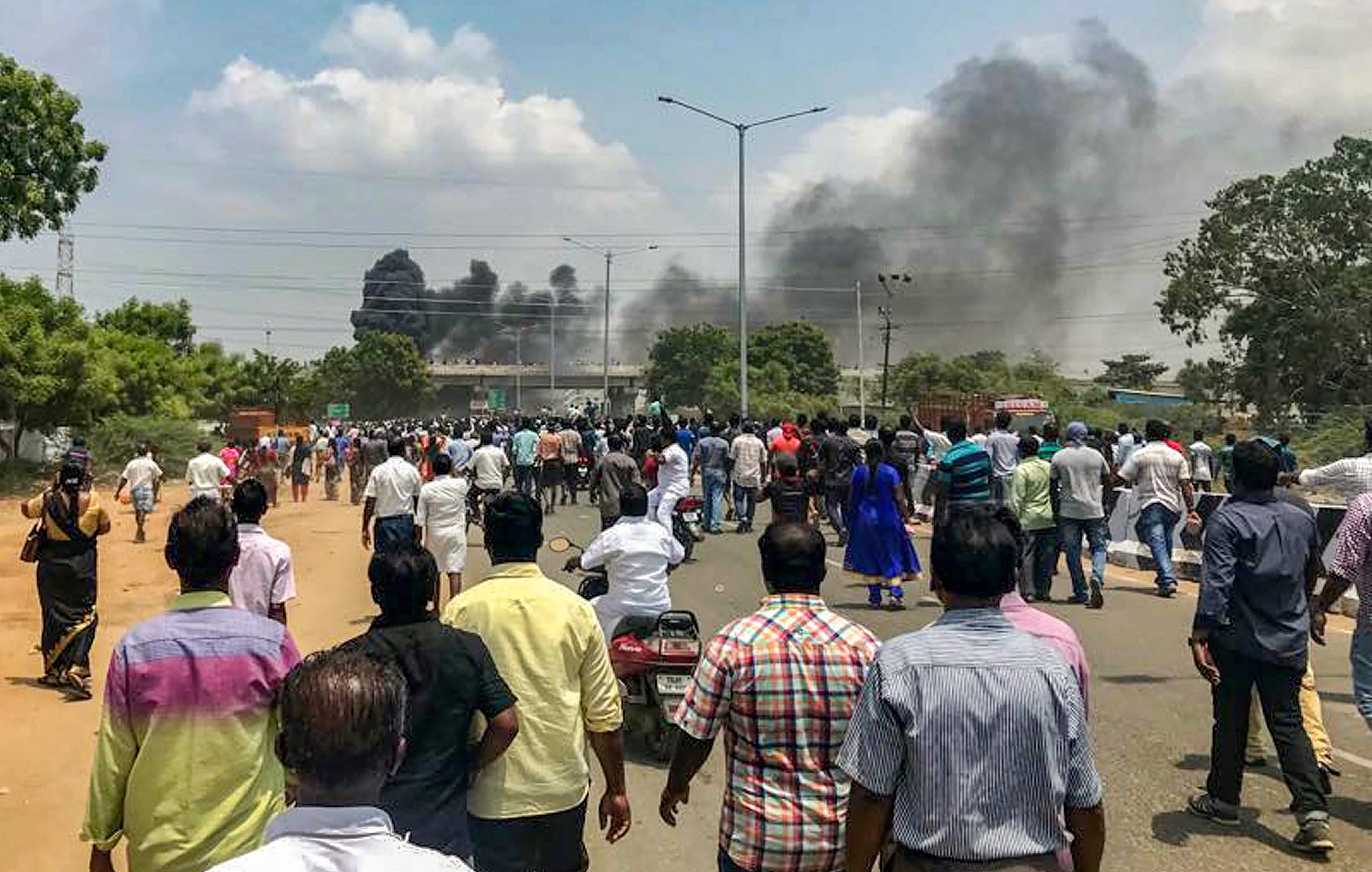
Violence cost the Indian economy $1.19 trillion (over Rs 80 lakh crore) last year in constant purchasing power parity terms, which amounts to roughly $595.4 per person, according to a report.
The findings are part of the report prepared by the Institute for Economics and Peace based on an analysis of 163 countries and territories.
Violence impacted $1,190.51 billion to the Indian economy in 2017, 9 percent of the country's gross domestic product or $595.4 (over Rs 40,000) per person.
The economic impact of violence to the global economy was $14.76 trillion in 2017, in PPP terms. This is equivalent to 12.4 percent of GDP, or $1,988 per person.
The global economic impact of violence is defined as the expenditure and economic effect related to containing, preventing and dealing with the consequences of violence.
The estimates include the direct and indirect cost of violence as well as an economic multiplier. “The multiplier effect calculates the additional economic activity that would have accrued if the direct costs of violence had been avoided,” the report said.
According to the report, human beings encounter conflict regularly whether at home, at work, among friends, or on a more systemic level between ethnic, religious or political groups. But the majority of these conflicts do not result in violence.
The fall in peacefulness over the decade was caused by a wide range of factors, including increased terrorist activity, the intensification of conflicts in the Middle East, rising regional tensions in Eastern Europe and northeast Asia, and increasing numbers of refugees and heightened political tensions in Europe and the U.S., it said.
About the Asia-Pacific region, it said it remained the third-most peaceful region in the world despite a slight fall in its overall peacefulness. There were notable improvements in both internal and external conflicts fought and relations with neighbouring countries, but violent crime, terrorism impact, political instability and political terror all deteriorated across the region.
For South Asia, the report said strengthening scores on the political terror scale, refugees and internally displaced person and terrorism impact were only partially offset by a deterioration in external conflicts fought after a border dispute with China flared in the Doklam Pass. The three-month standoff also involved India, which sent troops to the area, it said.
In this region, the two least peaceful nations—Afghanistan and Pakistan—continued their decline. Bangladesh and Myanmar also saw deterioration, including due to the Rohingya crisis.
“Total economic impact of violence (globally) was higher in 2017 than at any point in the last decade,” the report said, adding the global economic impact of violence increased 2.1 percent from 2016 to 2017, mainly due to a rise in internal security expenditure.
Syria topped the list of most affected countries by economic cost of violence as a percentage of GDP at 68 percent, followed by Afghanistan (63 percent), Iraq (51 percent) in the second and third positions, respectively.
Others in the 10 most affected countries by economic cost of violence include El Salvador, South Sudan, Central African Republic, Cyprus, Colombia, Lesotho and Somalia.
The report said there has been a widening “prosperity gap” between less and more peaceful countries. Since 1960, the most peaceful countries have, on average, seen their per capita GDP grow by an annual rate of 2.8 percent.
On the other hand, less peaceful countries have experienced an economic stagnation. Their annual per capita GDP has, on average, grown by just 1 percent over the last seven decades.
Switzerland is the least affected country in terms of economic cost of violence, followed by Indonesia and Burkina Faso.
Among emerging markets violence impacted $1,704.62 billion to the Chinese economy, Brazil ($511,364.9 million), Russia ($1,013.78 billion) and South Africa ($239,480.2 million).
Among developed nations, for the U.S., the cost of violence in terms of PPP was $2.67 trillion or 8 percent of the GDP. For the U.K., it was 312.27 billion, 7 percent of GDP.

-
Getting To Work Costs Women More | The Reason Why

It is not just about women paying more than men. It is about women paying much more in cities than in villages.
-
AI Bias In Investing Cannot Be Eliminated, But It Can Be Governed
Framing is a particularly important example as identical financial information presented in terms of gains rather than losses can lead an LLM to reach a different assessment.
-
Joining The Dots | Dark Skies, Steady Diya: Why Hope Holds This Diwali
With war, a weak rupee and foreign outflows weighing on sentiment, policymakers at the NDTV World Summit and market veterans at NDTV Profit Ignite: Diwali Edition offered the same advice: stay invested and filter out the noise.
-
The Curious Case of Equitas Small Finance Bank And A CEO Who Quit For Stock
PN Vasudevan believes persistent investor concerns over a perceived conflict of interest had become a governance overhang on Equitas Small Finance Bank's stock, even as the lender improved profitability and asset quality.
-
Talking Points This Week: AI Cash Burn, A Tiger Comeback And An India That Still Finds Its Own Path
India is not immune to higher oil or tighter global liquidity, yet its earnings base is broader, its domestic policy levers are still available.
-
Foreign Investors Own Half Of HDFC Bank and ICICI Bank. An LTCG Cut Could Matter Most Here
Foreign portfolio investors have US$115 billion parked in HDFC Bank, ICICI Bank. If the government cuts long-term capital gains tax, Jefferies says returning foreign money could land here first.
-
'Never Seen This Level Of Negativity': Sandeep Tandon Says The Next Rally May Be Closer Than You Think
Veteran investor Sandeep Tandon says foreign selling is easing, large-caps are due a comeback and mid-caps are crowded, while he turns positive on gold, power and pharma this Diwali.
-
Indians Stay With Family, Not In Hotels | The Reason Why
India still lacks enough clean, reliable and affordable hotels for budget-conscious travellers.
-
The Economic Imperative: Analysing The Material Driving Force Behind India-Canada Strategic Reset
This economic complementarity is further reinforced by deep institutional investment ties and talent mobility, which form the bedrock of the bilateral framework.
-
Medicine Pricing: Where Must Profit Stop?
India must confront excessive margins, hidden incentives and regulatory gaps that threaten the integrity of medicine.










