(Bloomberg) -- The US unveiled its biggest one-day sanctions package against Russia since the invasion of Ukraine two years ago, targeting more than 500 people and entities in a fresh bid to squeeze the country's economy and send a message over the death of dissident Alexey Navalny.
Sanctioned people and entities included Russia's Mir payment system, a military drone manufacturer and its top staff, and three people linked to Navalny's death earlier this month in a Russian prison. A State Department advisory said the moves - which also included pressure on Russia's state-owned atomic energy company Rosatom Corp. — were aimed at “imposing additional costs on Russia for both its internal repression and foreign aggression” led by President Vladimir Putin.
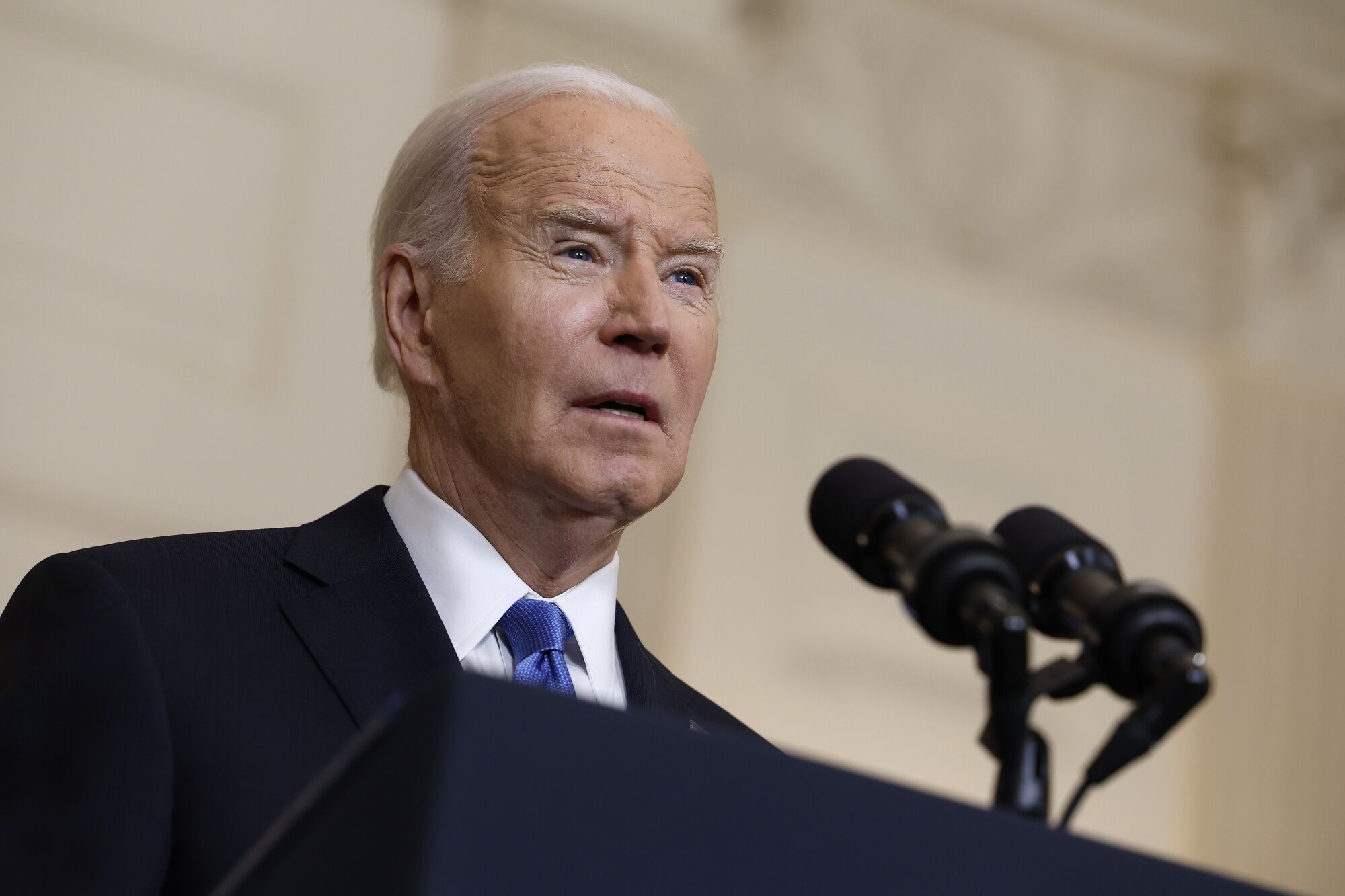
“That's why I'm announcing more than 500 new sanctions in response to Putin's brutal war of conquest, in response to Alexey Navalny's death,” President Joe Biden said Friday at the White House. “We can't walk away now. That's what Putin is betting on.”
Just as important was what was left off the list: the US largely avoided sanctions on Russia's metals sector and held off major sanctions on energy amid wariness of economic shocks in an election year. That led to forecasts that Russia's economy — which has largely withstood the sanctions campaign — would only continue to grow.
“The latest announcements mark only an incremental tightening of the sanctions regime and we still estimate that Russia's economy will expand by around 1% to 1.5% in 2024,” Alexander Isakov, Russia economist at Bloomberg Economics, said in a note. Sanctions on Mir will complicate Russia's access to western technology “but aren't likely to close those channels completely.”
The US has already imposed sweeping sanctions affecting whole swaths of Russia's economy and prominent oligarchs following the invasion of Ukraine. It's acted in concert with European allies, which have also imposed about a dozen sanctions packages in a complementary bid to punish Putin and crimp his forces' ability to wage war.
In fact, the Kremlin's calculation that it would be able to outlast US resolve appears to be paying off as billions in aid is stalled in the approval process in Congress, leaving Ukrainian troops short of the shells they need to hold off Putin's forces.
Ukraine presidential adviser Mikhailo Podolyak said the only action that will scare Putin or Russia's elites is to provide more weapons.
“Lots of weapons,” Podolyak wrote on X. “A really big amount of weapons for Ukraine. Long-range, anti-missile, anti-marine weapons. The rest is a fiction, delayed awareness, chronicling of the process, prolongation of the war.”
Read More: The Oil Was From Iran. The Insurance Was From New York City
None of the people or entities targeted Friday were especially well known. That highlighted how the US and European nations have already imposed harsh penalties and export controls on the most significant sectors of the Russian economy in the days after the invasion.
That includes freezing the country's central bank assets and cutting several of its banks off the Swift financial messaging system. A price cap on Russian oil was introduced in the summer of 2022 and implemented in December of that year, targeting Putin's most lucrative commodity.
At the same time, the US has held off a more severe clampdown on Russian oil sales for fear of causing a surge in crude prices — a politically perilous scenario during an election year. The US has also resisted singling out Russia's metals sector. In 2018, aluminum surged in response to sanctions imposed on Russians including United Co. Rusal International PJSC. Those sanctions were later unwound.
Russia has also managed to defy the oil price cap, finding willing buyers among allies such as China. Other nations including North Korea and Iran have kept it supplied with munitions to press ahead with the fight in Ukraine.
At the same time, support for Ukraine is wavering the US. A bill to provide Ukraine another $60 billion in weapons and munitions is stalled in the House of Representatives, with Republican lawmakers refusing to let it go ahead. Former President Donald Trump, the presumptive Republican nominee for the 2024 presidential election, has come out strongly against it, leading many of his supporters in Congress to abandon it.
How Sanctions Have Stressed Russia's Economy, Ruble: QuickTake
The US will also take further action to enforce the price cap, Deputy Secretary Wally Adeyemo was set to say in a speech at the Council on Foreign Relations later Friday.
“In order to pay for this brutal war, the Kremlin is mortgaging the future of the Russian people,” Adeyemo will say, according to his prepared remarks. “While GDP is higher than projected, it's largely due to the 70 percent increase in military spending, which has driven inflation higher and has taken the place of critical investments in Russia's people and future.”
The sanctions also target companies that provide optics, navigational instruments, software and hardware to the Russian military.
A handful of Chinese companies, primarily microelectronics firms, were also sanctioned. Adeyemo said in a call with reporters that while US officials continue to engage with the Chinese government to try to curtail these shipments, they have increasingly gone to the companies themselves and offered them a choice between doing business with Russia or doing business with the US.
--With assistance from Akayla Gardner.
(Updates with Biden comments in third paragraph. A previous version of this story corrected the spelling of Navalny in the headline.)
More stories like this are available on bloomberg.com
©2024 Bloomberg L.P.
Essential Business Intelligence, Sharp Market Insights, Practical Personal Finance Advice, Daily Fuel, Gold and Silver Prices and Latest Stories — On NDTV Profit.