U.S. May Hike H-1B Visa Application Fee, Says Labour Secretary
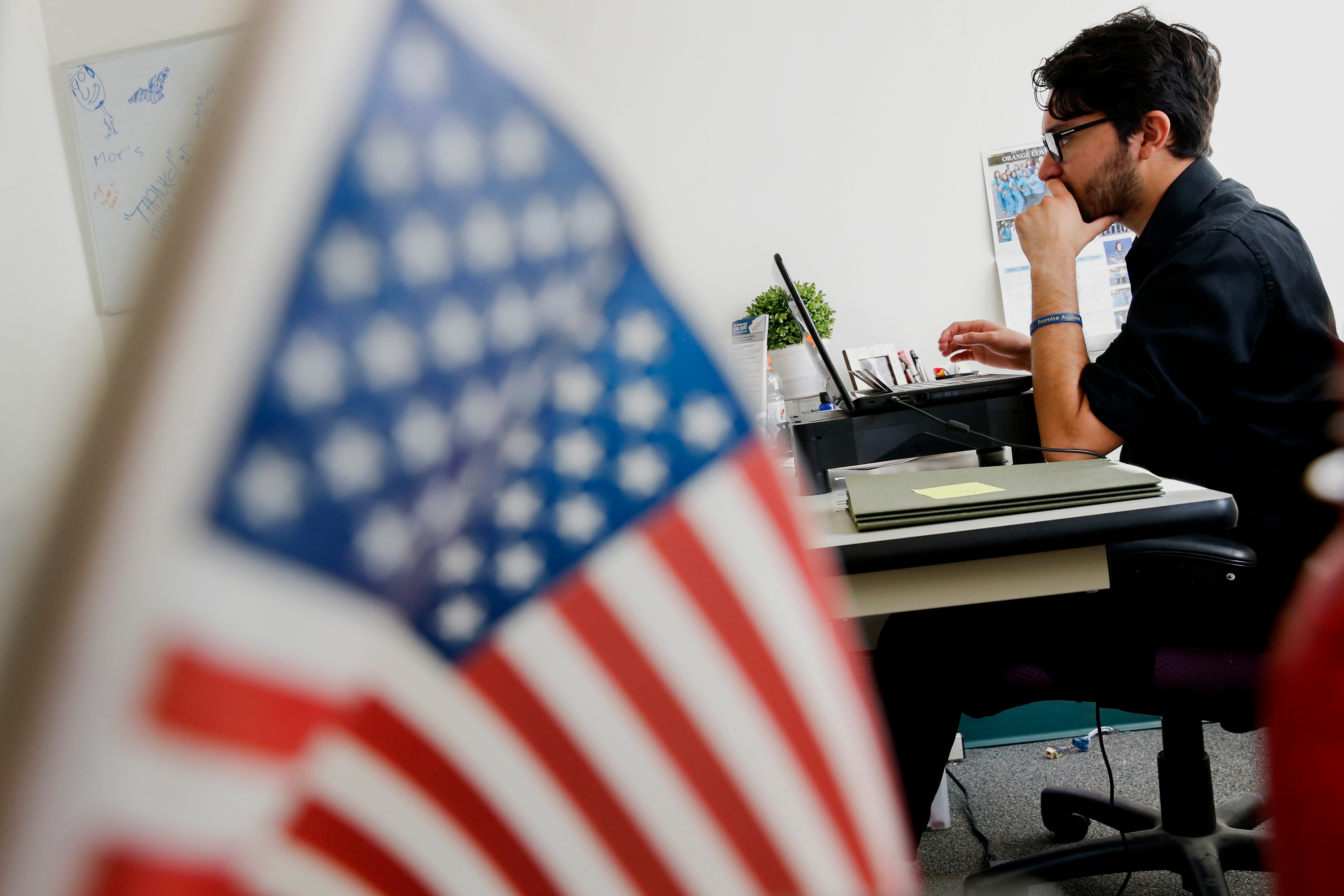
The Trump administration is proposing a hike in the H-1B visa application fee to increase funding for the expansion of an apprentice programme, which trains American youths in technology related activities, Labour Secretary Alexander Acosta told U.S. lawmakers.
Testifying before a Congressional committee on annual budget of the Department of Labour for the fiscal year 2020 beginning Oct. 1, Acosta, however, didn't give details of the proposed increase in H-1B filing fee and which categories of applicants it would be enforced on.
But given past experience, Indian information technology companies, which account for a large number of H-1B applications, are likely to face the additional financial burden because of this proposed increase in H-1B filing fees.
The H-1B visa is a non-immigrant visa that allows U.S. companies to employ foreign workers in speciality occupations that require theoretical or technical expertise. Technology companies depend on it to hire tens of thousands of employees each year from countries like India and China.
Arguing that foreigners hurt American workers by competing for jobs and driving down wages, the Trump administration has tightened the noose around the H-1B visa programme. The Seattle Times on Monday reported that last year immigration officials denied nearly one out of every four requests for new visas for skilled foreign workers.
In FY 2020, the Department's budget includes $160 million to continue our expansion of apprenticeship programmes, along with a proposal to increase H-1B fee revenues to fund additional apprenticeship activities, Acosta said in his testimony on May 2 before the Senate Appropriations Committee Subcommittee on Labour, Health and Human Services, Education and Related Agencies.
Acosta told lawmakers that last year the Department of Labour had launched the first-ever sector-based apprenticeship grant funding opportunity to invest $150 million to expand apprenticeships in those in-demand industry sectors most often filled by individuals on H-1B visas, such as information technology, health care and advanced manufacturing.
This grant funding opportunity introduced an innovative approach: a 35 percent private-sector match requirement. This brings the total investment to $202.5 million, $57.7 million coming from the private sector, he said.
“As a result of this private sector match requirement, educators have a greater incentive to join with industry to ensure curricula address the needs of our ever-changing workplace, investing in the latest technologies and techniques, and providing more in-demand opportunities for Americans,” Acosta said.
On July 18 last year, the Department of Labour had announced $150 million in H-1B funds to support sector-based approaches to expanding apprenticeships on a national scale in key industry sectors.
The focus is on industries reliant on H-1B visas. It aims at expanding apprenticeships and increase the level of apprenticeship activity among a range of new employers within these industries, particularly small- and medium-sized businesses.
Acosta also told lawmakers that the Labour Department has also made changes to the H-1B application forms to ensure greater transparency and better protect American workers from employers seeking to misuse the programme.
In fiscal 2018, the department concluded 649 non-immigrant visa programme cases and found violations in 553 of those cases.
In a news story, Breitbart News said that every year, more than 100,000 foreign workers are brought to the U.S. on the H-1B visa and are allowed to stay for up to six years. There are about 650,000 H-1B visa foreign workers in the U.S. at any given moment, it said.
“Let's put our citizens first and protect U.S. workers and wages. Hard-working and highly-skilled American men and women share their stories about H-1B visa fraud and abuse,” Congressman Paul Gosar said.

-
Getting To Work Costs Women More | The Reason Why

It is not just about women paying more than men. It is about women paying much more in cities than in villages.
-
AI Bias In Investing Cannot Be Eliminated, But It Can Be Governed
Framing is a particularly important example as identical financial information presented in terms of gains rather than losses can lead an LLM to reach a different assessment.
-
Joining The Dots | Dark Skies, Steady Diya: Why Hope Holds This Diwali
With war, a weak rupee and foreign outflows weighing on sentiment, policymakers at the NDTV World Summit and market veterans at NDTV Profit Ignite: Diwali Edition offered the same advice: stay invested and filter out the noise.
-
The Curious Case of Equitas Small Finance Bank And A CEO Who Quit For Stock
PN Vasudevan believes persistent investor concerns over a perceived conflict of interest had become a governance overhang on Equitas Small Finance Bank's stock, even as the lender improved profitability and asset quality.
-
Talking Points This Week: AI Cash Burn, A Tiger Comeback And An India That Still Finds Its Own Path
India is not immune to higher oil or tighter global liquidity, yet its earnings base is broader, its domestic policy levers are still available.
-
Foreign Investors Own Half Of HDFC Bank and ICICI Bank. An LTCG Cut Could Matter Most Here
Foreign portfolio investors have US$115 billion parked in HDFC Bank, ICICI Bank. If the government cuts long-term capital gains tax, Jefferies says returning foreign money could land here first.
-
'Never Seen This Level Of Negativity': Sandeep Tandon Says The Next Rally May Be Closer Than You Think
Veteran investor Sandeep Tandon says foreign selling is easing, large-caps are due a comeback and mid-caps are crowded, while he turns positive on gold, power and pharma this Diwali.
-
Indians Stay With Family, Not In Hotels | The Reason Why
India still lacks enough clean, reliable and affordable hotels for budget-conscious travellers.
-
The Economic Imperative: Analysing The Material Driving Force Behind India-Canada Strategic Reset
This economic complementarity is further reinforced by deep institutional investment ties and talent mobility, which form the bedrock of the bilateral framework.
-
Medicine Pricing: Where Must Profit Stop?
India must confront excessive margins, hidden incentives and regulatory gaps that threaten the integrity of medicine.










