US Strikes 3 Iranian Nuclear Sites — What We Know So Far
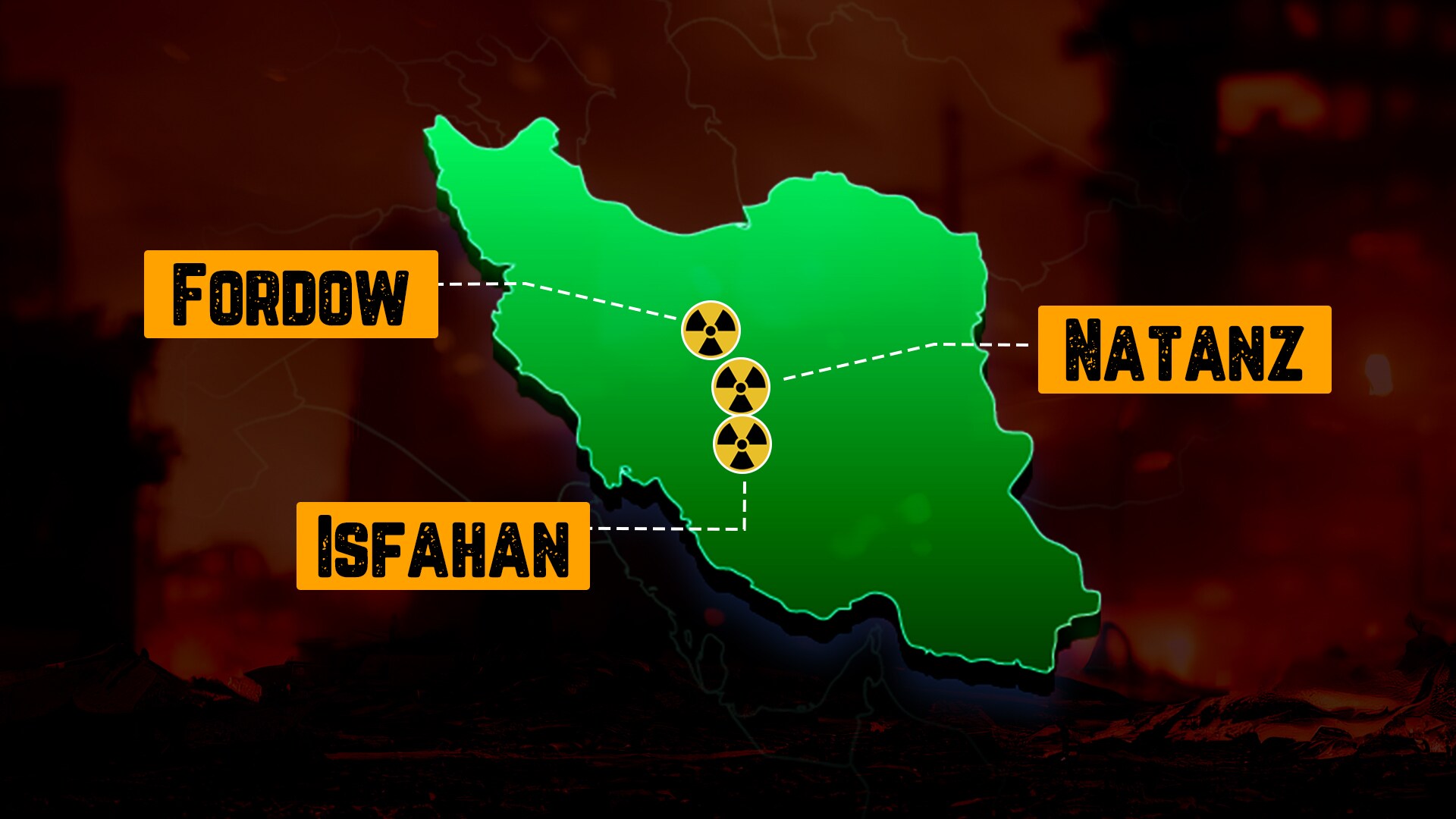
President Donald Trump on Sunday said that the United States has bombed three nuclear sites in Iran, joining Israel's war against the US's major rival.
This is the first time since the Iranian Revolution in 1979 that the US has attacked facilities inside Iran. The decision to directly involve the US comes after more than a week of Israeli strikes targeting Iran, aimed at systematically dismantling the country's air defences and offensive missile systems, as well as damaging its nuclear enrichment facilities.
"We have completed our very successful attack on three nuclear sites in Iran, including Fordow, Natanz and Esfahan," Trump said in a post on social media. "All planes are now outside of Iran air space. A full payload of BOMBS was dropped on the primary site, Fordow. All planes are safely on their way home."
Both the US and Israeli officials have indicated that only advanced American stealth bombers equipped with the massive 30,000-pound bunker-buster GBU-57 could effectively destroy Iran's deeply-buried, fortified nuclear sites.
Trump confirmed that B-2 stealth bombers carried out the strikes but did not specify the types of munitions used.
This military action carries significant risk, especially given Iran's vow to retaliate if US involvement joins Israel's campaign. For Trump, it marks a controversial departure from his campaign promises to avoid costly foreign entanglements and his skepticism of interventionism. He previously stated he was not interested in deploying ground forces in Iran and had been deliberating over a final decision, a process that now appears accelerated amid rapidly evolving circumstances.
Moreover, Trump's decision to authorise the strikes indicates that he now views military action as the sole remaining option to prevent Iran's nuclear ambitions.
Iranian leaders have issued stern warnings.
Supreme Leader Ayatollah Ali Khamenei cautioned on Wednesday that US strikes would result in “irreparable damage,” while Foreign Ministry spokesman Esmail Baghaei warned that American intervention could ignite “all-out war in the region.”
Trump has reiterated his commitment to preventing Iran from acquiring nuclear weapons, initially hoping diplomacy would suffice, but ultimately resorting to military action when negotiations stalled.
Israel's military has prepared for a potential prolonged conflict, while Iran's Foreign Minister warned that US military involvement would be “very, very dangerous for everyone.”
The risk of wider conflict extends beyond Iran, with Iranian-backed Houthi rebels in Yemen threatening to renew attacks on US vessels in the Red Sea if American forces become further involved.
In response to the recent escalation, the US ambassador to Israel announced that “assisted departure flights” have begun— the first since the October 7, 2023, Hamas-led attack that ignited the Gaza conflict.
The International Atomic Energy Agency has confirmed Iran's ongoing production of highly enriched uranium at Fordow, raising concerns that a strike could release nuclear material into the environment. Past Israeli strikes at Natanz caused localised contamination but did not affect surrounding areas, according to the IAEA.
The US has been repositioning military aircraft and warships in the Middle East to safeguard allies and interests, with shifting rhetoric—from hopes of a diplomatic “second chance” to explicit threats against Iran's leadership.
Trump remarked on social media that “we know exactly where the so-called Supreme Leader” is hiding, but indicated he would not target him at this time.
This escalation marks a sharp reversal from Trump's 2018 withdrawal from the 2015 nuclear deal, which aimed to limit Iran's nuclear program in exchange for sanctions relief. Trump had criticised the agreement as flawed and insufficient, citing Iran's regional activities and missile programs as reasons to abandon the deal. His administration's recent actions reflect a more confrontational stance, despite criticism from some supporters who argue that further US involvement risks entangling the nation in another costly conflict.
Significance of the three Iranian nuclear sites
Natanz
Iran's Natanz nuclear facility, about 220 km southeast of Tehran, is its main enrichment site and has previously been targeted by Israeli airstrikes. It consists of two facilities: the main Fuel Enrichment Plant and the Pilot Fuel Enrichment Plant. Before an Israeli attack destroyed its aboveground section, uranium was enriched up to 60%, near weapons-grade, according to the IAEA. An underground site on Iran's Central Plateau houses additional centrifuges to protect against strikes. The IAEA believes most of these centrifuges were likely destroyed when an Israeli attack cut power to the site.
Fordow
Located about 100 km southwest of Tehran, Iran's Fordow nuclear facility is smaller than Natanz and houses centrifuge cascades. Construction began around 2007, but Iran only notified the IAEA in 2009 after the US and Western intelligence became aware. Situated under a mountain and protected by anti-aircraft defenses, Fordow can be targeted with bunker-buster bombs like the GBU-57 Massive Ordnance Penetrator, designed to destroy deep underground facilities, according to a report by AP citing military experts.
Isfahan
The facility in Isfahan, situated roughly 350 kilometers southeast of Tehran, employs thousands of nuclear scientists. It also houses three Chinese research reactors and laboratories linked to Iran's atomic energy program. Israel has conducted strikes on structures at the Isfahan nuclear site, including a uranium conversion facility. According to the IAEA, there is no evidence of increased radiation levels at the site.

-
Gold Is Rs 22,000 Cheaper Than A Month Ago. Should You Buy Amid The Wedding Season?

Gold's potential slide to $3,500 could save around Rs 4,700 per 10 grams, but a soft inflation print could just as easily push prices back up. One way to split the risk is to buy in parts, some now and the rest after the Fed's Dec. 9 decision.
-
AI Agents Are Gaining Power. Who Governs Them?
Artificial intelligence agents promise to transform productivity by moving machines from assisting decisions to executing them. But as organisations delegate greater authority to these AI-agents, they must first establish who controls that authority and who remains accountable when things go wrong.
-
Why Swapping Your Old Gold Can Trigger A Rs 5 Lakh Tax Bill, And How You Can Avoid It Legally
Swapping old gold for new is taxed as a sale and a fresh purchase. Getting your own gold remade can cut most of that bill, though it has its own costs.
-
The AI Trade is Done. The Real Opportunity for Investors Starts in 2027 | Unhedged Position
As pureplay AI stocks plunge and circular, capex-led financing unwinds, 2027 is set to be a year of reckoning for AI companies. Yet the bust clears the way for a better opportunity for investors in 2027 -- shifting the spotlight from AI builders to the companies using AI.
-
Leadership As Mission: Why The Age Of AI Demands More Human Leadership
Debjani Ghosh examines how AI is changing leadership, arguing that its success must be measured by its impact on people and the accountability of those guiding its use.
-
We May Need Another Tukaram Mundhe To Fight Air Pollution | The Reason Why
Developers may install basic measures such as sprinklers and green nets, resume work, and continue violating rules when this equipment stops working.
-
Extracting Value From Battery Scrap Could Be Challenging For India | The Reason Why
A discarded lithium-ion battery still contains valuable materials such as lithium, nickel and cobalt. These can be recovered and reused. When such batteries are crushed and shredded, they produce a dark powder called black mass.
-
One El Nino, India Can Handle. Two Could Break The Granary
India's grain stocks can absorb one bad year, but a second El Nino could drain the buffer in two to three years, economists say.
-
India's Troika Of Good Luck | Joining The Dots
As Jensen Huang's exit drags Nvidia down, a cooling AI trade and resilient earnings have revived investor interest in India. A likely RBI rate hike looms.
-
Talking Points This Week: Leadership Shock At Nvidia, Earnings Strength, And The Fog Over Hormuz
The Anthropic IPO pricing and first trading day, Nvidia's upcoming earnings, and any fresh signals from Iran will set the tone for the following week.









