US Manufacturing Activity Nears Stagnation While Prices Jump
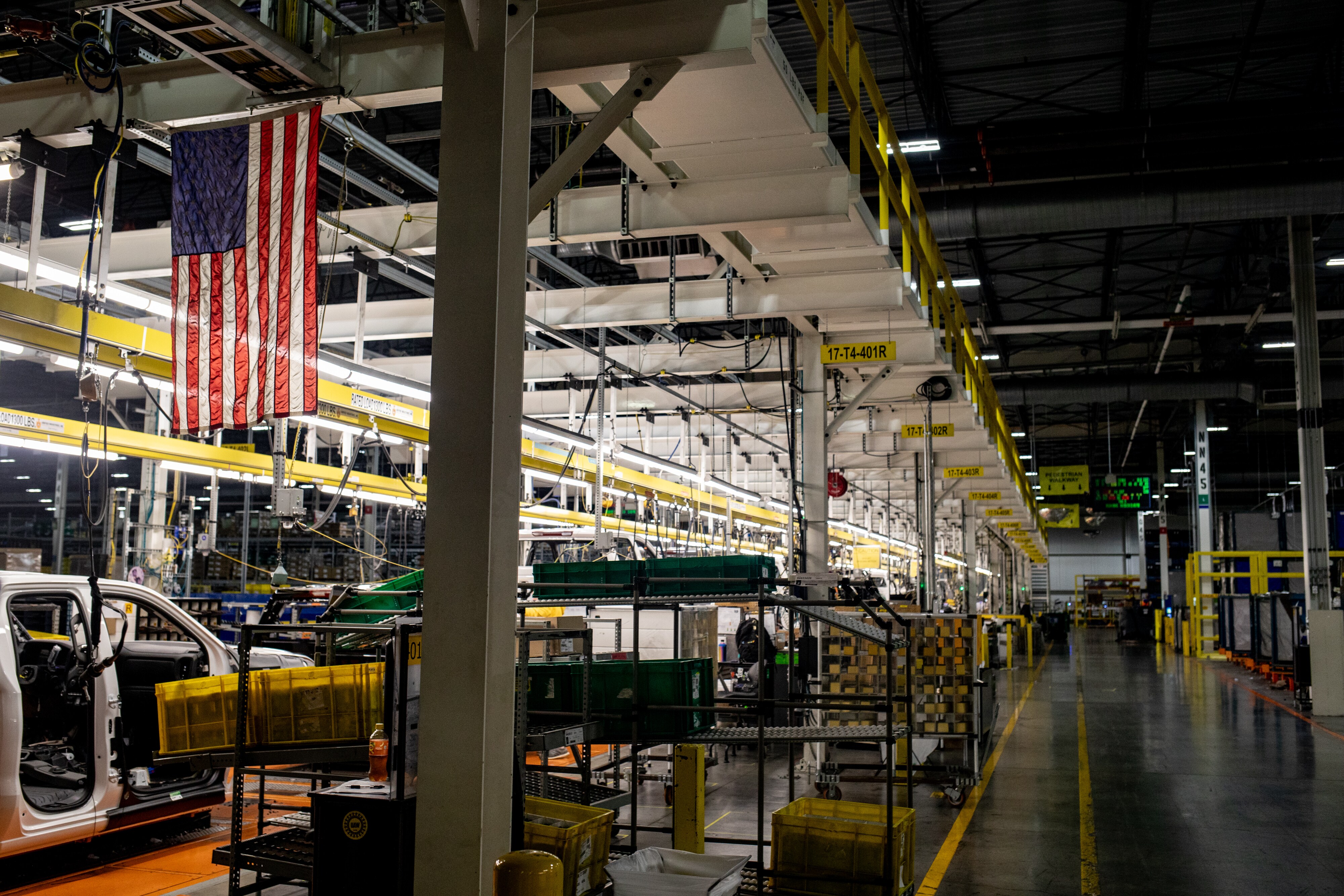
US factory activity last month edged closer to stagnation as orders and employment contracted, while a gauge of prices paid for materials surged to the highest since June 2022 as tariff concerns mounted.
The Institute for Supply Management's manufacturing index slipped by 0.6 point in February to 50.3, according to data released Monday. Readings above 50 indicate growth. The group's price measure increased 7.5 points to 62.4.
Rising input costs represent a challenge for manufacturers against a backdrop of shrinking orders that suggests demand is at risk of retrenching as businesses weigh the implications of tariffs from the Trump administration. Producers may be hard-pressed to pass on higher costs should sales continue to weaken.

After contracting in September for the first time since 2023, prices paid have shown growth for five straight months. While that suggests inflationary pressures are heating up again in the production pipeline, it's unclear to what extent manufacturers can pass along those higher costs.
The S&P 500, US Treasury yields and the dollar fell after the survey release.
The overall ISM manufacturing index was able to remain in growth territory because of the largest monthly increase in the supplier deliveries gauge since September 2021. But while slower delivery times typically indicate firmer demand, the February figure reflected suppliers struggling to meet requests that were accelerated by customers ahead of tariffs, the ISM said.
“Demand eased, production stabilized, and destaffing continued as panelists' companies experience the first operational shock of the new administration's tariff policy,” Timothy Fiore, chair of the ISM Manufacturing Business Survey Committee, said in a statement. “Prices growth accelerated due to tariffs, causing new order placement backlogs, supplier delivery stoppages and manufacturing inventory impacts.”
Price Spikes
Prices for steel and aluminum rose immediately after Trump's announcement of tariffs, and some suppliers are not taking as many new orders because of disagreements about who will pay the additional cost, Fiore said on a call with reporters.
Last Friday, a government report showed the Federal Reserve's preferred measure of underlying inflation, the so-called core personal consumption expenditures price index, rose in January at a subdued pace while consumer spending fell by the most in nearly four years.
The ISM survey data suggest that the optimism exhibited by factory managers in the wake of Donald Trump's presidential election is tempered as threats of tariffs, and geopolitical risks increase uncertainty. Long-promised 25% tariffs on Mexico and Canada — the two-largest US trading partners — are set to take effect Tuesday.
Separate data on Monday showed construction spending fell 0.2% in January, which is expected to weigh on the economy. After the figures, the Federal Reserve Bank of Atlanta's GDPNow forecast placed first-quarter gross domestic product at a 2.8% annualized decline, reflecting a steep decline in residential investment. The previous GDPNow estimate was minus 1.5%.
Ten manufacturing industries reported growth in February, including petroleum and coal, primary metals and wood products, the ISM report showed. Five industries contracted, led by furniture and textile mills.
The ISM measure of new orders fell 6.5 points to 48.6, the first contraction since October 2024. It marked the biggest monthly decline since April 2020.
The ISM production gauge also softened to 50.7 after a sharp advance last month to the highest level since March. That in turn discouraged hiring by manufacturers. The factory employment index fell 2.7 points to 47.6. The gauge has shown contracting employment in eight of the last nine months.
Select ISM Industry Comments
“The tariff environment regarding products from Mexico and Canada has created uncertainty and volatility among our customers and increased our exposure to retaliatory measures from these countries.”
— Chemical Products
"Customers are pausing on new orders as a result of uncertainty regarding tariffs. There is no clear direction from the administration on how they will be implemented, so it's harder to project how they will affect business.”
— Transportation Equipment
“Tariff impact has been minimal to overall manufacturing and raw material supply. Limits on U.S. government spending in key organizations like the Food and Drug Administration, Environmental Protection Agency and National Institutes of Health are delaying some orders.”
— Computers & Electronics
“Inflation and pricing pressure continue to drive uncertainty in our 2025 outlook. We are seeing volume impacts due to pricing, with customers buying less and looking for substitution options.”
— Food, Beverage & Tobacco Products
“The incoming tariffs are causing our products to increase in price. Sweeping price increases are incoming from suppliers. Most are noting increases in labor costs. Vendors are indicating open capacity. Inflationary pressures are a concern.”
— Machinery
“Business is still slow, but some indications of improved demand are six to nine months out. “
— Fabricated Metals
“New orders continue to be strong after picking up in December. The uncertainty about tariffs keeps us cautious on spending, despite the strong sales right now.”
— Electrical Equipment, Appliances & Components
“Internal analysis ongoing about impact of tariffs, but nothing concrete yet. General business conditions remain tepid; outlook on the durables side growing more pessimistic with growing domestic inventories of automobiles.”
— Plastics & Rubber Products
“Customer volumes seem to be better than 2024. However, customers are still very hesitant to commit to long-term volumes due to the market uncertainty caused by proposed tariffs on steel/aluminum imports.”
— Primary Metals
Meanwhile, the imports gauge rose to 52.6 the highest since March 2024 as companies increase orders with foreign suppliers before threatened tariffs take effect.

-
Foreign Investors Own Half Of HDFC Bank and ICICI Bank. An LTCG Cut Could Matter Most Here

Foreign portfolio investors have US$115 billion parked in HDFC Bank, ICICI Bank. If the government cuts long-term capital gains tax, Jefferies says returning foreign money could land here first.
-
'Never Seen This Level Of Negativity': Sandeep Tandon Says The Next Rally May Be Closer Than You Think
Veteran investor Sandeep Tandon says foreign selling is easing, large-caps are due a comeback and mid-caps are crowded, while he turns positive on gold, power and pharma this Diwali.
-
Indians Stay With Family, Not In Hotels | The Reason Why
India still lacks enough clean, reliable and affordable hotels for budget-conscious travellers.
-
The Economic Imperative: Analysing The Material Driving Force Behind India-Canada Strategic Reset
This economic complementarity is further reinforced by deep institutional investment ties and talent mobility, which form the bedrock of the bilateral framework.
-
Medicine Pricing: Where Must Profit Stop?
India must confront excessive margins, hidden incentives and regulatory gaps that threaten the integrity of medicine.
-
Why Amazon And Flipkart Are Struggling To Beat Meesho In India's Smaller Cities
With 274 million users and lowest-cost logistics, Meesho is defending its value commerce crown against giants like Amazon and Flipkart.
-
High US Salaries, No Green Card Certainty: The Financial Calculation Facing Indian H-1B Families
The suspension of PERM processing at eight technology employers does not cancel existing H-1B visas. What it does is force a question many Indian families have been avoiding: is the US salary worth tying your career and family plans to one employer?
-
Swiggy vs Eternal: Food Delivery's Two Rivals Are No Longer In The Same Race
Eternal is building a private AI assistant, dark.ai. Swiggy is still working out how to make Instamart pay, with an operating loss of Rs 895 crore in the July-September quarter while Blinkit stayed profitable.
-
Where You Live Shapes How You Get To Work | The Reason Why
Two-wheelers are the most popular way to get to work in India, accounting for nearly 43% of workplace commutes.
-
Unhedged Position: Can India See An Indonesia-Style Time Correction?
The Nifty is trading below levels it first clocked in 2024. Is there, then, as I have suggested in the headline, potential that the current time correction drags on painfully for the next three-five, even ten years?










