US Job Openings Fall Below 10 Million for First Time Since 2021
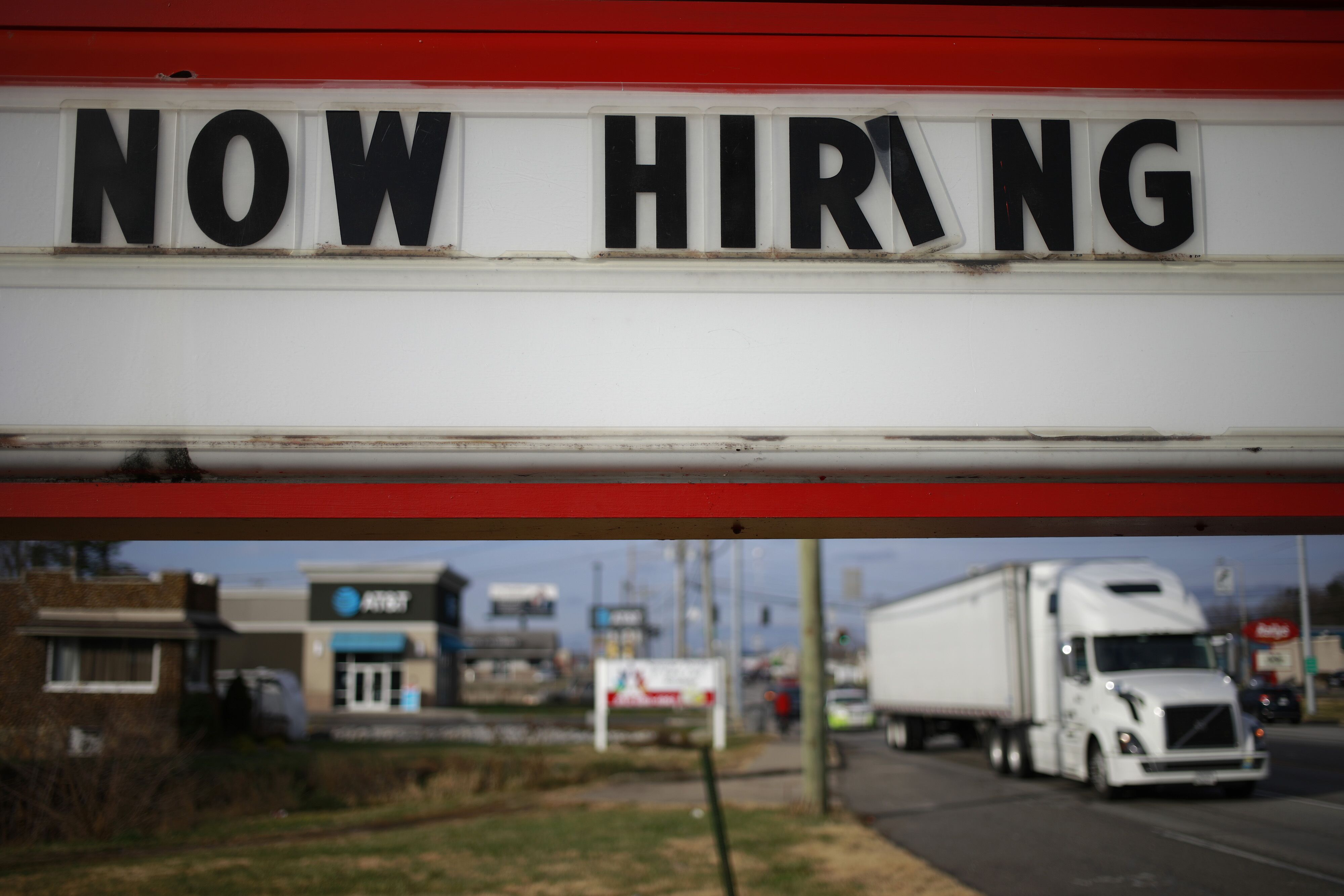
(Bloomberg) -- Vacancies at US employers dropped in February to the lowest since May 2021, suggesting a cooling in labor demand in some industries but still indicative of a job market that's too tight for the Federal Reserve.
The number of available positions decreased to 9.9 million from a downwardly revised 10.6 million a month earlier, the Labor Department's Job Openings and Labor Turnover Survey, or JOLTS, showed Tuesday. Vacancies were below all estimates in a Bloomberg survey of economists.

The figures, which can be volatile on a monthly basis, suggest labor supply and demand are moving into better balance. Still, further progress is needed — particularly in the service sector — to help alleviate wage pressures. Enduring strength in the job market remains a key hurdle for the Fed as it seeks to bring inflation down to its 2% goal.
The yield on the two-year Treasury note plunged after the report and the dollar fell.
The JOLTS report showed that the so-called quits rate, which measures voluntary job leavers as a share of total employment, edged up to 2.6%. That equates to about 4 million Americans. Quits increased in business services, accommodation and food services, and wholesale trade.
The ratio of openings to unemployed people slid to 1.67 in February, the lowest since November 2021, from almost 1.9 in the prior month. In the firm labor market that preceded the pandemic, that ratio was about 1.2.
What Bloomberg Economics Says...
“February's JOLTS report shows the labor market is unambiguously cooling, with labor demand moving more in line with supply. Most of the loosening has come via a decline in job openings, which should help alleviate Fed concerns of a potential wage-price spiral.”
— Stuart Paul, economist
To read the full note, click here
Fed officials watch that ratio closely and have pointed to the elevated number of job openings as a reason why the central bank may be able to cool the labor market — and therefore inflation — without an ensuing surge in unemployment.
The largest declines in vacancies were in business services, healthcare and social assistance, and transportation, warehousing and utilities. Openings rose in construction and recreation and entertainment. While hiring eased, layoffs also declined.
Firms with fewer than 10 employees experienced the biggest decline in job openings on a percentage basis. Vacancies fell in all four US regions.
Looking ahead, the recent turmoil in the banking sector is expected to prompt lenders to further tighten credit conditions, something that's expected to curb consumer spending as well as stifle business investment. Given companies tend to freeze hiring before initiating layoffs, the JOLTS report will be a key indicator of labor market strength in coming months.
The data precede Friday's monthly jobs report, which is currently forecast to show employers added nearly a quarter of a million workers in March. Economists are expecting the unemployment rate to hold at a historically low 3.6% and for average hourly earnings to rise firmly.
Some economists have questioned the reliability of the JOLTS statistics given the survey's low response rate. By year-end, the response rate for JOLTS had fallen to about 31%, roughly half the rate just three years earlier.
--With assistance from Jordan Yadoo and Augusta Saraiva.
(Adds Bloomberg Economics comment)
More stories like this are available on bloomberg.com
©2023 Bloomberg L.P.

-
The Economic Imperative: Analysing The Material Driving Force Behind India-Canada Strategic Reset

This economic complementarity is further reinforced by deep institutional investment ties and talent mobility, which form the bedrock of the bilateral framework.
-
Medicine Pricing: Where Must Profit Stop?
India must confront excessive margins, hidden incentives and regulatory gaps that threaten the integrity of medicine.
-
Why Amazon And Flipkart Are Struggling To Beat Meesho In India's Smaller Cities
With 274 million users and lowest-cost logistics, Meesho is defending its value commerce crown against giants like Amazon and Flipkart.
-
High US Salaries, No Green Card Certainty: The Financial Calculation Facing Indian H-1B Families
The suspension of PERM processing at eight technology employers does not cancel existing H-1B visas. What it does is force a question many Indian families have been avoiding: is the US salary worth tying your career and family plans to one employer?
-
Swiggy vs Eternal: Food Delivery's Two Rivals Are No Longer In The Same Race
Eternal is building a private AI assistant, dark.ai. Swiggy is still working out how to make Instamart pay, with an operating loss of Rs 895 crore in the July-September quarter while Blinkit stayed profitable.
-
Where You Live Shapes How You Get To Work | The Reason Why
Two-wheelers are the most popular way to get to work in India, accounting for nearly 43% of workplace commutes.
-
Unhedged Position: Can India See An Indonesia-Style Time Correction?
The Nifty is trading below levels it first clocked in 2024. Is there, then, as I have suggested in the headline, potential that the current time correction drags on painfully for the next three-five, even ten years?
-
Navigating Friction And Energy Realities: An Analysis Of Marco Rubio's October Visit To India
Occurring at a critical juncture marked by stalled trade negotiations and escalating geopolitical pressures over global energy supplies, the visit offers a profound window into modern US-India relations.
-
India Exports Capital. Why Not Export Trusteeship?
The big question, then, is whether India can build an institution that global borrowers, investors, banks, and lawyers can trust, even without an Indian connection.
-
France's Economy & Politics Are In Crisis | The Reason Why
Let's look at how the French economy and politics evolved under Nicolas Sarkozy, Franois Hollande and Emmanuel Macron.










