US, China Officials Agree On Plan To Reduce Trade Tensions
The US and China agreed to a preliminary plan to ease trade tensions, which could revive the flow of sensitive goods between the world's two largest economies.
American and Chinese negotiators in London said both sides agreed on a framework on how to implement the consensus the two sides reached in the prior round of talks in Geneva.
The US and Chinese delegations will now take the proposal back to their respective leaders, according to China's chief trade negotiator Li Chenggang.
While full details of the pact weren't immediately available, US negotiators said they “absolutely expect” that issues around shipments of rare earth minerals and magnets would be resolved.
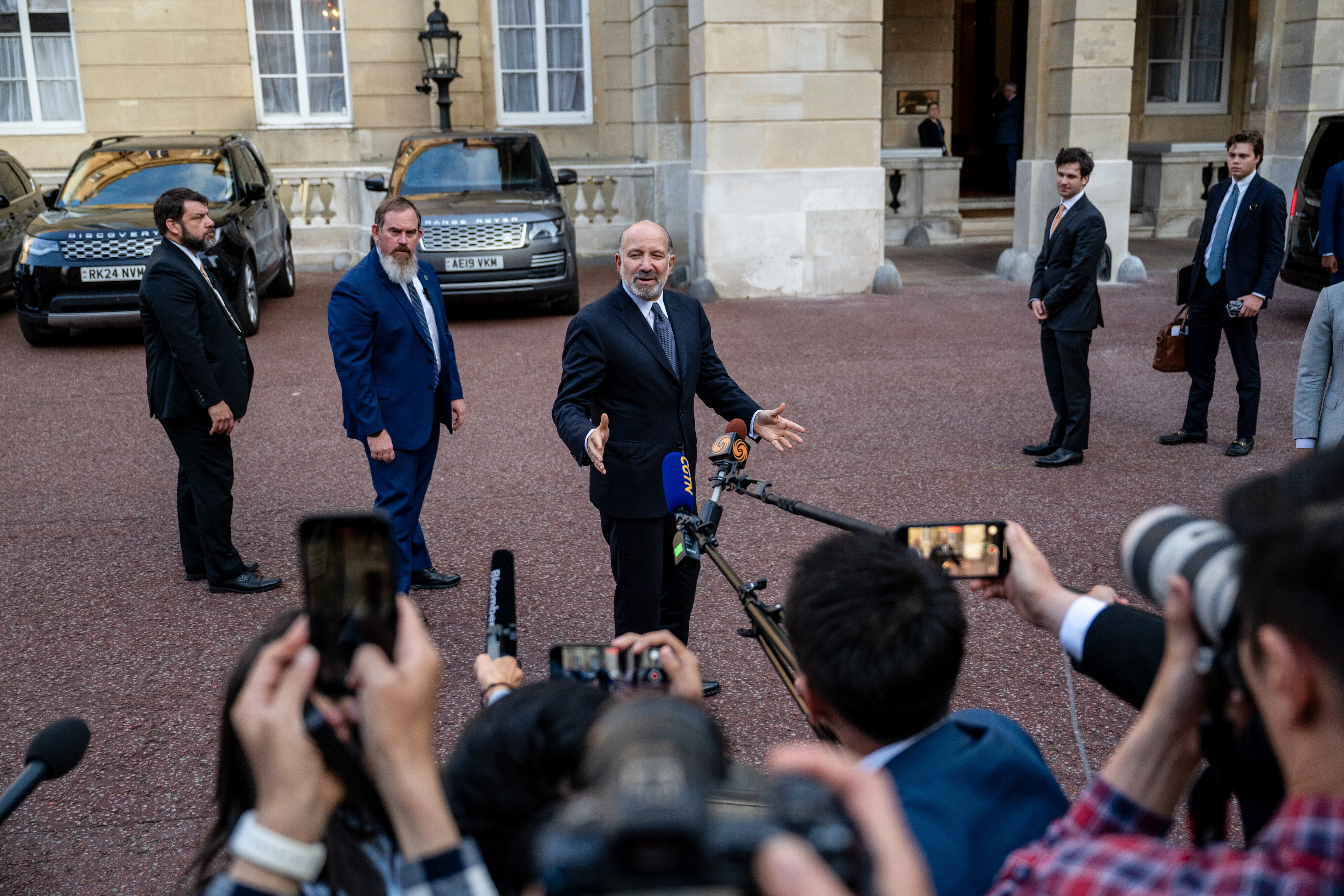
“Once the presidents approve it, we will then seek to implement it,” US Commerce Secretary Howard Lutnick told reporters in London, after two days of discussions that spanned nearly 20 hours in a Georgian-era mansion near Buckingham Palace.
US Trade Representative Jamieson Greer said there were no other meetings scheduled, but added that the American and Chinese sides talk frequently and are able to do so whenever they need.
Rare Earths
The talks in London came at the urging of the Trump administration to cement a pledge the Chinese government made to ease shipments of rare earths made during last month's trade talks in Geneva, which culminated in a tariff truce.
The disagreement over critical mineral exports reignited open economic conflict between the US and China and raised the prospect their nascent deal could collapse, which would pose a fresh threat for the world economy.
“We do absolutely expect that the topic of rare earth minerals and magnets with respect to the United States of America will be resolved in this framework implementation,” Lutnick said.
“Also, there were a number of measures the United States of America put on when those rare earths were not coming,” Lutnick added. “You should expect those to come off — sort of, as President Trump said, in a balanced way. When they approve the licenses, then you should expect that our export implementation will come down as well.”
The Chinese Foreign Ministry and Ministry for Commerce didn't immediately respond to requests for comment.
Greer said the issue of fentanyl, which the Trump has administration cited as a rationale for imposing tariffs on China, is also a priority for the US president. “We would expect to see progress from the Chinese on that issue in a major way.”
Leverage
The London meetings showcased the growing role of export controls in modern trade warfare, where access to rare minerals or tiny microchips can give one economy a big edge over a rival. China controls much of the world's supplies of raw materials used to make magnets and other inputs for advanced manufacturing like electric vehicles, lasers and mobile phones.
That leverage came to bear over the past several weeks, as complaints from American companies about looming magnet shortages led US President Donald Trump to request a call with Chinese leader Xi Jinping.
The US accused Beijing of stalling on sales, although delays may have been due to long lead times in China's permitting system. European trade officials and carmakers have also sounded the alarm on disruption of supplies from China.
In response, Washington moved last month to limit exports of chip design software, jet engine parts, chemicals and nuclear materials — restrictions the US opened the door to lifting in London in exchange for relief on rare earths.
Following the Xi-Trump call last week, Treasury Secretary Scott Bessent, Lutnick and Greer were dispatched to the UK capital to break the deadlock with a Chinese delegation led by Vice Premier He Lifeng.
Trust
The US and China are about a third of the way through a 90-day reprieve on the crippling tit-for-tat tariffs imposed on each other through April. The settlement announced in Geneva on May 12 brought those duties down considerably, though trade between the two largest economies remains disrupted.
“We hope that the progress we made will be conducive to building trust,” China's Li said.
China's exports to the US fell 34% in May, according to Bloomberg News calculations, the most since Feb. 2020, when the first wave of the coronavirus pandemic shut down the Chinese economy.
Josef Gregory Mahoney, a professor of international relations at Shanghai's East China Normal University, said the biggest casualty of the trade war has not been lost sales but trust and that China is very cautious, aiming to avoid being drawn into the Trump “circus.”
“We've heard a lot about agreements on frameworks for talks. But the fundamental issue remains: chips vs. rare earths,” he said. “Everything else is a peacock dance.”
Financial markets have largely recovered from a bout of volatility that struck as Trump first introduced his tariff policies in early April, with MSCI's all-country equity index ending Tuesday at a record high. Currency markets tell a slightly different story, with the US dollar weaker against all its major counterparts.
Initial market reaction to the announcement was minimal, with US equity futures edging lower and the offshore yuan inching higher. The yen was little changed.
“Markets will likely welcome the shift from confrontation to coordination,” said Charu Chanana, chief investment strategist at Saxo Markets. “But the absence of further scheduled meetings signals that we're not out of the woods yet — it's now up to Trump and Xi to approve and enforce the deal.”

-
Indians Are Travelling, But Not Every Journey Is A Holiday | The Week In Whys

Pilgrims, patients and working women are the real travellers, and the system hasn't quite caught up with them.
-
Getting To Work Costs Women More | The Reason Why
It is not just about women paying more than men. It is about women paying much more in cities than in villages.
-
AI Bias In Investing Cannot Be Eliminated, But It Can Be Governed
Framing is a particularly important example as identical financial information presented in terms of gains rather than losses can lead an LLM to reach a different assessment.
-
Joining The Dots | Dark Skies, Steady Diya: Why Hope Holds This Diwali
With war, a weak rupee and foreign outflows weighing on sentiment, policymakers at the NDTV World Summit and market veterans at NDTV Profit Ignite: Diwali Edition offered the same advice: stay invested and filter out the noise.
-
The Curious Case of Equitas Small Finance Bank And A CEO Who Quit For Stock
PN Vasudevan believes persistent investor concerns over a perceived conflict of interest had become a governance overhang on Equitas Small Finance Bank's stock, even as the lender improved profitability and asset quality.
-
Talking Points This Week: AI Cash Burn, A Tiger Comeback And An India That Still Finds Its Own Path
India is not immune to higher oil or tighter global liquidity, yet its earnings base is broader, its domestic policy levers are still available.
-
Foreign Investors Own Half Of HDFC Bank and ICICI Bank. An LTCG Cut Could Matter Most Here
Foreign portfolio investors have US$115 billion parked in HDFC Bank, ICICI Bank. If the government cuts long-term capital gains tax, Jefferies says returning foreign money could land here first.
-
'Never Seen This Level Of Negativity': Sandeep Tandon Says The Next Rally May Be Closer Than You Think
Veteran investor Sandeep Tandon says foreign selling is easing, large-caps are due a comeback and mid-caps are crowded, while he turns positive on gold, power and pharma this Diwali.
-
Indians Stay With Family, Not In Hotels | The Reason Why
India still lacks enough clean, reliable and affordable hotels for budget-conscious travellers.
-
The Economic Imperative: Analysing The Material Driving Force Behind India-Canada Strategic Reset
This economic complementarity is further reinforced by deep institutional investment ties and talent mobility, which form the bedrock of the bilateral framework.










