U.S. And Israel Weigh Peacekeepers For The Gaza Strip After Hamas
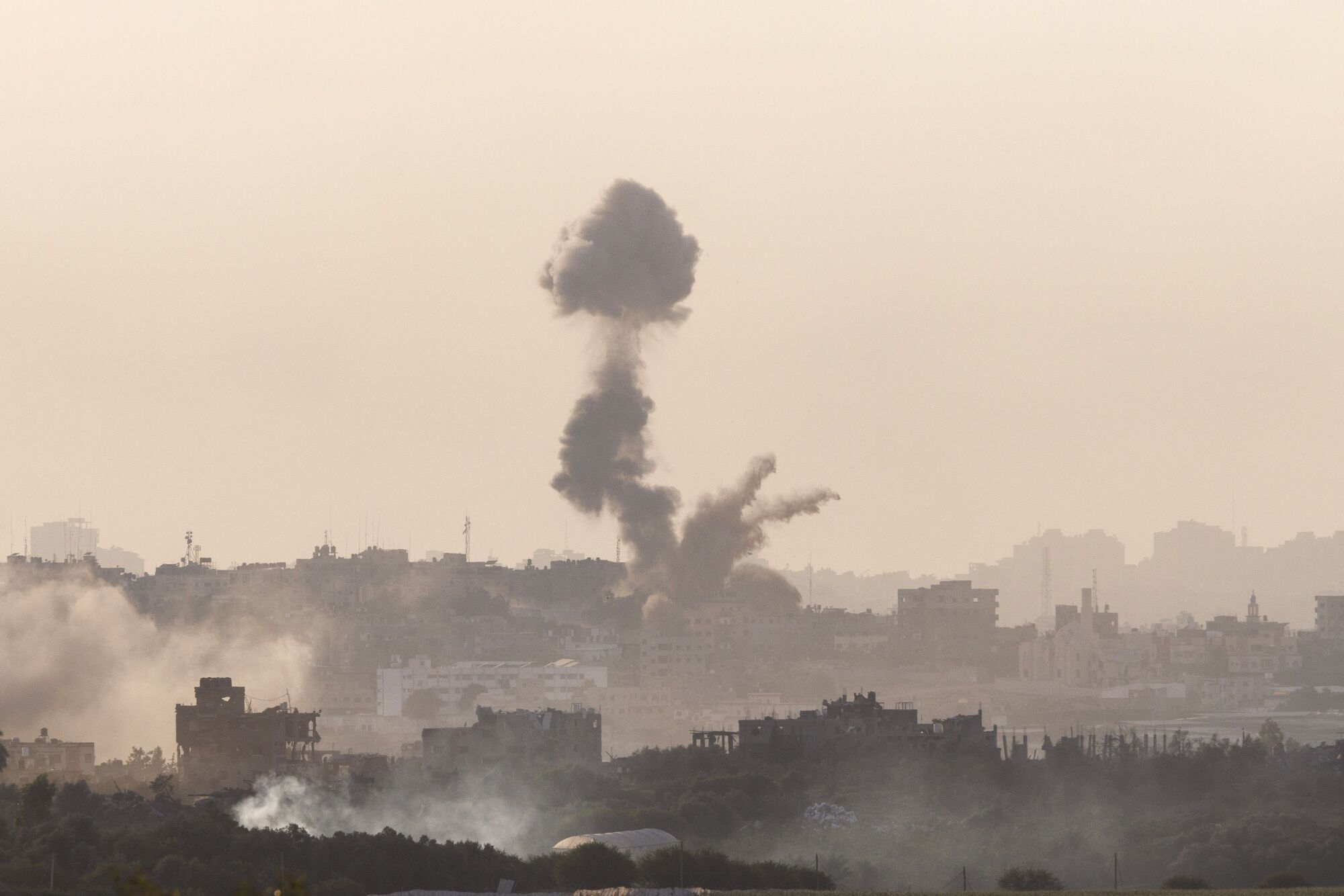
(Bloomberg) -- The US and Israel are exploring options for the future of the Gaza Strip, including the possibility of a multinational force that may involve American troops if Israeli forces succeed in ousting Hamas, people familiar with the matter said.
The people said the conversations have been impelled by a sense of urgency to come up with a plan for the future of Gaza now that a ground invasion has begun. A second option would establish a peacekeeping force modeled on one that oversees a 1979 Egypt-Israel peace treaty, while a third would see Gaza put under temporary United Nations oversight.
The people, who asked not to be identified discussing the sensitive matter, underscored that the conversations are still at an early stage and much could change. Some US officials consider the options premature or unlikely. But Secretary of State Antony Blinken alluded to the challenge on Tuesday when he told a Senate panel that the US was examining a range options for the future of Gaza.
“We can't have a reversion to the status quo with Hamas running Gaza,” Blinken, who will travel to Israel on Friday, told the Senate Appropriations Committee. “We also can't have — and the Israelis start with this proposition themselves — Israel running or controlling Gaza.”

“Between those shoals are a variety of possible permutations that we're looking at very closely now, as are other countries,” he said.
National Security Council spokesperson Adrienne Watson told Bloomberg on Tuesday night that “sending US troops to Gaza as part of a peacekeeping force is not something that's being considered or is under discussion.”
The State Department declined to comment on the plans.
Israeli officials have said repeatedly that they don't intend to occupy Gaza, but they've also said that continued rule by Hamas is unacceptable after the Oct. 7 attack in which the group killed 1,400 Israelis and took more than 200 people hostage. There's also little evidence that the Palestinian Authority, which governs the West Bank, would be willing or able to take over Gaza. Hamas has been designated a terrorist group by the US and the European Union.
Ophir Falk, a foreign policy adviser to Prime Minister Benjamin Netanyahu, said, “A number of options have been raised for the day after Hamas. The prerequisite for all of them is that Hamas be destroyed. Once Hamas is destroyed, all the options discussed are based on the premise that Gaza be demilitarized.”
All options hold political peril for President Joe Biden and for other nations, including Gulf States, not to mention Israel. Biden believes that putting even a small contingent of American troops in harm's way could prove politically risky, according to a person familiar with his thinking, who added that the US isn't close to making such a decision. It's also not yet clear whether Arab states might be interested in participating, another person said.
Ultimately, Biden and other US officials say that an endpoint that involves a sovereign Palestinian state is necessary, but exactly how to reach that outcome has barely featured in discussions, either public or private. And Israel says its military operation could last months, and will result in a buffer zone around Gaza.

According to the people familiar with the matter, one option would grant temporary oversight to Gaza to countries from the region, backed by troops from the US, UK, Germany and France. Ideally, it would also include representation from Arab nations such as Saudi Arabia or the United Arab Emirates, the people said.
A second option is a peacekeeping force modeled on the Multinational Force and Observers group that operates on and around the Sinai peninsula, enforcing the terms of the peace treaty between Egypt and Israel. Israel believes that this idea is worthy of consideration, according to a person familiar with the matter.
A third option would be temporary governance of the strip under a United Nations umbrella. This would have the advantage of the legitimacy bestowed by the UN, but Israel views it as impractical, according to a person familiar with Israel's thinking, who added that Israel believes that little good has come from the world body.
Read more: The US and Israel Weigh a Future for Gaza Without Hamas
Earlier this month, Israeli Minister Benny Gantz labeled UN Secretary-General Antonio Guterres a “terror apologist” after Guterres argued that the Oct. 7 attacks “did not happen in a vacuum.”
Several former officials and outside groups have already begun discussions with the US and Israel, and floated possible plans. One came from the Washington Institute for Near East Policy, which called for a Palestinian-run interim administration, with the UN Relief and Works Agency continuing to provide food, heath and education.
“Public safety and law enforcement could be directed by a consortium of the five Arab states who have reached peace agreements with Israel—Egypt, Jordan, the United Arab Emirates, Bahrain and Morocco,” Washington Institute scholars wrote in an Oct. 17 note. “Only those Arab states would have Israel's confidence, which is essential for this effort to succeed.”
US officials have suggested that the Palestinian Authority should be one part of a longer-term solution. “At some point, what would make the most sense would be for an effective and revitalized Palestinian Authority to have governance and ultimately security responsibility for Gaza,” Blinken said, adding that “whether you can get there in one step is a big question.”
(Updates with White House response, in sixth paragraph. Adds Israeli reaction in ninth paragraph.)
More stories like this are available on bloomberg.com
©2023 Bloomberg L.P.

-
Talking Points This Week: Leadership Shock At Nvidia, Earnings Strength, And The Fog Over Hormuz

The Anthropic IPO pricing and first trading day, Nvidia's upcoming earnings, and any fresh signals from Iran will set the tone for the following week.
-
Signature Play: The Classic Cocktail Is Dead. Or Is It?
Classic cocktails are disappearing from India's cocktail menus. But they're still being ordered, taught to bartenders and borrowed from. So, who's really having the last drink?
-
A New Samvat Wishlist: Inclusive Prosperity And Human Development
India has strengthened its economic foundations through infrastructure, digital access and enterprise. Its next growth chapter must deepen productivity, create better livelihoods and widen participation in prosperity.
-
Love, Sex Aur Dhokha: The Audacious Plot To Spy On Jensen Huang
A Taipei dinner, a Singapore chip buyer and a suspected Chinese asset: inside the alleged spy operation that got close to NVIDIA's Jensen Huang.
-
Ten Things I Learnt This Samvat
Patience can be a trap. Cheap stocks can stay cheap. Leverage can wipe you out. What did Samvat 2082 teach us? Niraj Shah writes on 10 lessons from the year gone by.
-
Talking Points This Week: Tech Nerves, FII Buying, And A Faraway Banking Shock
The global markets are not shining this Diwali. The exception in the large markets is, India.
-
Midterm Rally Lasted A Day. The Hard Reality Of A Divided US May Last Two Years | Opinion
Between a contested AI boom, a debt ceiling that arrives in 2027 and a president with every incentive to act alone, the next two years may prove more volatile than the first day's rally suggests.
-
Blue Wave Will Derail the AI Trade but Won't Dismantle the AI Era | Unhedged Position
The Democrats' sweep of the US Congress will see politics collide with economic forces both over the long and short term.
-
It's Time To Take The GST Council's Bet On Trust Global
Payment records can prove India's services exports, and clear, proportionate rules can bring foreign digital sellers into the tax net.
-
Opinion | India at 38: From Innovation Overperformer to Innovation Powerhouse
India now has 453 VC-backed deep science startups, 18 of them late-stage, after 117 percent growth since 2020. Laurus Labs, at USD 9.3 billion, is the most valuable deep science company in any middle-income economy outside China.









