UK’s New Parliament Most Diverse Ever Except at the Top
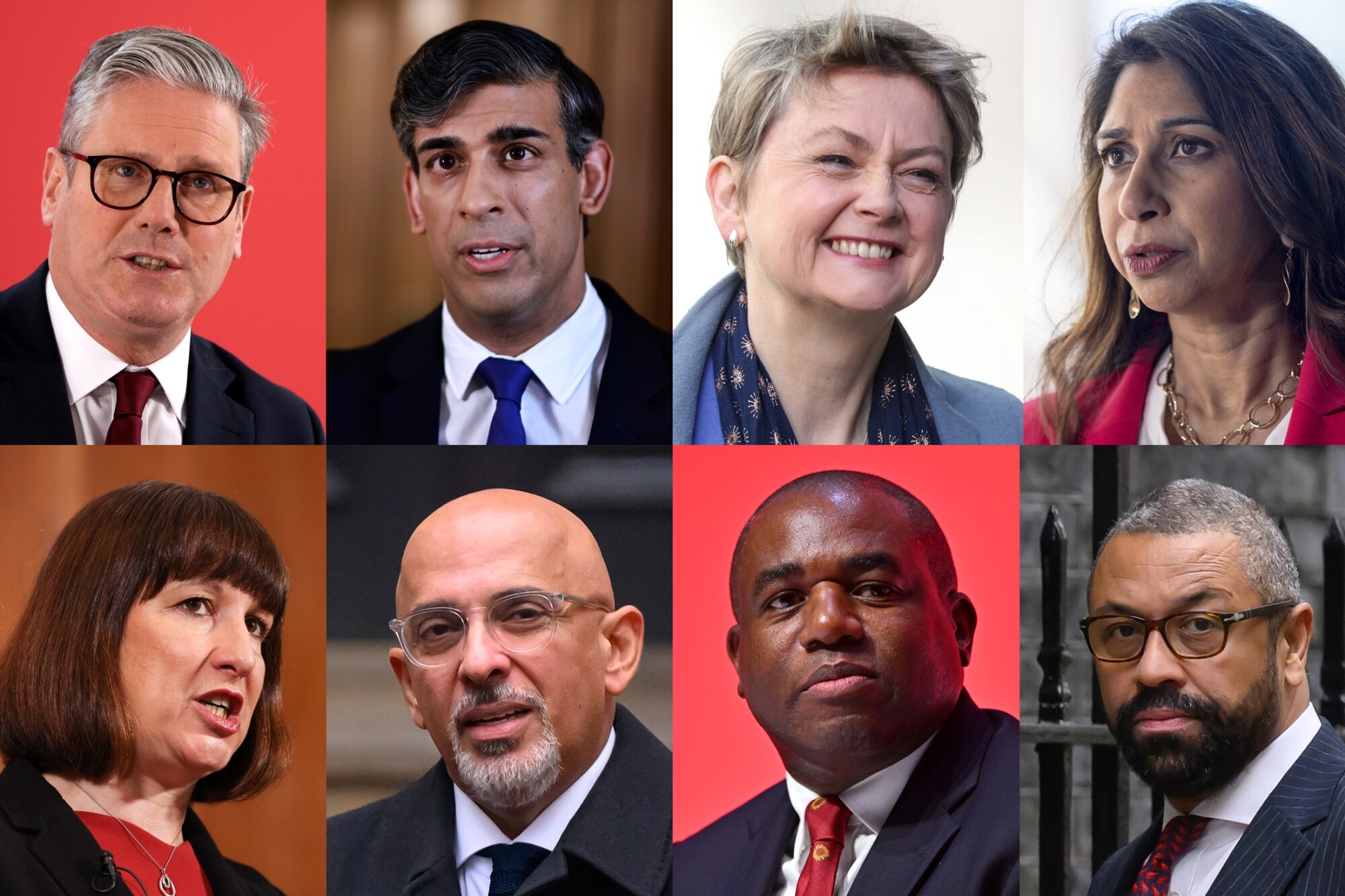
(Bloomberg) -- British voters elected the largest ever number of ethnic minority MPs to the House of Commons on Thursday, a reflection of more minorities becoming involved in politics as well as political parties seeking to reflect the people they represent.
More than 13% of the new parliament come from an ethnic minority background, according to an analysis by the British Future think tank, an increase from 10% in 2019. More broadly, 18% of the British population belongs to a non-White ethnic group, according to 2021 census data.

Yet while 66 out of 89 of these MPs will represent Labour, that same level of diversity hasn't extended to Keir Starmer's cabinet, many of whom were announced on Friday.
The prime minister has so far appointed three cabinet ministers from an ethnic minority background: Foreign Secretary David Lammy, Justice Secretary Shabana Mahmood and Culture Secretary Lisa Nandy. Thangam Debbonaire was also expected to be part of the top team but failed to win her election campaign.
That's so far fewer than were in former Prime Minister Rishi Sunak's cabinet and it is a smaller proportion of the larger diverse Parliament. Just one of them will hold a key post, in contrast to previous Conservative cabinets in which the most senior roles — the premier, chancellor, home secretary and foreign secretary — were all held by people from minority backgrounds for the first time, with at least two in those jobs since July 2019.
To be sure, Starmer's top team used to feature more ethnic minority MPs but three left the shadow cabinet — his spokespeople while in opposition — in November, along with seven others, to vote for an immediate ceasefire in the war between Israel and Hamas. The fact the party had a more diverse candidate list, and now more MPs, is largely attributed to it having more diverse members.
“Ethnic minority representation is a new norm in British politics,” said Sunder Katwala, director of British Future. “Many will be surprised to recall that when Labour was last elected in 1997 it was with an all-White cabinet — it took another five years before Paul Boating became the first Black cabinet minister.”
The Conservatives' legacy
Although ethnic minority voters are often historically associated with Labour, the Conservatives cemented their reputation since 2010 as a party that promotes people from minority backgrounds to the top of politics.
That's by design. Ex-premier David Cameron pushed to place more women and ethnic minority individuals on party shortlists after becoming party leader in 2005, in a leadership election that featured seven White men. He also promoted the first British Muslim to the cabinet through Sayeeda Warsi's appointment as the party's chairwoman.
The Conservatives went from having just two minority MPs in 2005 to 22 in 2019 as well as Britain's first Asian prime minister, who lit Diwali candles outside Downing Street with his family.
Successive Conservative governments — led by Cameron, Theresa May, Boris Johnson and Liz Truss — each promoted minority MPs to the highest levels. Yet these children of immigrants — such as Priti Patel, Suella Braverman and Sunak — have also pushed for less migration. And researchers argue that while visual representation is important, minority groups haven't directly benefited from their appointments.
“We can't equate ethnic diversity in the Conservative Party Cabinet with racial justice, it's quite the opposite,” Dr Rima Saini, a Senior Lecturer in Sociology at Middlesex University said in a statement after publishing a 2023 paper on ethnic diversity in the Conservative Party.
“Diversity within the Conservative Party hasn't translated into better outcomes for the most marginalized ethnic minority communities, it's simply a mechanism in order to modernize the party.”
Labour's social diversity
Starmer's cabinet will still be a dramatic shift from the Conservative governments of the last 14 years in terms of the number of MPs who come from working-class backgrounds.
Roughly 84% of his shadow cabinet went to state schools, according to the Sutton Trust, a social mobility charity. Conservative cabinets by contrast featured the likes of Johnson and Cameron, known for being members of the all-male, largely wealthy, Bullingdon Club, and Sunak, who famously appeared in a video laughing about the idea of having working-class friends.
The new cabinet's demographic may already be influencing policies previously avoided by the Conservatives, such as removing a tax break for private schools and using the funds to employ more teachers.
Pressure will immediately start building for Starmer. With the huge mandate he's just received, come high expectations that he delivers on his promise to create a new age of hope and opportunity for all Britons, especially the poorest.
Read Next: Gaza Concerns Take Gloss Off Labour's UK Election Victory
(Updates to reflect appointment of new cabinet in third and fourth paragraphs. A previous version of this story was corrected to say there are 89 ethnic minority MPs, per British Future)
More stories like this are available on bloomberg.com
©2024 Bloomberg L.P.

-
Getting To Work Costs Women More | The Reason Why

It is not just about women paying more than men. It is about women paying much more in cities than in villages.
-
AI Bias In Investing Cannot Be Eliminated, But It Can Be Governed
Framing is a particularly important example as identical financial information presented in terms of gains rather than losses can lead an LLM to reach a different assessment.
-
Joining The Dots | Dark Skies, Steady Diya: Why Hope Holds This Diwali
With war, a weak rupee and foreign outflows weighing on sentiment, policymakers at the NDTV World Summit and market veterans at NDTV Profit Ignite: Diwali Edition offered the same advice: stay invested and filter out the noise.
-
The Curious Case of Equitas Small Finance Bank And A CEO Who Quit For Stock
PN Vasudevan believes persistent investor concerns over a perceived conflict of interest had become a governance overhang on Equitas Small Finance Bank's stock, even as the lender improved profitability and asset quality.
-
Talking Points This Week: AI Cash Burn, A Tiger Comeback And An India That Still Finds Its Own Path
India is not immune to higher oil or tighter global liquidity, yet its earnings base is broader, its domestic policy levers are still available.
-
Foreign Investors Own Half Of HDFC Bank and ICICI Bank. An LTCG Cut Could Matter Most Here
Foreign portfolio investors have US$115 billion parked in HDFC Bank, ICICI Bank. If the government cuts long-term capital gains tax, Jefferies says returning foreign money could land here first.
-
'Never Seen This Level Of Negativity': Sandeep Tandon Says The Next Rally May Be Closer Than You Think
Veteran investor Sandeep Tandon says foreign selling is easing, large-caps are due a comeback and mid-caps are crowded, while he turns positive on gold, power and pharma this Diwali.
-
Indians Stay With Family, Not In Hotels | The Reason Why
India still lacks enough clean, reliable and affordable hotels for budget-conscious travellers.
-
The Economic Imperative: Analysing The Material Driving Force Behind India-Canada Strategic Reset
This economic complementarity is further reinforced by deep institutional investment ties and talent mobility, which form the bedrock of the bilateral framework.
-
Medicine Pricing: Where Must Profit Stop?
India must confront excessive margins, hidden incentives and regulatory gaps that threaten the integrity of medicine.










