Typhoon Kalmaegi Kills 59 In Philippines As It Threatens Vietnam
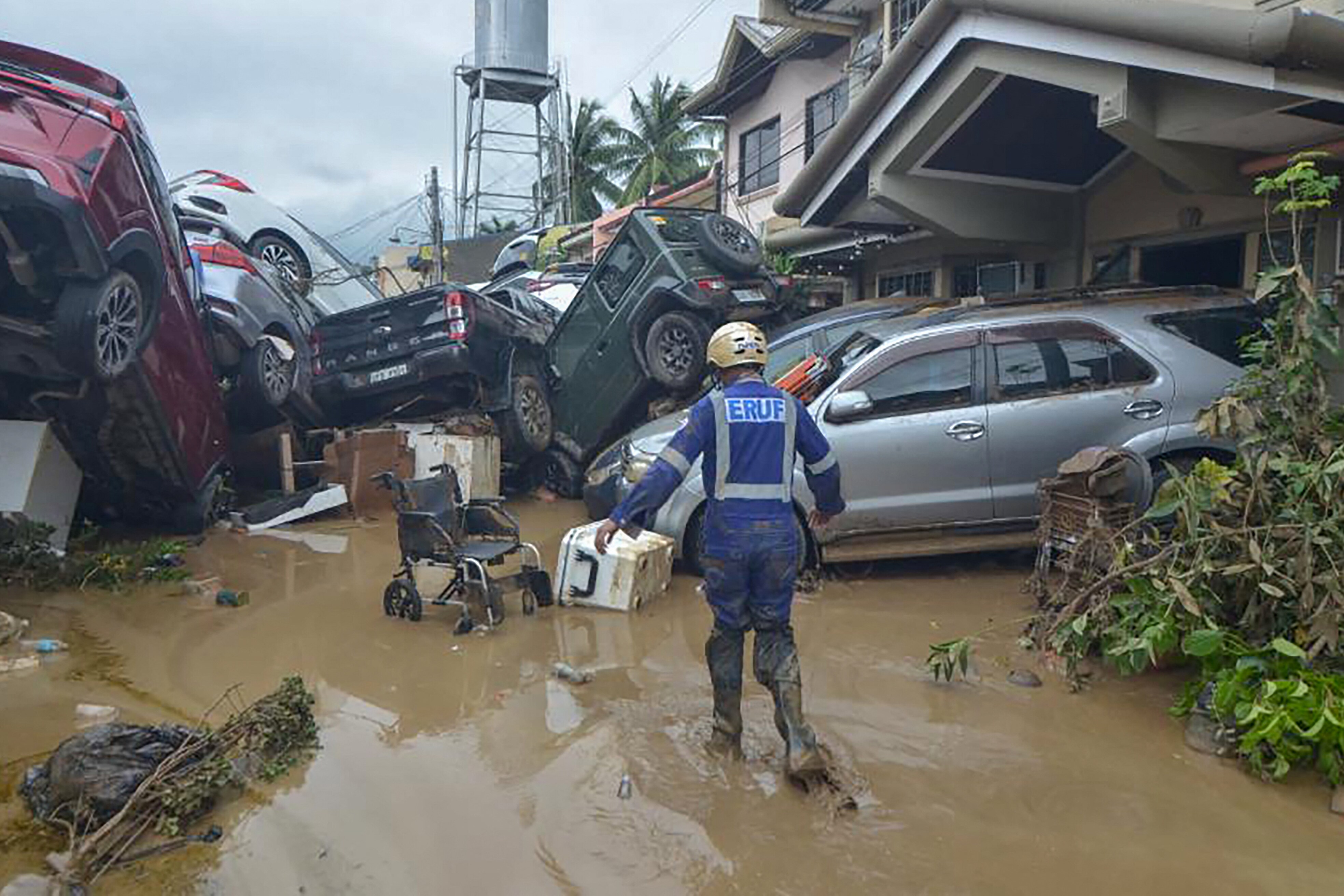
Typhoon Kalmaegi killed 59 people and displaced nearly half a million more in the Philippines as it tracks a path toward Vietnam.
One of the deadliest typhoons to hit the Philippines in recent years pounded central provinces, particularly Cebu, which reported the most casualties as widespread flooding submerged homes and forced residents to shelter on their rooftops.
Many of the casualties were hit by falling trees and debris or swept away by floods, according to disaster response officials. A Philippine Air Force chopper deployed to aid typhoon response crashed, killing six crew aboard, the military said.
Kalmaegi, locally called Tino, has weakened and is now packing maximum sustained winds of 120 kilometers (75 miles) per hour and gustiness of up to 165 kilometers per hour, according to the latest bulletin by weather bureau Pagasa. The second-highest alert in a five-level typhoon warning system remains up in parts of Palawan province near the South China Sea.
The typhoon is poised to exit the Philippines early Thursday, before heading to Vietnam, which is still reeling from the massive flooding that killed dozens, according to weather forecasters.
Kalmaegi, the 20th storm to strike the Philippines this year, is putting a spotlight on the ongoing scandal over corruption in flood-control projects worth billions of pesos that has triggered public outrage. The nation is battered by around 20 cyclones a year, making it one of the world's disaster-prone nations.
In Cebu province, which is still recovering from a recent earthquake that killed dozens, its new governor, Pamela Baricuatro, has appealed for help.
“26 billion (pesos) of flood control funds for Cebu yet we are flooded to the max,” Baricuatro said in a Facebook post.

-
Navigating Friction And Energy Realities: An Analysis Of Marco Rubio's October Visit To India

Occurring at a critical juncture marked by stalled trade negotiations and escalating geopolitical pressures over global energy supplies, the visit offers a profound window into modern US-India relations.
-
India Exports Capital. Why Not Export Trusteeship?
The big question, then, is whether India can build an institution that global borrowers, investors, banks, and lawyers can trust, even without an Indian connection.
-
France's Economy & Politics Are In Crisis | The Reason Why
Let's look at how the French economy and politics evolved under Nicolas Sarkozy, Franois Hollande and Emmanuel Macron.
-
You May Inherit The Business. You Must Earn Its Credibility.
Succession tests the founder's ability to share authority as much as it tests the next generation's readiness to assume it.
-
Signing Deals Is One Thing; Making Them Work Is Another | The Week In Whys
Sometimes, things don't turn out as planned. Indian companies have lost some bids to rivals, some projects won't produce until 2030.
-
FOMC Wall, PERM Suspension, Hospital Stocks | Talking Points This Week
A PERM suspension would directly affect green-card sponsorship rather than H-1B visas, so the near-term earnings impact could remain relatively limited. The key question is whether this marks a new phase in US scrutiny of Indian IT.
-
Everything, Everywhere, All At Once: Dalal Street's Week To Forget | Joining The Dots
Visa curbs, a Starlink spat and cancer drug caps: what connects this week's shocks for Indian markets
-
India Is Going Abroad For Critical Minerals. But It May Take Years To Pay Off | The Reason Why
Although India's steps are in the right direction, they remain modest compared with India's growing dependence.
-
When Everyone Has AI, What Gives You An Edge?
India's young workforce is entering an uncertain world of work where powerful AI tools are becoming widely accessible. The advantage will belong to those who combine deep expertise with digital fluency, and the distinctly human capabilities that technology cannot manufacture.
-
Wrong Labels, High Pesticide Residues Holding Back Agri Exports | The Reason Why
India needs stronger domestic food-safety and labelling standards, with best practices becoming part of everyday business for farmers, traders and food companies.