Liz Truss Drafts £130 Billion Plan To Freeze UK Energy Bills
(Bloomberg) -- Incoming Prime Minister Liz Truss has drafted plans to fix annual electricity and gas bills for a typical UK household at or below the current level of £1,971 ($2,300).
In discussions with her team and government officials in recent days, Truss has settled on a mechanism that will avert the massive increase in energy bills that is due to kick in at the start of next month under the existing pricing system, according to officials and advisers to Truss who were briefed on the plan. The policy could cost as much as £130 billion over the next 18 months, according to policy documents seen by Bloomberg.
Energy bills in the UK were due to jump 80% from October to £3,548 a year for the average household, forcing many poorer families to choose between heating their homes and other basics. Under the plans drawn up by Truss's team, that pricing regime will effectively be abolished and the energy regulator Ofgem will be sidelined. Instead, ministers will set a new unit price that households will pay for electricity and gas, the people said.
The pound rose relative to most major currencies following the report and was 0.4% higher against the dollar in Asian trading, marking a second straight day of gains for the first time since July.
Truss is due to travel to Balmoral Castle in Scotland on Tuesday to meet Queen Elizabeth II before officially taking office as the successor to Boris Johnson as British prime minister. She's under pressure to come up with a solution to surging energy prices that are crushing families and businesses in the UK as Russia shuts off gas supplies to Europe in response to the sanctions imposed following its invasion of Ukraine.
Read More: Liz Truss Wins Contest to Become UK's Next Prime Minister
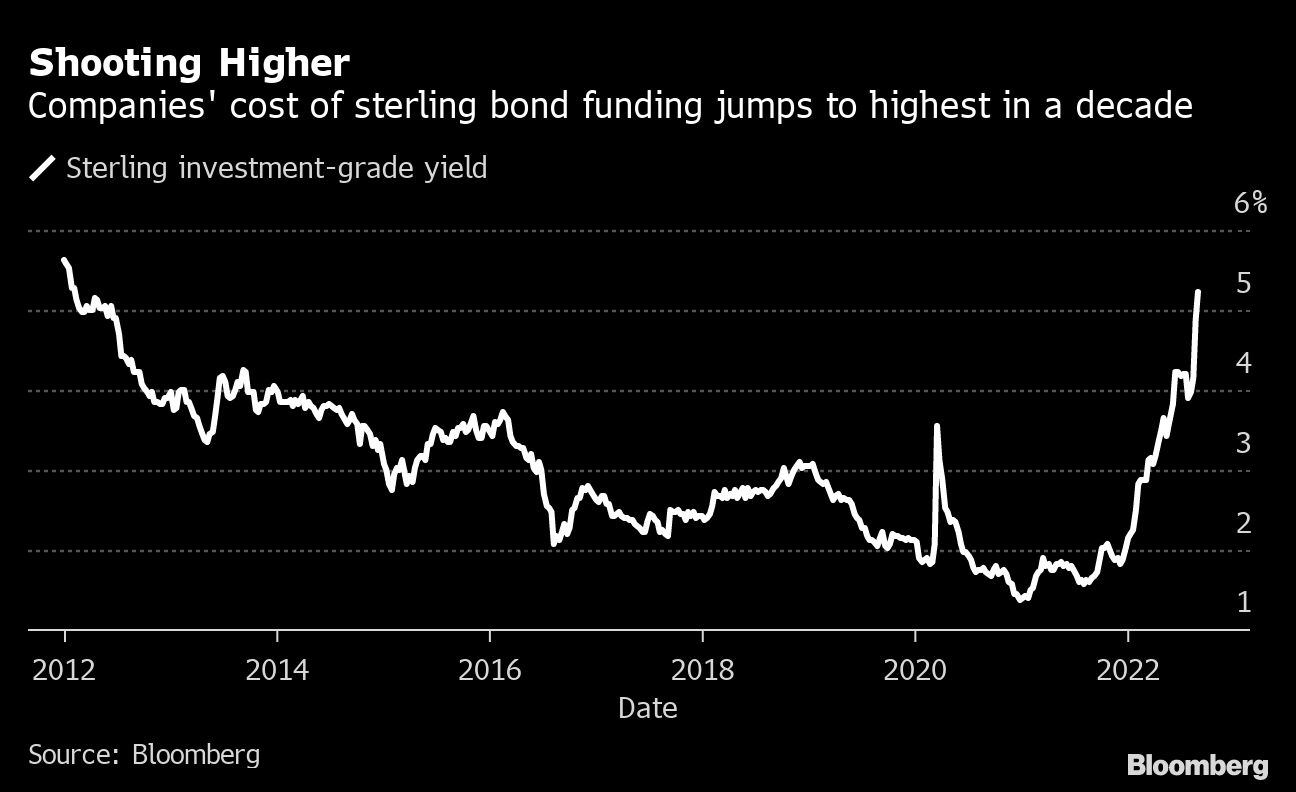
Sterling market had tumbled in the weeks before Truss's victory with investors wary of her plans to cut taxes despite the inflation pressures that have hit the pound. The yield that investors demand to lend to British companies has risen to its highest level in a decade.

Under Truss's plan, energy suppliers will be obliged to charge households a reduced rate for their energy and the government will guarantee financing that will cover the difference with what they would have charged under the previous system, according to documents seen by Bloomberg.
Jacob Rees-Mogg, who is set to become Business Secretary in Truss's government, held talks with the chief executives of energy companies Monday to discuss the plans. The companies were receptive to the idea, which means they will avoid a windfall tax and see the shortfall in their revenue covered by the taxpayer, a person present said.
Read More: Truss Plan to ‘Turbo-Charge' UK Economy Already Alarms Markets
During the campaign to lead the governing Conservative Party Truss had already pledged to remove a green levy of about £150 a year from bills while the previous administration had promised another £400 in government subsidies to help families. Added together with the new aid package, the average household will effectively see their bills frozen, the officials said.
The price that energy companies are allowed to charge consumers will be set by ministers will likely be reviewed every quarter, the person added.
As recently as last week, Truss had wanted to extend the existing support package put in place by former chancellor Rishi Sunak from £400 per household to £1,000. However, after lengthy internal discussions, it was decided this would not be enough and she had to go further, according to an aide.
Read More: Even Liz Truss Supporters Worry She Could Wreak Havoc for the UK
(Updates with pound move in fourth paragraph)
More stories like this are available on bloomberg.com
©2022 Bloomberg L.P.

-
Signature Play: The Classic Cocktail Is Dead. Or Is It?

Classic cocktails are disappearing from India's cocktail menus. But they're still being ordered, taught to bartenders and borrowed from. So, who's really having the last drink?
-
A New Samvat Wishlist: Inclusive Prosperity And Human Development
India has strengthened its economic foundations through infrastructure, digital access and enterprise. Its next growth chapter must deepen productivity, create better livelihoods and widen participation in prosperity.
-
Love, Sex Aur Dhokha: The Audacious Plot To Spy On Jensen Huang
A Taipei dinner, a Singapore chip buyer and a suspected Chinese asset: inside the alleged spy operation that got close to NVIDIA's Jensen Huang.
-
Ten Things I Learnt This Samvat
Patience can be a trap. Cheap stocks can stay cheap. Leverage can wipe you out. What did Samvat 2082 teach us? Niraj Shah writes on 10 lessons from the year gone by.
-
Talking Points This Week: Tech Nerves, FII Buying, And A Faraway Banking Shock
The global markets are not shining this Diwali. The exception in the large markets is, India.
-
Midterm Rally Lasted A Day. The Hard Reality Of A Divided US May Last Two Years | Opinion
Between a contested AI boom, a debt ceiling that arrives in 2027 and a president with every incentive to act alone, the next two years may prove more volatile than the first day's rally suggests.
-
Blue Wave Will Derail the AI Trade but Won't Dismantle the AI Era | Unhedged Position
The Democrats' sweep of the US Congress will see politics collide with economic forces both over the long and short term.
-
It's Time To Take The GST Council's Bet On Trust Global
Payment records can prove India's services exports, and clear, proportionate rules can bring foreign digital sellers into the tax net.
-
Opinion | India at 38: From Innovation Overperformer to Innovation Powerhouse
India now has 453 VC-backed deep science startups, 18 of them late-stage, after 117 percent growth since 2020. Laurus Labs, at USD 9.3 billion, is the most valuable deep science company in any middle-income economy outside China.









