Trump Threatens 100% Russia Tariffs, Vows Arms For Ukraine
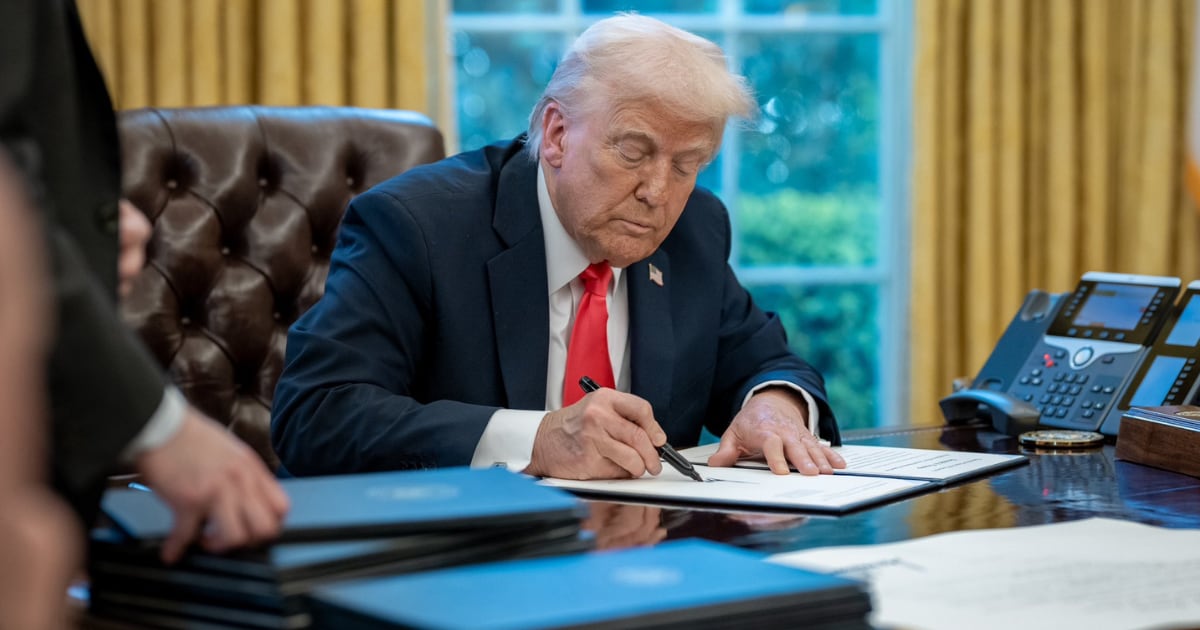
US President Donald Trump threatened to impose stiff financial penalties on Russia if it does not end hostilities with Ukraine even as he pledged fresh weapons supplies for Kyiv.
“We're going to be doing very severe tariffs if we don't have a deal in 50 days, tariffs at about 100%,” Trump said Monday during a meeting with NATO Secretary General Mark Rutte at the White House.
Trump said the levies would come in the form of “secondary tariffs,” without providing details. The US president has used the term in the past to describe duties imposed on countries for trading with American adversaries.
Asked later if Trump meant to refer to the more widely known tool “secondary sanctions,” Commerce Secretary Howard Lutnick told reporters that sanctions and tariffs were “both tools in his toolbox” and that “you can do either one.” A White House official said Russia could face both measures if it fails to sign a ceasefire deal by early September.
Matt Whitaker, the US ambassador to NATO, said the planned action effectively represents secondary sanctions on countries buying oil from Russia. “It's about tariffs on countries like India and China that are buying their oil,” he told reporters. “And it really is going to, I think, dramatically impact the Russian economy.”
The threats echo punishment spelled out in a bipartisan bill in Congress that would impose 500% tariffs on countries that buy Russian oil and gas. Trump also vowed earlier this year to tariff imports from countries that buy Venezuelan oil.
Trump did not elaborate on the powers he would use to impose secondary tariffs. He said he wasn't sure “we need” Congress to act in order to move forward but said the legislation “could be very useful.”
The comments mark the latest signal of Trump's growing impatience with Moscow's war in Ukraine, which has dragged on since 2022. But the arrangement also risks Moscow continuing its barrage on the battlefield before it returns to talks.
Trump said the US was sending a “top-of-the-line weapons” package that includes Patriot air defense batteries. The president said that NATO member states will pay for the weapons to be sent to Ukraine.
“We're not buying it, but we will manufacture it,” Trump said. “They're going to be paying for it.”
Much of what Kyiv will receive will depend on Europe's ability and willingness to make the purchases. Ukraine needs air defense systems and drone interceptors as well as a constant supply of artillery shells and missiles as Moscow unleashes record air strikes.
Ukrainian President Volodymyr Zelenskiy said Monday in a post on X that he had spoken with Trump, who briefed him on his discussions with Rutte.
“We discussed the necessary means and solutions with the President to provide better protection for people from Russian attacks and to strengthen our positions. We are ready to work as productively as possible to achieve peace,” Zelenskiy said. “We agreed to catch up more often by phone and coordinate our steps in the future as well.”
Trump hailed Monday's announcement as a major shift in course as he looks to push Russian President Vladimir Putin to end the hostilities. But the details of the decision also reflect Trump's priorities: It won't cost the US anything and Trump is not dedicating any new US funding to Ukraine, at least for now.
“I'm disappointed in President Putin because I thought we would have had a deal two months ago, but it doesn't seem to get there,” Trump said.
The White House didn't immediately explain how Trump envisioned the secondary tariff program working. Oil fell after Trump made his threat, with West Texas Intermediate down 2.1% to settle below $67 a barrel.
The president's remarks in recent weeks make clear that his willingness to deal with Putin is being tested. Trump directed most of his ire at Zelenskiy during the first several months of his term but has grown increasingly frustrated that Putin is still refusing his ceasefire demands.
Many of the details of the new weapons cache for Ukraine also remained unclear after Trump's meeting with Rutte.
The NATO chief said the bloc would coordinate with allies to fulfill Ukraine's military needs including air defense equipment, missiles and ammunition. Germany will play a major part, alongside Finland, Denmark, Sweden, Norway, The Netherlands and Canada, according to Rutte.
Hours later, German Defense Minister Boris Pistorius, also in Washington, said Germany had asked the US to make two more Patriot missile batteries available for Ukraine, and he and US Defense Secretary Pete Hegseth had promised to resolve any outstanding issues “quickly and quietly.”
He said that meant Germany expected to pay about $2 billion. Berlin also plans to buy the mid-range Typhon missile system, he said.
Rutte said that the deal with Trump will allow allies to send weapons to Ukraine more quickly, with the US later backfilling the allies' supplies. The agreement would be “just the first wave” and more is to come, he added.
“This is again Europeans stepping up,” Rutte said, adding that Putin should “take negotiations about Ukraine more seriously.”

-
'Never Seen This Level Of Negativity': Sandeep Tandon Says The Next Rally May Be Closer Than You Think

Veteran investor Sandeep Tandon says foreign selling is easing, large-caps are due a comeback and mid-caps are crowded, while he turns positive on gold, power and pharma this Diwali.
-
Indians Stay With Family, Not In Hotels | The Reason Why
India still lacks enough clean, reliable and affordable hotels for budget-conscious travellers.
-
The Economic Imperative: Analysing The Material Driving Force Behind India-Canada Strategic Reset
This economic complementarity is further reinforced by deep institutional investment ties and talent mobility, which form the bedrock of the bilateral framework.
-
Medicine Pricing: Where Must Profit Stop?
India must confront excessive margins, hidden incentives and regulatory gaps that threaten the integrity of medicine.
-
Why Amazon And Flipkart Are Struggling To Beat Meesho In India's Smaller Cities
With 274 million users and lowest-cost logistics, Meesho is defending its value commerce crown against giants like Amazon and Flipkart.
-
High US Salaries, No Green Card Certainty: The Financial Calculation Facing Indian H-1B Families
The suspension of PERM processing at eight technology employers does not cancel existing H-1B visas. What it does is force a question many Indian families have been avoiding: is the US salary worth tying your career and family plans to one employer?
-
Swiggy vs Eternal: Food Delivery's Two Rivals Are No Longer In The Same Race
Eternal is building a private AI assistant, dark.ai. Swiggy is still working out how to make Instamart pay, with an operating loss of Rs 895 crore in the July-September quarter while Blinkit stayed profitable.
-
Where You Live Shapes How You Get To Work | The Reason Why
Two-wheelers are the most popular way to get to work in India, accounting for nearly 43% of workplace commutes.
-
Unhedged Position: Can India See An Indonesia-Style Time Correction?
The Nifty is trading below levels it first clocked in 2024. Is there, then, as I have suggested in the headline, potential that the current time correction drags on painfully for the next three-five, even ten years?
-
Navigating Friction And Energy Realities: An Analysis Of Marco Rubio's October Visit To India
Occurring at a critical juncture marked by stalled trade negotiations and escalating geopolitical pressures over global energy supplies, the visit offers a profound window into modern US-India relations.










