Trump Loses Bid To Have Hush Money Case Tossed Over Immunity
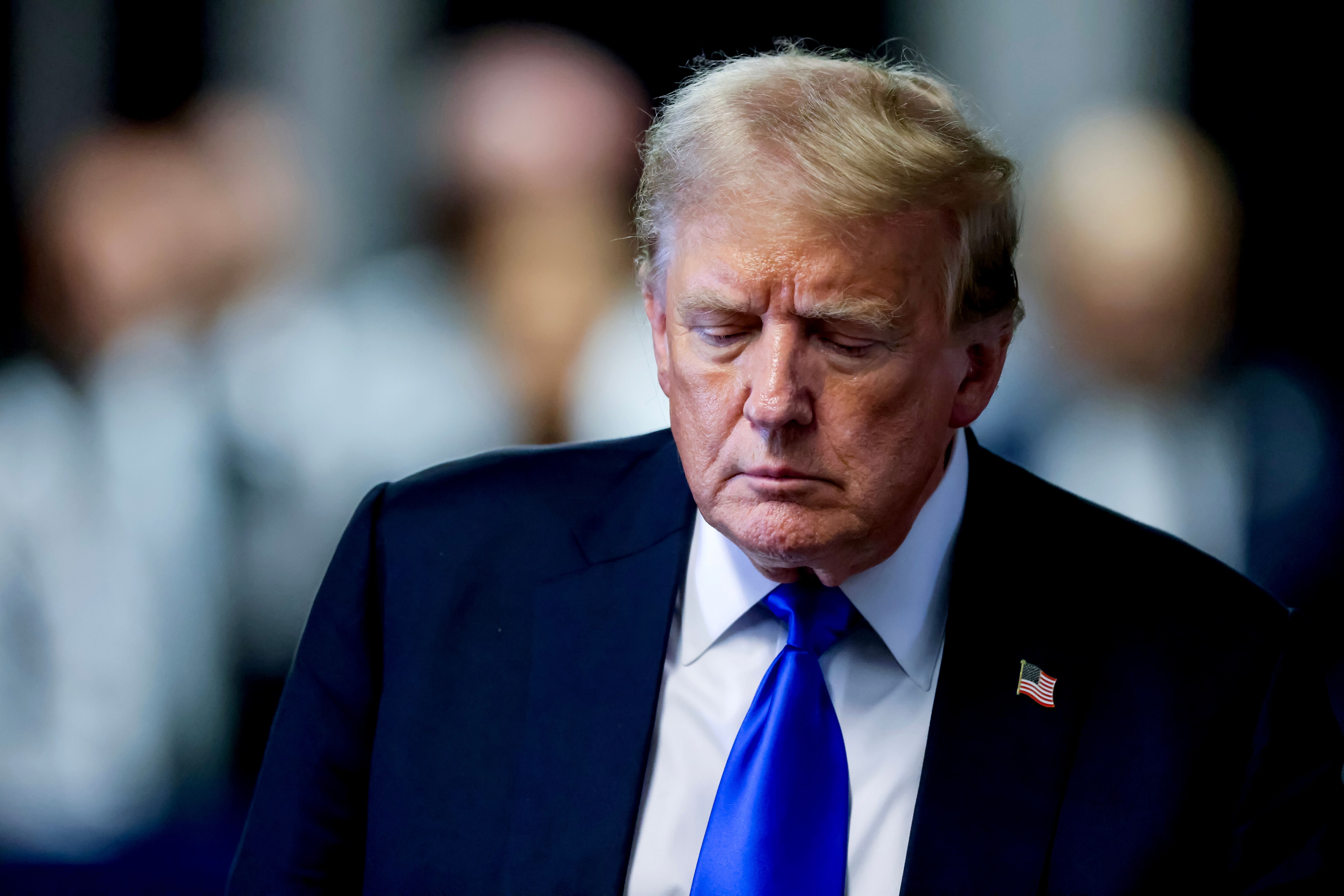
Donald Trump lost his request to toss his conviction in the New York hush money case on presidential immunity grounds, though it's far from certain that the case will proceed to sentencing as the president-elect continues to challenge the verdict.
New York state court Justice Juan Merchan on Monday rejected Trump's argument that his trial was tainted by witness testimony and other evidence that wouldn't have been allowed under a July US Supreme Court decision that granted presidents broad immunity from criminal charges.
Merchan said in his ruling that Trump failed to raise his immunity argument in a timely fashion and also didn't object to the use of certain evidence stemming from his time in the White House — such as testimony from former aide Hope Hicks and other evidence — until the first day of jury selection on April 15. But he ruled that even that testimony wasn't subject to the Supreme Court's ruling.
Merchan said that even if the challenged evidence fell within Trump's presidential authority, prosecutors used it to prove “decidedly personal acts of falsifying business records” and that there is “no danger of intrusion on the authority and function of the Executive Branch.”
Finally, Merchan said that any possible error in admitting evidence was harmless, in that it would not have changed the “overwhelming evidence of guilt” against Trump. In a separate ruling, Merchan rejected arguments from the Trump team that the Supreme Court ruling blocks him from ruling in the case at all.
Trump's lawyers didn't immediately respond to an email seeking comment on Merchan's decision.
Merchan is considering a request by Trump to throw out the case in light of rules to protect sitting presidents from prosecution.
A Manhattan jury in May found Trump guilty of falsifying business records to conceal a $130,000 payment to former adult-film actress Stormy Daniels before the 2016 election. The verdict on 34 felony counts made Trump the first former president to be convicted of a crime.
The US Supreme Court held in July that former presidents are largely immune from charges over conduct that falls within their official duties in office. The hush money case was focused on Trump's conduct before he was in office — a scheme to keep tabloid stories from being published — but his lawyers argued the immunity ruling nevertheless had an impact.
Trump, 78, faces as long as four years behind bars, though many experts have predicted all along — even before the election — that he would likely get far less time than that or even just probation. The case is the only one of four criminal prosecutions to go to trial but also bogged Trump down during his campaign.
Even so, Trump's sentencing in the hush money case was immediately placed in doubt when he won the Nov. 5 contest against his Democratic opponent, Vice President Kamala Harris. While the White House does not have any authority over state cases, Trump's lawyers are arguing that allowing the case to proceed would violate the Constitution by undermining the US presidency.
The writing is already on the wall for the two federal cases against Trump. The Justice Department ended its pursuit of two criminal cases against him on Nov. 25 while a Georgia state case has stalled over Trump's challenges.
Merchan conducted a detailed analysis of some evidence jurors reviewed to decide if the Supreme Court ruling required him to throw out the conviction. Prosecutors argued that even if Merchan excluded evidence affected by the new standard, it was only a “sliver of the mountains of testimony and documentary proof” underpinning Trump's conviction.

-
Getting To Work Costs Women More | The Reason Why

It is not just about women paying more than men. It is about women paying much more in cities than in villages.
-
AI Bias In Investing Cannot Be Eliminated, But It Can Be Governed
Framing is a particularly important example as identical financial information presented in terms of gains rather than losses can lead an LLM to reach a different assessment.
-
Joining The Dots | Dark Skies, Steady Diya: Why Hope Holds This Diwali
With war, a weak rupee and foreign outflows weighing on sentiment, policymakers at the NDTV World Summit and market veterans at NDTV Profit Ignite: Diwali Edition offered the same advice: stay invested and filter out the noise.
-
The Curious Case of Equitas Small Finance Bank And A CEO Who Quit For Stock
PN Vasudevan believes persistent investor concerns over a perceived conflict of interest had become a governance overhang on Equitas Small Finance Bank's stock, even as the lender improved profitability and asset quality.
-
Talking Points This Week: AI Cash Burn, A Tiger Comeback And An India That Still Finds Its Own Path
India is not immune to higher oil or tighter global liquidity, yet its earnings base is broader, its domestic policy levers are still available.
-
Foreign Investors Own Half Of HDFC Bank and ICICI Bank. An LTCG Cut Could Matter Most Here
Foreign portfolio investors have US$115 billion parked in HDFC Bank, ICICI Bank. If the government cuts long-term capital gains tax, Jefferies says returning foreign money could land here first.
-
'Never Seen This Level Of Negativity': Sandeep Tandon Says The Next Rally May Be Closer Than You Think
Veteran investor Sandeep Tandon says foreign selling is easing, large-caps are due a comeback and mid-caps are crowded, while he turns positive on gold, power and pharma this Diwali.
-
Indians Stay With Family, Not In Hotels | The Reason Why
India still lacks enough clean, reliable and affordable hotels for budget-conscious travellers.
-
The Economic Imperative: Analysing The Material Driving Force Behind India-Canada Strategic Reset
This economic complementarity is further reinforced by deep institutional investment ties and talent mobility, which form the bedrock of the bilateral framework.
-
Medicine Pricing: Where Must Profit Stop?
India must confront excessive margins, hidden incentives and regulatory gaps that threaten the integrity of medicine.










