Trump Extends Trade Fight As Steel, Aluminum Tariffs Take Effect
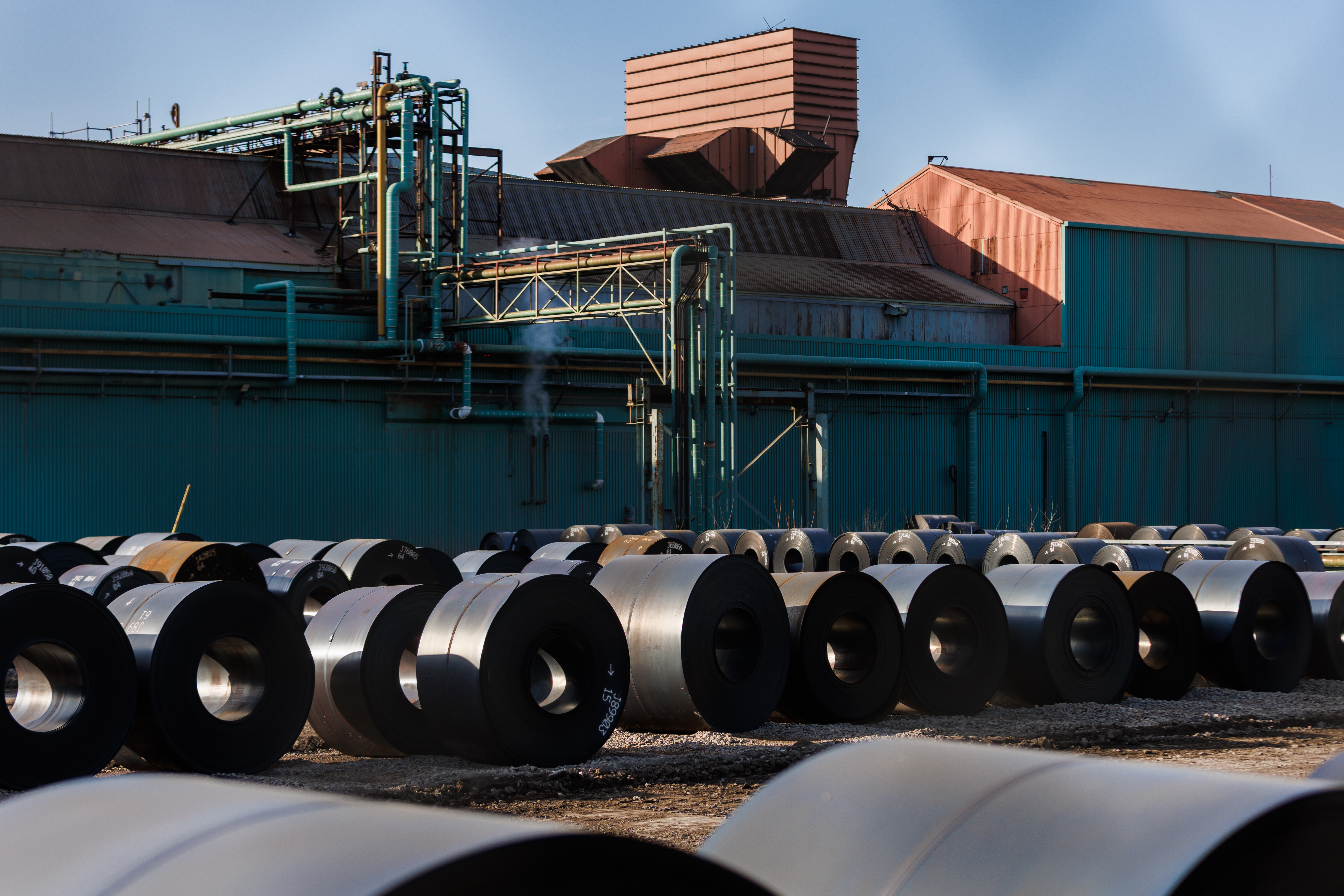
President Donald Trump's latest tariffs on steel and aluminum imports came into force Wednesday, extending his trade wars to more of the US's top trading partners in a risky bid to revive an industrial base that migrated over decades to foreign competitors.
The president announced his plan last month to impose 25% duties on the metals. No exemptions have been granted.
The latest restrictions kick in after a tumultuous day at the White House, when Trump threatened to double the metals tariffs on Canada to 50%, only to back off when Ontario agreed to drop plans to impose a surcharge on electricity sent to the US — all while downplaying the risk of a tariff-led recession that has sent US markets plunging.
Trump's move to widen his trade offensive comes at a perilous juncture seven weeks into his second term. His rapid effort to rewire the US economy as a global manufacturing power has rattled financial markets, spooked consumers still haunted by pandemic-era inflation and fueled recession fears amid mounting uncertainty for corporate America.
Trump pressed on with the metals tariffs despite a flurry of last-minute lobbying from US stakeholders, including the country's largest aluminum producer, Alcoa Corp. The company warned the tariffs would imperil tens of thousands of jobs while raising prices for Americans already feeling their household budgets squeezed.
The president acted with the backing of some domestic industry executives, who say the protectionist measures could raise profits for US producers and bring steel and aluminum jobs back from overseas.
The metals tariffs apply worldwide, with effects extending to economic rivals as well as close US allies such as Australia, the European Union, South Korea and Japan.
Aluminum was up 0.3% on the London Metal Exchange immediately after the tariffs kicked in, while hot-rolled coil — a key steel product — rose 0.4% on the Shanghai Futures Exchange.

Steel and aluminum levies are part of Trump's plan to build significant barriers around the US economy, moves he has cast as necessary to rebalance a global trading system that is “ripping off” the nation. Yet his indecision on some duties has raised questions about his resolve.
Trump last week allowed 25% tariffs to take effect on Canada and Mexico tied to illegal drugs and migration, but within days announced a month-long exemption for goods covered by the North American trade agreement. At the same time, he doubled a similar tariff on China to 20%.
Trump's steel and aluminum orders revive and expand his 2018 levies on the metals and prohibit exemptions for products made from either of them. That means some $150 billion worth of imported consumer goods get hit with the new tariffs, according to research from Global Trade Alert, in addition to raw steel and aluminum.
Trump's first administration granted exclusions for major suppliers, including Canada, Mexico, Brazil and the European Union, so that some months, fewer than half of imports were covered by the tariffs. Administration officials have warned not to expect future carveouts.
Tariff Anxiety
Anxiety that tariffs and Trump's government downsizing push will stifle US growth has fueled a three-week stretch of volatility in global markets.
Global trade disputes are expected to intensify next month. Trump's advisers are crafting so-called “reciprocal” tariffs on trading partners worldwide that could take effect as soon as April 2. He's also promised duties on automobiles, semiconductors, pharmaceuticals, lumber and agricultural products. Tariffs on copper are under investigation.
Many US manufacturers have championed Trump's tariffs on steel and aluminum, arguing subsidized foreign rivals have unfairly set out to dominate the industry, rob market share and jobs from US suppliers. They argue the metal industry is critical to the US industrial base and national security.
“Strengthening the steel and aluminum tariffs” will help incentivize “companies to boost output, make new investments and hire workers,” said Scott Paul, president of the Alliance for American Manufacturing. “Including derivative steel products makes a lot of sense to ensure that importers can't game the system and American companies that make these products have a level playing field.”
The nation's largest steelmakers, including Nucor Corp., United States Steel Corp., Cleveland-Cliffs Inc. and Steel Dynamics Inc, last week urged Trump to “resist” calls for carveouts, warning that previous exemptions prompted a surge of imports, causing prices to drop and their profits to shrink.
Before the exemptions, Trump's 2018 tariffs helped boost prices — and reduce imports — of both steel and aluminum.
The US steel industry is coming off its worst year since Trump's first term, as lackluster construction demand, inflation on input materials and high borrowing costs crushed their earnings. While imports rose in 2024, they remained lower than 2022 and 2021. Steel inventories are near a multi-year high, sitting in warehouses awaiting an increase in demand.
The tariffs present a more complex challenge for the aluminum industry. Unlike American steelmakers, aluminum producers have more global footprints. More than half of the metal consumed in the US is made in Canada, where the biggest producers are Rio Tinto Group and Pittsburgh-based Alcoa.

Alcoa Chief Executive Officer William Oplinger, Rio Tinto representatives, the president of the US Aluminum Association and others have recently been directly involved in lobbying the Trump administration to avoid the added tariffs on Canadian imports, according to people familiar with the discussions who asked not to be named because they were private.
Oplinger predicts devastating consequences from a 25% tariff, including the loss of about 20,000 direct US aluminum industry jobs and another 80,000 indirect jobs.
Economists predict the tariffs are likely to drive up costs for some domestic industries that are heavily reliant on foreign supplies of specialty steel. That includes the oil industry, which uses steel pipes and other materials at wells. Higher costs for steel and aluminum also could trickle down to consumers in the form of more expensive automobiles, appliances and even canned drinks.
Supporters of the president's plan argue the tariffs ultimately will help drive more manufacturing to the US. And while even the president has acknowledged there may be some short-term economic pain from his broader tariff onslaught for US consumers, administration officials say extended tax cuts and more domestic energy production should help offset those costs.

The metal tariffs prompted global shifts even before they took effect. China's top private aluminum producer, China Hongqiao Group Ltd.. is exploring options for boosting sales in markets beyond the US, including nations that are part of Beijing's Belt and Road Initiative, the Middle East and Southeast Asia.
Mexico has launched trade probes into whether aluminum bars and laminated steel from China is being dumped below market cost in the country. Those investigations coincide with new scrutiny of the surge in steel imports from Mexico. Trump administration officials have raised the specter that Chinese metals are being imported to the US through its southern neighbor.
© 2025 Bloomberg L.P.

-
Indians Are Travelling, But Not Every Journey Is A Holiday | The Week In Whys

Pilgrims, patients and working women are the real travellers, and the system hasn't quite caught up with them.
-
Getting To Work Costs Women More | The Reason Why
It is not just about women paying more than men. It is about women paying much more in cities than in villages.
-
AI Bias In Investing Cannot Be Eliminated, But It Can Be Governed
Framing is a particularly important example as identical financial information presented in terms of gains rather than losses can lead an LLM to reach a different assessment.
-
Joining The Dots | Dark Skies, Steady Diya: Why Hope Holds This Diwali
With war, a weak rupee and foreign outflows weighing on sentiment, policymakers at the NDTV World Summit and market veterans at NDTV Profit Ignite: Diwali Edition offered the same advice: stay invested and filter out the noise.
-
The Curious Case of Equitas Small Finance Bank And A CEO Who Quit For Stock
PN Vasudevan believes persistent investor concerns over a perceived conflict of interest had become a governance overhang on Equitas Small Finance Bank's stock, even as the lender improved profitability and asset quality.
-
Talking Points This Week: AI Cash Burn, A Tiger Comeback And An India That Still Finds Its Own Path
India is not immune to higher oil or tighter global liquidity, yet its earnings base is broader, its domestic policy levers are still available.
-
Foreign Investors Own Half Of HDFC Bank and ICICI Bank. An LTCG Cut Could Matter Most Here
Foreign portfolio investors have US$115 billion parked in HDFC Bank, ICICI Bank. If the government cuts long-term capital gains tax, Jefferies says returning foreign money could land here first.
-
'Never Seen This Level Of Negativity': Sandeep Tandon Says The Next Rally May Be Closer Than You Think
Veteran investor Sandeep Tandon says foreign selling is easing, large-caps are due a comeback and mid-caps are crowded, while he turns positive on gold, power and pharma this Diwali.
-
Indians Stay With Family, Not In Hotels | The Reason Why
India still lacks enough clean, reliable and affordable hotels for budget-conscious travellers.
-
The Economic Imperative: Analysing The Material Driving Force Behind India-Canada Strategic Reset
This economic complementarity is further reinforced by deep institutional investment ties and talent mobility, which form the bedrock of the bilateral framework.










