Davos WEF 2018: Trump And China Biggest Risks To Global Economy, Says Kenneth Rogoff
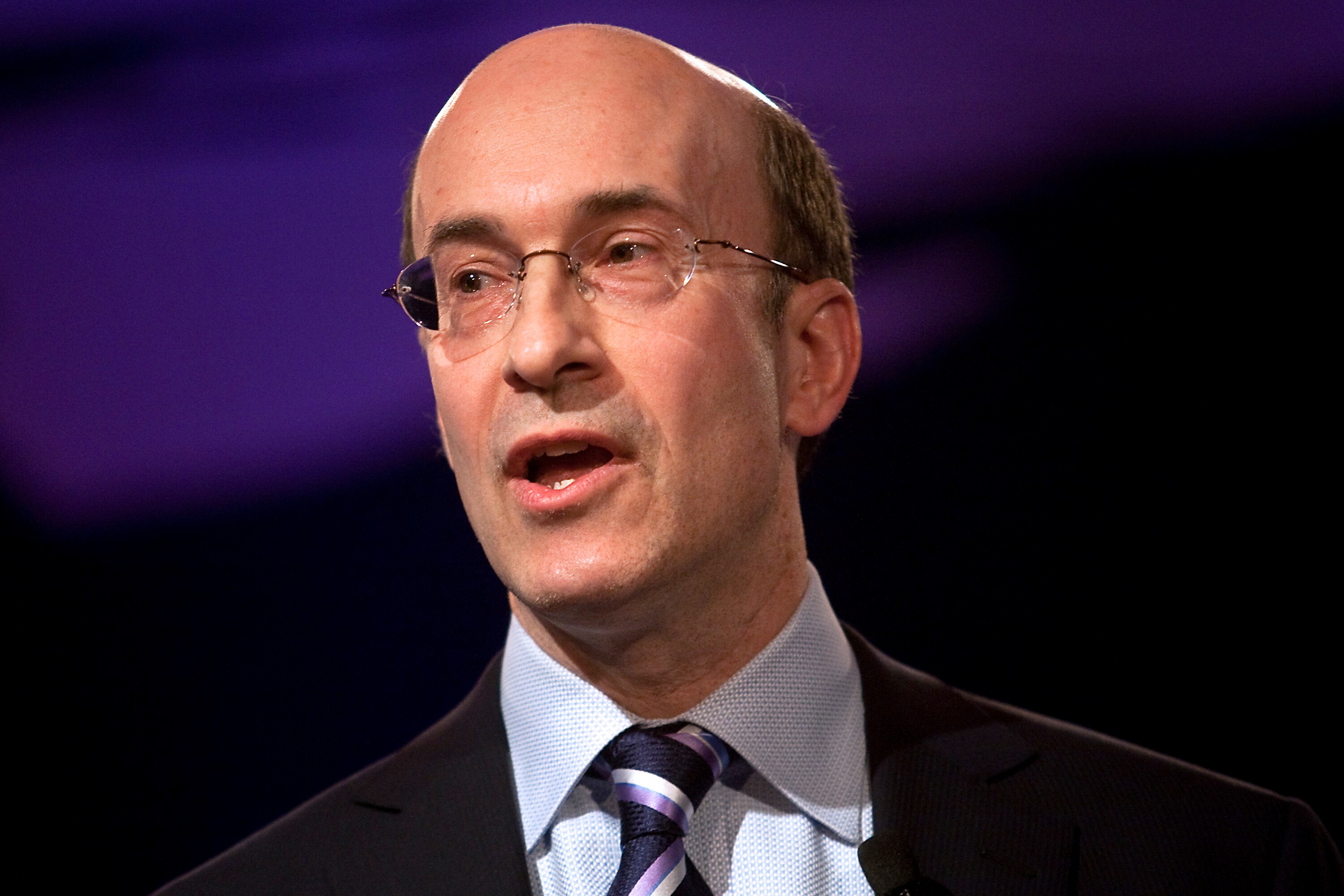
The global economy is projected to grow at a stronger pace this year than the last, but that's not without risks, according to Harvard Economist Kenneth Rogoff. And “one of them is coming to Davos.”
The International Monetary Fund recently revised its global growth projections upward for 2018 after nine years of downgrades. But this outlook is subject to risks, he told BloombergQuint on the sidelines of the World Economic Forum at Davos, Switzerland. Besides U.S. President Donald Trump, risks coming in from China and a faster-than-expected pace of policy rate hikes by global central banks could jeopardise the “economic calm”.
A rapid rise in rates is not his baseline scenario, but the Harvard economist is “more uncertain about it than the markets”.
At some point next year interest rates will be significantly higher than what is currently priced in by the markets. But we may not see that in 2018.Kenneth Rogoff, Harvard Economist
Also Read: World Economy Is Fine, Worry About Geopolitics, Says Nobel Laureate Pissarides
Inflation has not turned out to be a big worry for the global economy so far, but Rogoff believes it will kick in eventually. “You have accelerating growth, unemployment being really low and now fiscal stimulus. Inflation will rise above 2 percent in the U.S. this year.”
Also Read: Three Events That Could Derail Global Growth
Here are edited excerpts from the conversation.
Do you think there could be good strong growth for the economy?
That's the central projection and there is no question about it. The IMF upgraded its forecast but that's after 9 years of downgrading the forecast every year. The baseline is they will keep upgrading their forecast for a while. There are lots of risks. One of them is coming to visit Davos in a day or two, China, perhaps if global interest rates rise faster than what people are expecting. But the shadow of the financial crisis is melting away and that helps.
Do you think that the global interest rates will rise faster than expected?
My baseline is no. But I have more uncertainty about it than the markets do. I don't think anyone knows why they went down so fast. I would bet that at some point in the next few years, interest rates will be significantly higher than what is being currently priced in. But we may not see that in 2018.
It doesn't seem that inflation has given anyone a reason to worry, especially in developed economies.
That's right but eventually it will kick in. There was more slack in employment than we realise and probably the fact that labour share has been declining also was a factor. You have accelerating growth, unemployment is low and then there is the fiscal stimulus. I predict inflation will rise above 2 percent in the U.S. this year.
How will dollar play a role in this because it's been difficult to read the currency?
The big growth story last year was not in the U.S., but it in Europe. Also, Japan did better than expected and some of the emerging markets like Brazil, Russia which were in a deep recession are now in not so much of a recession. It is not that the U.S. is doing badly compared to rest of the world. But that's the story of the dollar. Interests rates will come up in the U.S., but it will also come up in Europe sooner than people expect. But not this year.
The U.S. seems to be the big growth focus for the last few months ever since the tax reforms went through. Do you think that will have an impact on growth rate this year in the U.S. and on the dollar?
Let's just talk about the corporate tax, the individual tax makes no sense to me. The corporate tax was a good structural reform, except that they set the rate too low. So, they took a messy system, produced a much cleaner and more elegant one, that aspect is being praised. But they set the rate down to 21 percent. It is so low that the government could lose a lot of money. The growth effects will come in the future because it rationalises the expenditure. The tax bill shifts money away from housing into industry and more productive things. The IMF projection is just the opposite. They have a very large number of over more than 1 percent for a year that it can add both 2018-19. And then it can be lower because of debt. I think it is a good thing not because of the stimulus but because of structural reform.
One reading was, it seems to favour small industry in America which could have a dramatic impact on the way small industry succeeds over the years. Is that your key takeaway from the tax reform impact?
I did not see the corporate tax cut favouring smaller industries over large ones. Apple seems to be benefitted very nicely. There are a lot of industries that are not incorporated, and they are not benefitting from this.
Do you see this impacting global fund flows?
A lot of this is bookkeeping. The money is not actually moving, it's just moving from where you do some accounting. So, there is much to do about this. But the good thing is the long-term effect. Instead of having a hotch-potch of a corporate tax rate, the average was probably 25 percent. But the official rate was 35 percent. But now they have made this much simpler, cleaner and uniform, which is a good thing.
What is happening in the equity markets of U.S. and in the world?
I don't see a clear case for overvaluation or undervaluation. But volatility surprises me. There are risks. And the biggest risks are rising interest rates, at a faster pace than anyone expects. It doesn't seem to be priced in at all. The volatility is phenomenal. But interest rates are so low, where do you put your money. It is a big driving factor. If interest rates rise, the stock market will easily fall. If interest rates rise much faster than expected than we can start market 20 percent down. And I think Donald Trump will be upset about it.
We have a new Fed chief this year. Should we expect any surprises from Mr. Powell?
Not in the short run. The way these transactions work, as the new Fed Chair said that I am just the clone of the old Fed chair, everything will be the same. And it's only after the first six months or year that the differences take shape. After all, Jerome Powell learnt a lot from Janet Yellen. He worked with her very closely. The Fed was shrinking under Trump because no one was getting appointed to the Board. There were just three people working at one point. Powell is not an economist by training, but he learnt a lot. That said, when you get to face new challenges, it could be different. The thing that worries me the most is that if the U.S. inflation does started rising but the stock market falls. The Fed would want to raise interest rates, and suddenly Trump might be tweeting about it in the middle of the night. That's a serious institutional risk. One of the reasons that investors here are so complacent is because he is leaving the Federal Reserve alone. The appointment is reasonable, and they are suspecting their independence. But interest rates are really low, so why shouldn't he? And that worries me.
What did you make of Prime Minister Narendra Modi's speech?
I liked the message that the world should be open to globalisation. I wondered whether the message was directed at home as much as rest of the world. India is growing faster. It is time for us to think of ourselves in a more global way. I think he has done lot of interesting things. I don't know how easy it would be for him to bring about new policies as the election gets closer. But I hope he is able to do it. He has made lot of dramatic changes to India.
What do you hope from the U.S. President Donald Trump's speech?
What's so unpredictable about Trump is that they may write a speech which his daughter Ivanka looks at and says that it looks great, saying globalization is good and it must be little different and let's make it fair, that would be totally reasonable. Yet, he might say completely off script, and that's very unpredictable. I believe that the main reason for him coming here here is to beat his chest and say that markets are up, global economy is doing well, and you should thank me for what I am doing. You may not like me, but you should thank me. The main reason that market is up and the economy is doing well are because of slow moving factors and not anything. After all, his big bill just got passed. So, how can that be an explanation. So, who knows. I couldn't read his mind.
So is this year going to be a calm one?
I think the growth estimates will go up, but I can't tell you whether this year will be a calm one. There are risks like China is an obvious risk. Things that are unsustainable eventually have problems. That can be tied with President Trump which is the number one risk to the global economy. And also, the interest rate rising. But it there could be a geopolitical event. The worst thing is a geopolitical event saying that things are really good. Geo-political events are mostly really bad, and the economy is very fragile to start with. I can imagine a very large equity track after a geopolitical event but in my study, the financial crises are not so dangerous as debt crises.
Are you saying that Trump is the biggest risk for the global economy this year?
I had him tied with China. It is just something irrational. I think we just have to put him on the list because we just don't know what he might tweet in the middle of the night.

-
Getting To Work Costs Women More | The Reason Why

It is not just about women paying more than men. It is about women paying much more in cities than in villages.
-
AI Bias In Investing Cannot Be Eliminated, But It Can Be Governed
Framing is a particularly important example as identical financial information presented in terms of gains rather than losses can lead an LLM to reach a different assessment.
-
Joining The Dots | Dark Skies, Steady Diya: Why Hope Holds This Diwali
With war, a weak rupee and foreign outflows weighing on sentiment, policymakers at the NDTV World Summit and market veterans at NDTV Profit Ignite: Diwali Edition offered the same advice: stay invested and filter out the noise.
-
The Curious Case of Equitas Small Finance Bank And A CEO Who Quit For Stock
PN Vasudevan believes persistent investor concerns over a perceived conflict of interest had become a governance overhang on Equitas Small Finance Bank's stock, even as the lender improved profitability and asset quality.
-
Talking Points This Week: AI Cash Burn, A Tiger Comeback And An India That Still Finds Its Own Path
India is not immune to higher oil or tighter global liquidity, yet its earnings base is broader, its domestic policy levers are still available.
-
Foreign Investors Own Half Of HDFC Bank and ICICI Bank. An LTCG Cut Could Matter Most Here
Foreign portfolio investors have US$115 billion parked in HDFC Bank, ICICI Bank. If the government cuts long-term capital gains tax, Jefferies says returning foreign money could land here first.
-
'Never Seen This Level Of Negativity': Sandeep Tandon Says The Next Rally May Be Closer Than You Think
Veteran investor Sandeep Tandon says foreign selling is easing, large-caps are due a comeback and mid-caps are crowded, while he turns positive on gold, power and pharma this Diwali.
-
Indians Stay With Family, Not In Hotels | The Reason Why
India still lacks enough clean, reliable and affordable hotels for budget-conscious travellers.
-
The Economic Imperative: Analysing The Material Driving Force Behind India-Canada Strategic Reset
This economic complementarity is further reinforced by deep institutional investment ties and talent mobility, which form the bedrock of the bilateral framework.
-
Medicine Pricing: Where Must Profit Stop?
India must confront excessive margins, hidden incentives and regulatory gaps that threaten the integrity of medicine.










