Troubled China Shadow Bank Zhongzhi Files For Bankruptcy
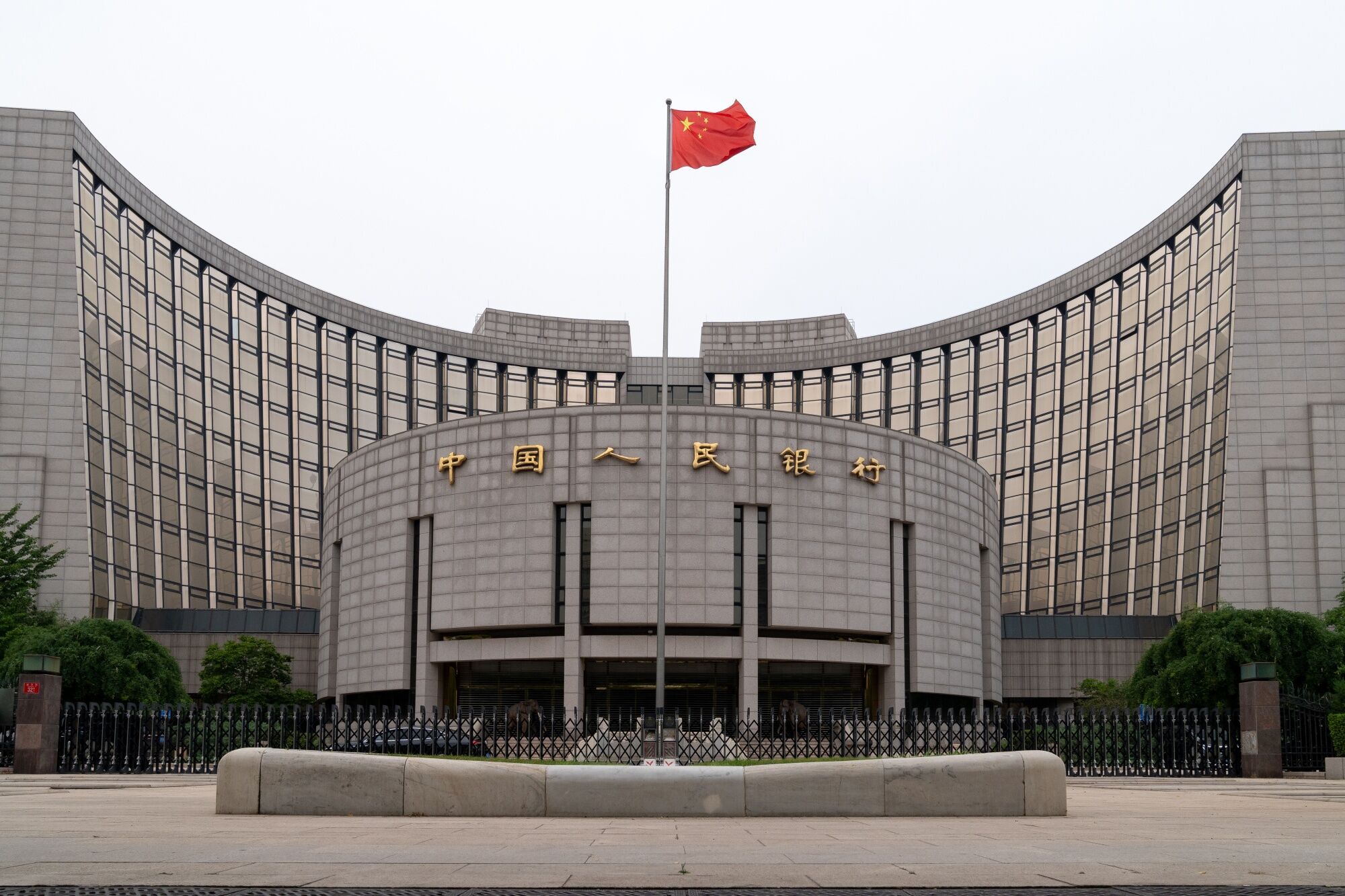
(Bloomberg) -- Chinese shadow banking giant Zhongzhi Enterprise Group Co. filed for bankruptcy, cementing the rapid downfall of a firm that oversaw more than $140 billion at its peak before succumbing to the property crisis that has wreaked havoc on the world's second-largest economy.
Zhongzhi said it “obviously” lacked the ability to repay its debts, according to a statement Friday from Beijing's First Intermediate People's Court, which accepted the case. An audit found Zhongzhi's debts were as much as 460 billion yuan ($64.3 billion), compared with assets of 200 billion yuan, according to a letter to investors in November.
The downfall marks one of China's biggest-ever bankruptcies, putting more stress on already fragile consumer and investor sentiment. The property slump, weak domestic demand and sluggish trade are all weighing on the economy, while its benchmark stock index has plunged three years in a row.
The Zhongzhi filing came just months after the lending giant first triggered concerns in the financial markets when one of its trust-company affiliates failed to repay customers on high-yield investment products, sparking protests in Beijing.
Chinese authorities in November said they opened criminal investigations into the money management business days after the firm revealed a shortfall of $36.4 billion, telling investors it was “severely insolvent.” The company didn't respond to an email request seeking comment outside of business hours Friday.
While the firm's creditors are mostly wealthy individuals rather than financial institutions — limiting the direct impact on the financial system — the collapse exposes potential cracks in the $2.9 trillion trust sector. The failure also highlights the risks of the rapidly growing global private credit market, where the lack of public disclosure on debts raised outside the banking system is one of its defining traits.
Read more: Zhongzhi Crisis Exposes the Perils of Private Credit: Shuli Ren
In recent years, even as rival trusts pared risks, Zhongzhi and its affiliates, especially Zhongrong International Trust Co., extended financing to troubled developers and snapped up assets from companies including China Evergrande Group. China's housing market continues to flounder despite a slew of incentives from Beijing to revive sales, which have have now dropped in 20 of the last 24 months.
“The persistent decline in the real estate market, coupled with stringent policies and increased financial anti-corruption measures, has hindered timely asset collection,” said Zhao Jian, head of the Atlantis Financial Research Institute in Beijing, who estimates more than half of the group's assets are linked to real estate. “Redeeming these assets has become exceedingly challenging.”
The filing also underscores Beijing's unwillingness to bail out struggling financial firms. China Evergrande is among several high-profile developers that have defaulted in recent years amid the real estate crisis, with little direct support from the Communist Party government.
As recently as August, China had asked two of the nation's biggest financial firms to examine the books of Zhongrong International, potentially paving the way for a state-led rescue of the troubled shadow lender, people familiar with the matter said at the time.
A twice-a-decade financial policy meeting attended by President Xi Jinping at the end of October stressed the need to effectively prevent financial risks and crack down on any illegal financial activities. In a following study session, the banking regulator, which also oversees trust firms, vowed to use “strong medicine” to tackle major risks.

Zhongzhi's filing is unusual in that China's highest-profile debt failures in recent years have tended to go through debt restructurings first, avoiding formal bankruptcy. HNA Group Co., the conglomerate that collapsed with billions of dollars of debt, completed its restructuring work in 2022. China Evergrande, whose default in 2021 accelerated the country's property crisis and which has some $327 billion of liabilities, is still struggling to avoid liquidation and hasn't filed for bankruptcy.
“Authorities have accumulated quite some experience from handling earlier cases such as HNA Group and Anbang Insurance, so they're well prepared for risk events like Zhongzhi and more confident they can keep it under control and avoid wider fallout,” said Shen Meng, director of Beijing-based investment bank Chanson & Co.
Shadow banks like Zhongzhi are loosely regulated firms that pool household savings to offer loans and invest in real estate, stocks, bonds and commodities. China's trust industry is a key alternative funding source for weaker borrowers unable to get regular bank loans such as developers and local government financing vehicles. China has been cracking down on shadow banking since late 2017.

Founded in 1995, Beijing-based Zhongzhi expanded into a sprawling empire that had more than 1 trillion yuan in assets at its peak. The group holds shares in six licensed financial institutions including Zhongrong International, five asset managers as well as four wealth management firms, according to its website. It also has controlling stakes in a string of listed firms across sectors from semiconductors to health and consumption.
The firm said in November that the death of its founder Xie Zhikun in 2021 and the subsequent departure of senior executives had led to a failure of internal management. Previous efforts at a “self-rescue” didn't live up to expectations, Zhongzhi said in the letter. At the time, lawyers and analysts estimated more than three quarters of investor cash would be lost, with just 100 billion yuan recovered from debt of as much as 460 billion yuan.
--With assistance from Zheng Li and Amanda Wang.
(Updates with comments in 13th paragraph)
More stories like this are available on bloomberg.com
©2024 Bloomberg L.P.

-
Getting To Work Costs Women More | The Reason Why

It is not just about women paying more than men. It is about women paying much more in cities than in villages.
-
AI Bias In Investing Cannot Be Eliminated, But It Can Be Governed
Framing is a particularly important example as identical financial information presented in terms of gains rather than losses can lead an LLM to reach a different assessment.
-
Joining The Dots | Dark Skies, Steady Diya: Why Hope Holds This Diwali
With war, a weak rupee and foreign outflows weighing on sentiment, policymakers at the NDTV World Summit and market veterans at NDTV Profit Ignite: Diwali Edition offered the same advice: stay invested and filter out the noise.
-
The Curious Case of Equitas Small Finance Bank And A CEO Who Quit For Stock
PN Vasudevan believes persistent investor concerns over a perceived conflict of interest had become a governance overhang on Equitas Small Finance Bank's stock, even as the lender improved profitability and asset quality.
-
Talking Points This Week: AI Cash Burn, A Tiger Comeback And An India That Still Finds Its Own Path
India is not immune to higher oil or tighter global liquidity, yet its earnings base is broader, its domestic policy levers are still available.
-
Foreign Investors Own Half Of HDFC Bank and ICICI Bank. An LTCG Cut Could Matter Most Here
Foreign portfolio investors have US$115 billion parked in HDFC Bank, ICICI Bank. If the government cuts long-term capital gains tax, Jefferies says returning foreign money could land here first.
-
'Never Seen This Level Of Negativity': Sandeep Tandon Says The Next Rally May Be Closer Than You Think
Veteran investor Sandeep Tandon says foreign selling is easing, large-caps are due a comeback and mid-caps are crowded, while he turns positive on gold, power and pharma this Diwali.
-
Indians Stay With Family, Not In Hotels | The Reason Why
India still lacks enough clean, reliable and affordable hotels for budget-conscious travellers.
-
The Economic Imperative: Analysing The Material Driving Force Behind India-Canada Strategic Reset
This economic complementarity is further reinforced by deep institutional investment ties and talent mobility, which form the bedrock of the bilateral framework.
-
Medicine Pricing: Where Must Profit Stop?
India must confront excessive margins, hidden incentives and regulatory gaps that threaten the integrity of medicine.










