Traders See Wild S&P 500 Swings After Trump Address to Congress
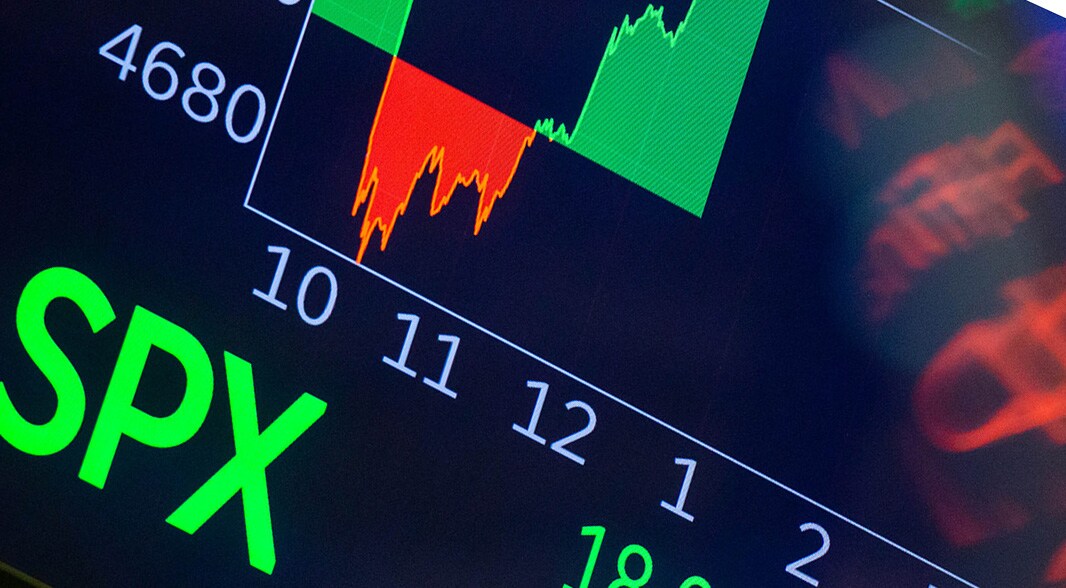
(Bloomberg) --US stocks have been on a wild ride this week, and options traders expect more of that to come as traders assess the latest tariff developments and brace for Friday's monthly jobs report.
The S&P 500 Index is expected to swing 1.4% in either direction Wednesday following President Donald Trump's address to Congress, based on the cost of at-the-money puts and calls, data compiled by Citigroup Inc. show. That would be the biggest implied move since Nov. 6, the day after the US presidential election.
Volatility will likely pick up further on Friday: options traders expect the S&P 500 to move 1.3% in either direction, in what would be the most for any jobs day since the regional bank turmoil in March 2023.
The signals from the options market show a growing sense of anxiety about everything from a full-fledged trade war to economic uncertainty following a string of weaker-than-expected figures. On Tuesday, the S&P 500 fell 1.2%, wiping out its advance since Election Day, as traders upped their bets that the Federal Reserve will need to reduce borrowing costs to support a potential slowdown in growth.
“Macro days matter so much more now,” said Maxwell Grinacoff, an equity derivatives strategist at UBS Group AG. “This is a higher volatility environment so there's going to be more elevated implied moves for the S&P 500.”

In a speech to Congress late Tuesday, Trump warned there could be more economic discomfort ahead and defended his plan to remake the world's largest economy through the biggest tariff increases in a century. Still, stock futures tied to the S&P 500 rebounded after Commerce Secretary Howard Lutnick said Trump was considering some tariff relief.
The past few months have already seen more than the typical volatility around economic data. Over the past three months, the S&P 500's average realized volatility on days when the monthly jobs data, CPI report and Fed rate decisions are released has been nearly 23%, more than double the 12% reading on all other sessions, data complied by Asym 500's show.
After months of muted activity, the equity gauge has busted out of a tight range moving 1% or more in either direction during 12 out of the 41 trading sessions in 2025 — or roughly a quarter of the time this year, according to data compiled by Bloomberg.
Options volatility across markets is elevated as the Fed is wrestling with Trump's policies, which include a crackdown on immigration, a 25% tariffs on Canadian and Mexican goods and an additional charge on China in moves to shore up revenue and domestic manufacturing jobs. Those measures are all projected to stoke inflation, stall economic growth and sway central bank monetary policy.
Even with corporate earnings season winding down, the Cboe Volatility Index, or VIX, is trading at the highest level since December — topping the 20 level that starts to raise concerns for traders. So, any signs of persistent wage inflation — or progress on bringing it down — along with potential moderating in hiring may fuel wild stock swings after Friday's employment data. A gauge of implied volatility in the VIX Index — the VVIX — is hovering 23% above its one-year average.

Traders are looking to the latest unemployment report for clues on whether a slowing but healthy labor market, combined with rising inflation expectations, supports the Fed's inclination to keep rates on hold for the foreseeable future.
Employers are expected to add jobs at a moderate pace in February at a time of federal government layoffs and a consumer spending slowdown. Payrolls in the world's largest economy are seen rising 160,000, based on the median estimate in a Bloomberg survey of economists. The jobless rate is expected to hold steady at 4%, while average hourly earnings are projected to have risen 4.1% from a year earlier.
“Weaker growth data along with the Trump tariff news has forced markets to price in larger daily swings,” said Stuart Kaiser, Citigroup's head of US equity trading strategy. “That means a deterioration in economic data has the potential to raise realized volatility now.”

-
Foreign Investors Own Half Of HDFC Bank and ICICI Bank. An LTCG Cut Could Matter Most Here

Foreign portfolio investors have US$115 billion parked in HDFC Bank, ICICI Bank. If the government cuts long-term capital gains tax, Jefferies says returning foreign money could land here first.
-
'Never Seen This Level Of Negativity': Sandeep Tandon Says The Next Rally May Be Closer Than You Think
Veteran investor Sandeep Tandon says foreign selling is easing, large-caps are due a comeback and mid-caps are crowded, while he turns positive on gold, power and pharma this Diwali.
-
Indians Stay With Family, Not In Hotels | The Reason Why
India still lacks enough clean, reliable and affordable hotels for budget-conscious travellers.
-
The Economic Imperative: Analysing The Material Driving Force Behind India-Canada Strategic Reset
This economic complementarity is further reinforced by deep institutional investment ties and talent mobility, which form the bedrock of the bilateral framework.
-
Medicine Pricing: Where Must Profit Stop?
India must confront excessive margins, hidden incentives and regulatory gaps that threaten the integrity of medicine.
-
Why Amazon And Flipkart Are Struggling To Beat Meesho In India's Smaller Cities
With 274 million users and lowest-cost logistics, Meesho is defending its value commerce crown against giants like Amazon and Flipkart.
-
High US Salaries, No Green Card Certainty: The Financial Calculation Facing Indian H-1B Families
The suspension of PERM processing at eight technology employers does not cancel existing H-1B visas. What it does is force a question many Indian families have been avoiding: is the US salary worth tying your career and family plans to one employer?
-
Swiggy vs Eternal: Food Delivery's Two Rivals Are No Longer In The Same Race
Eternal is building a private AI assistant, dark.ai. Swiggy is still working out how to make Instamart pay, with an operating loss of Rs 895 crore in the July-September quarter while Blinkit stayed profitable.
-
Where You Live Shapes How You Get To Work | The Reason Why
Two-wheelers are the most popular way to get to work in India, accounting for nearly 43% of workplace commutes.
-
Unhedged Position: Can India See An Indonesia-Style Time Correction?
The Nifty is trading below levels it first clocked in 2024. Is there, then, as I have suggested in the headline, potential that the current time correction drags on painfully for the next three-five, even ten years?










