Tame US Job Growth Expected In Approach To Fed Meeting

Employers in the US showed little enthusiasm to take on workers during August, and the unemployment rate probably ticked up to an almost four-year high, adding to evidence of a more subdued labor market.
Economists project about 75,000 jobs were added, based on the median of a Bloomberg survey, while the jobless rate is seen at 4.3%. Four straight months of sub-100,000 payrolls growth would mark the weakest such stretch since the onset of the pandemic in 2020.
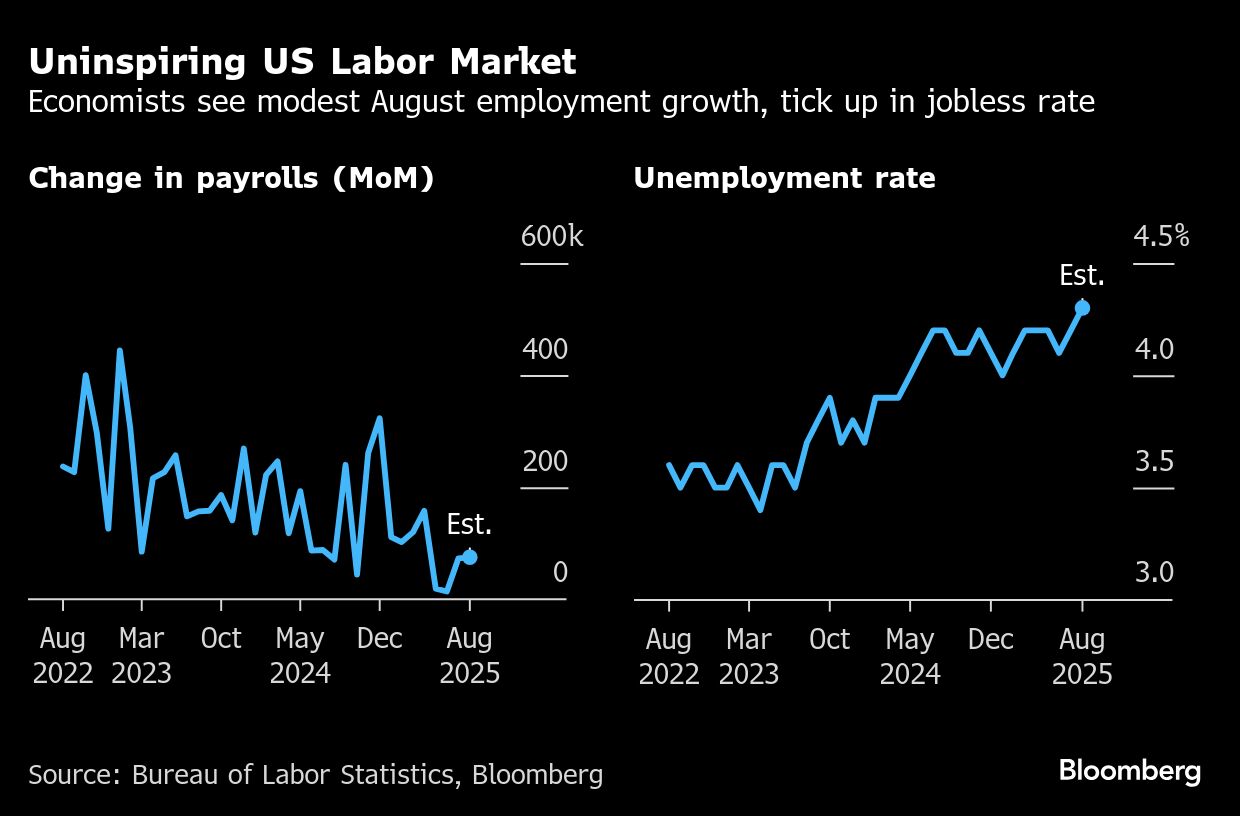
Friday's jobs data from the Bureau of Labor Statistics will be a crucial input for Federal Reserve officials ahead of their September policy meeting. Some are less concerned about the slowdown in payrolls growth because it's being accompanied by a decline in the participation rate. They're also wary of reducing borrowing costs when inflation is gradually increasing.
Others, like Governor Christopher Waller, say the sluggish hiring pace in recent months means the Fed should move forward with the first interest-rate cut of the year.
Investors in the coming week will parse comments — albeit ahead of the jobs report — from Fed officials including regional bank presidents Alberto Musalem of St. Louis, John Williams of New York, and Austan Goolsbee of Chicago. The Fed will also release its Beige Book, a collection of anecdotes about the economy, on Wednesday.
The appetite for workers has gradually diminished as companies focus on containing costs such as higher import duties. Separate data due on Wednesday is projected to show a decline in July job openings from the prior month, to one of lowest levels since 2021.
What Bloomberg Economics Says: “We expect nonfarm payrolls to add 93k jobs — a modest improvement from July, and consistent with the story told by a broad array of labor-market indicators. We expect local government, leisure and hospitality, and construction to drive the improved hiring.”— Anna Wong, Stuart Paul, Eliza Winger, Estelle Ou and Chris G. Collins, economists. For full analysis, click here
With the goal of engineering stronger job growth, President Donald Trump is attempting to use tariffs to reverse trade imbalances, spark long-term investment, and spur the domestic output of critical goods and materials.
Other data in the coming holiday-shortened week include the Institute for Supply Management's August surveys of manufacturers and service providers. On Thursday, government figures will likely show a sharp widening in the goods and services trade deficit for July, after preliminary data indicated a surge in imported merchandise ahead of higher tariffs.
For more, read Bloomberg Economics' full Week Ahead for the US
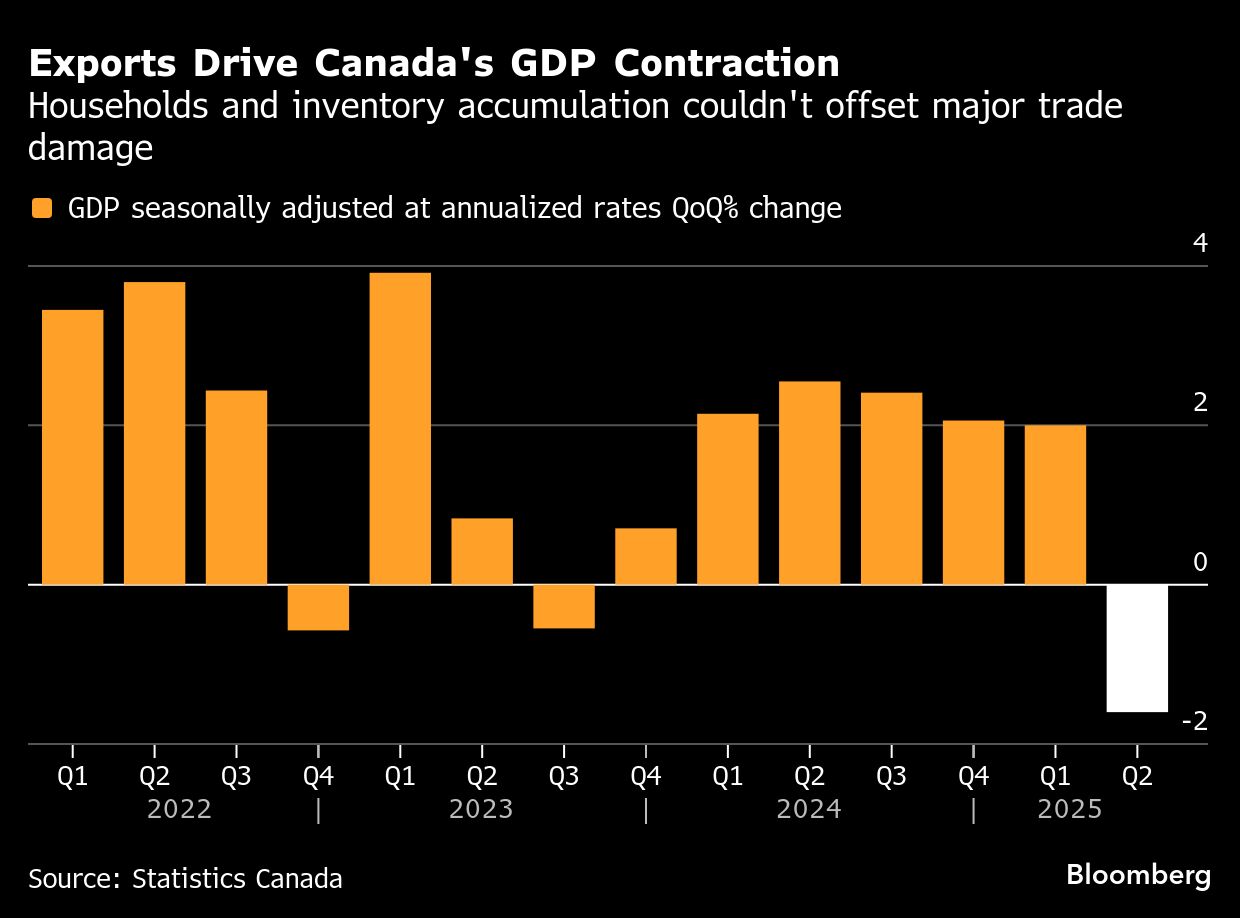
Canada will also release jobs data, which are expected to show the labor market stayed soft in August in the face of trade tensions. Data on Friday showed the hit to commerce forced Canada's economy into its first contraction for nearly two years.
Merchandise trade numbers for July will likely show a wide and persistent deficit, even as exports may slowly continue their bounce back from the lowest level in three years in April.
Elsewhere, inflation figures from the euro zone to Turkey, key testimony by UK policymakers, and activity data from around Asia will be among the week's highlights.
Click here for what happened in the past week, and below is our wrap of what's coming up in the global economy.
Asia
It's a big week for Australia and South Korea, with a slew of data including second-quarter growth reports. Economists anticipate expansion picked up in Australia while remaining flat in South Korea in figures due on Wednesday.
Australia also reports second-quarter inventories and building approvals on Monday, and exports and household spending figures on Thursday. South Korea announces export figures, with activity likely to have slowed in August, and consumer prices due Tuesday seen easing on the month.
A rush of purchasing managers activity indices features Thailand, China and Vietnam.
Japan's second-quarter capital spending and company profits are reported on Monday, and July cash earnings and household spending in the country round out the week.
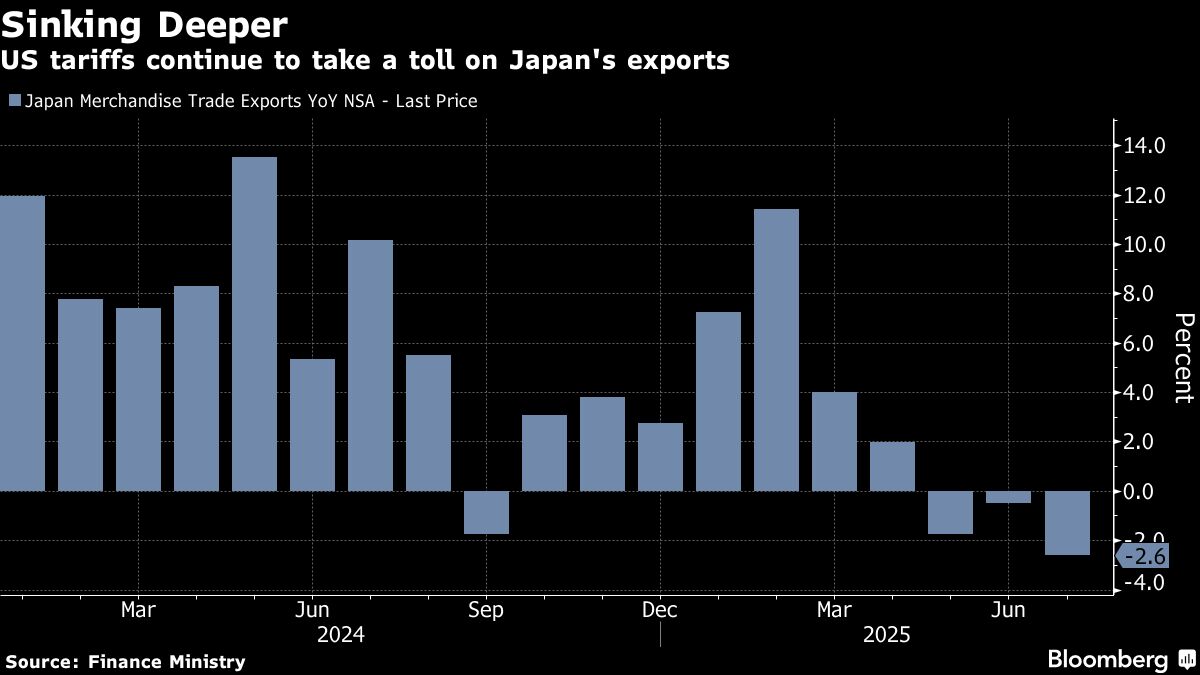
Indonesia and Thailand report consumer prices, while Taiwan and the Philippines release inflation data. Inflationary pressures are abating and the reports will likely show prices little changed in the month or easing.
Elsewhere, Hong Kong shows July retail sales figures on Monday and Singapore reports theirs on Friday. Malaysia's central bank is likely to hold rates at 2.75% on Thursday.
For more, read Bloomberg Economics' full Week Ahead for Asia
Europe, Middle East, Africa
Euro-zone reports include unemployment on Monday, inflation the following day and a revised reading of GDP on Friday. The reports will adhere to a new protocol that no longer allows news organizations to access the numbers shortly before their release.
“Euro-Area Economic Indicators Survey: Data Preview”
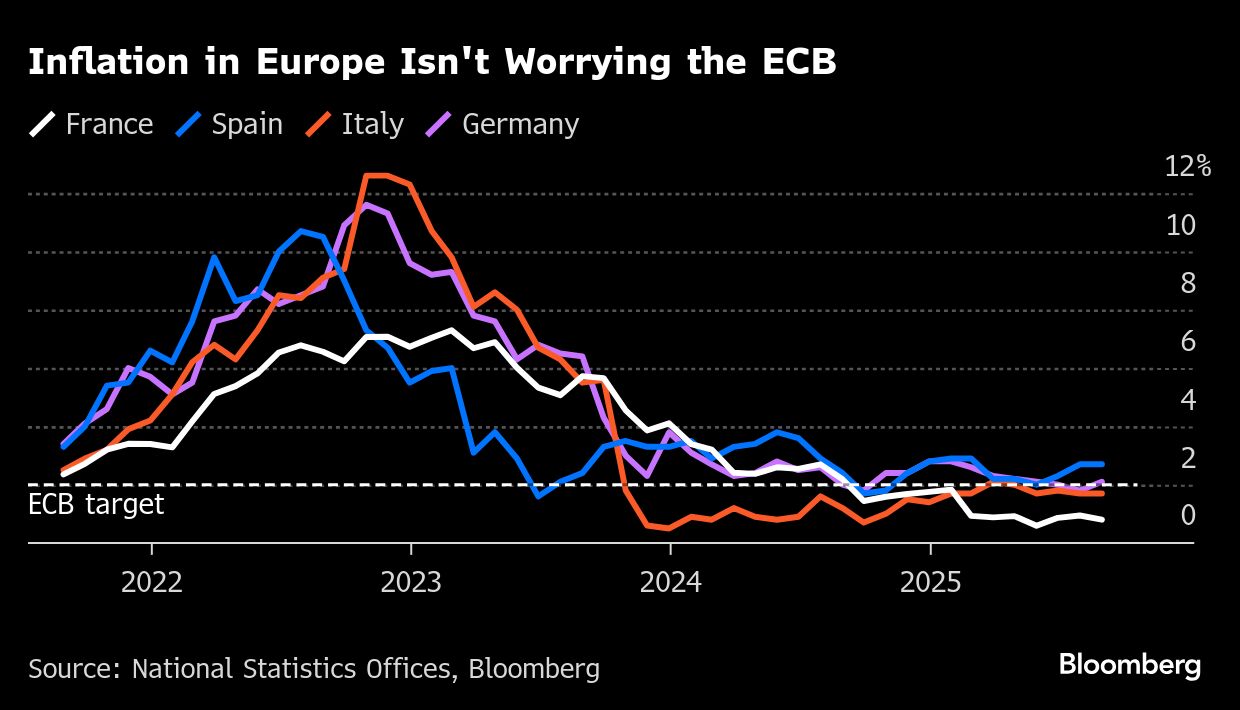
Following a mixed outcome from the euro zone's four biggest economies on Friday, economists anticipate an inflation reading at just above the 2% level targeted by the European Central Bank. That may embolden officials already poised to keep rates on hold on Sept. 11.
Two ECB Executive Board members, Isabel Schnabel and Piero Cipollone, chair panels at the bank's 2025 legal conference in Frankfurt on Monday, and President Christine Lagarde delivers a dinner speech.
Lagarde also speaks on Wednesday in her role as chair of the European Systemic Risk Board, and Cipollone appears before lawmakers in Brussels the following day. Policymakers will begin a pre-decision quiet period on Thursday.
Among data from individual euro-area economies, German factory orders may draw attention for early clues on how US tariffs are impacting manufacturing.
Inflation will be in focus around the wider region:
On Wednesday, Turkey's measure of annual price growth is expected to have slowed in August, albeit still landing above 30%. Evidence of weakening pressures may allow further rate cuts.
Switzerland's reading on Thursday is anticipated to have exceeded zero for a third month in the final report before the Swiss National Bank's quarterly rate decision in September.
Sweden releases data the same day. Analysts forecast the CPIF gauge targeted by the Riksbank to have reached the highest since early 2024.
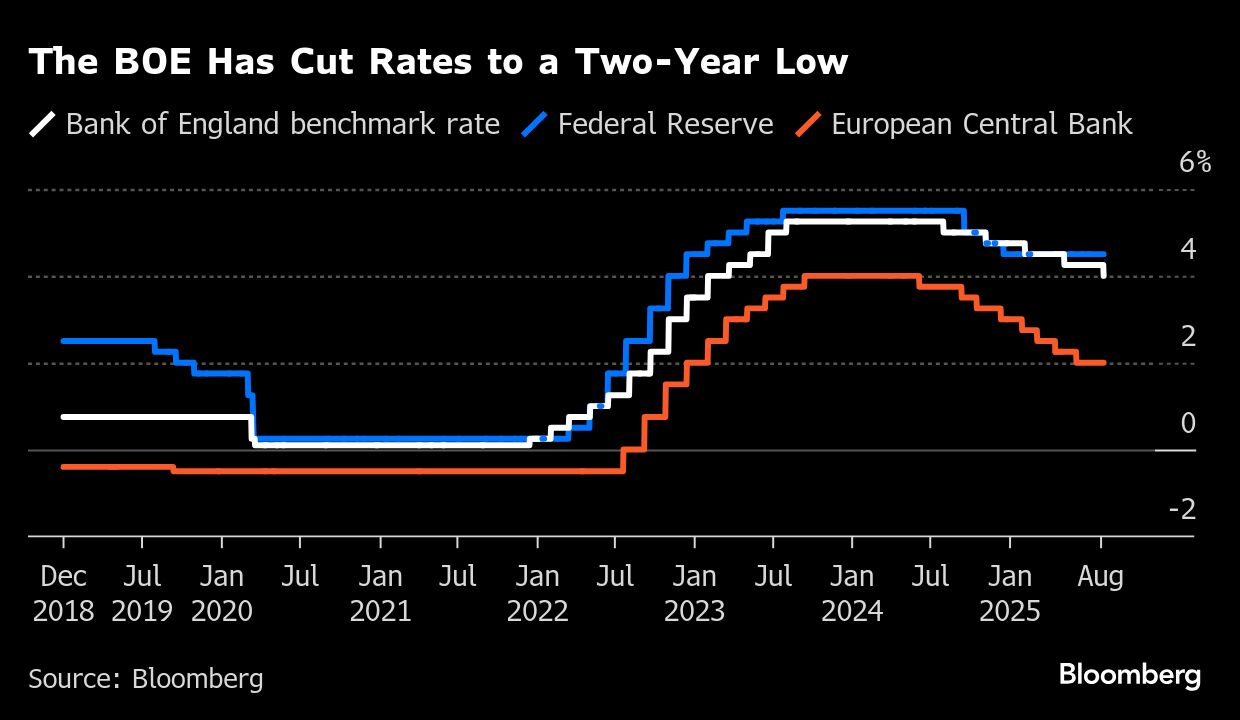
Turning to the UK, Bank of England testimony in parliament on Wednesday will be a highlight. Policymakers from across the spectrum of this month's unprecedented split vote are scheduled to speak, including Governor Andrew Bailey. Retail sales data are due on Friday.
For more, read Bloomberg Economics' full Week Ahead for EMEA
Latin America
Mexican President Claudia Sheinbaum opens the nation's legislative year on Monday. Her comments will be parsed for any discussion of economic priorities, including tariffs on Chinese goods.
Brazil publishes second-quarter GDP figures on Tuesday amid expectations of a slowdown. While it's likely to see its 16th consecutive quarter of expansion, Bloomberg Economics projects growth of 0.4% on a quarterly basis and 1.9% annually, both down from prior readings.
Elsewhere, Chile releases economic activity data for July on Monday, with Bloomberg Economics expecting a rise of 2.2% from a year ago. Peru publishes August inflation readings the same day.
Colombia closes the week with inflation data on Friday, with analysts surveyed by Bloomberg expecting it to accelerate above 5% on an annual basis.

-
One Battle After Another: India's Corporate Dynasties Battle For Control

2026 could go down as Corporate India's year of succession wars, governance battles and family fault lines.
-
Rs 50-Lakh Gold In Bank Locker, Rs 3 Lakh Of Protection: The Gap Most Families Don't Know About
The RBI ties a bank's liability to the annual locker rent and families who want to insure their jewellery face a separate question about how to prove what was inside.
-
The More Food Turns Into Fuel, The Harder It Is To Read Agricultural Markets | The Reason Why
A policy designed to reduce dependence on imported fuel can create new pressures elsewhere in the food economy.
-
Your iPhone Costs 12 Grams Of Gold, A Car About 100. What Does Your Life Weigh?
Measured in rupees, almost everything looks more expensive than it did a generation ago. Measured in grams of gold, a lot of it has become cheaper.
-
Gold Is Rs 22,000 Cheaper Than A Month Ago. Should You Buy Amid The Wedding Season?
Gold's potential slide to $3,500 could save around Rs 4,700 per 10 grams, but a soft inflation print could just as easily push prices back up. One way to split the risk is to buy in parts, some now and the rest after the Fed's Dec. 9 decision.
-
AI Agents Are Gaining Power. Who Governs Them?
Artificial intelligence agents promise to transform productivity by moving machines from assisting decisions to executing them. But as organisations delegate greater authority to these AI-agents, they must first establish who controls that authority and who remains accountable when things go wrong.
-
Why Swapping Your Old Gold Can Trigger A Rs 5 Lakh Tax Bill, And How You Can Avoid It Legally
Swapping old gold for new is taxed as a sale and a fresh purchase. Getting your own gold remade can cut most of that bill, though it has its own costs.
-
The AI Trade is Done. The Real Opportunity for Investors Starts in 2027 | Unhedged Position
As pureplay AI stocks plunge and circular, capex-led financing unwinds, 2027 is set to be a year of reckoning for AI companies. Yet the bust clears the way for a better opportunity for investors in 2027 -- shifting the spotlight from AI builders to the companies using AI.
-
Leadership As Mission: Why The Age Of AI Demands More Human Leadership
Debjani Ghosh examines how AI is changing leadership, arguing that its success must be measured by its impact on people and the accountability of those guiding its use.
-
We May Need Another Tukaram Mundhe To Fight Air Pollution | The Reason Why
Developers may install basic measures such as sprinklers and green nets, resume work, and continue violating rules when this equipment stops working.









