US Supreme Court Denies Ghislaine Maxwell’s Bid To Toss Conviction
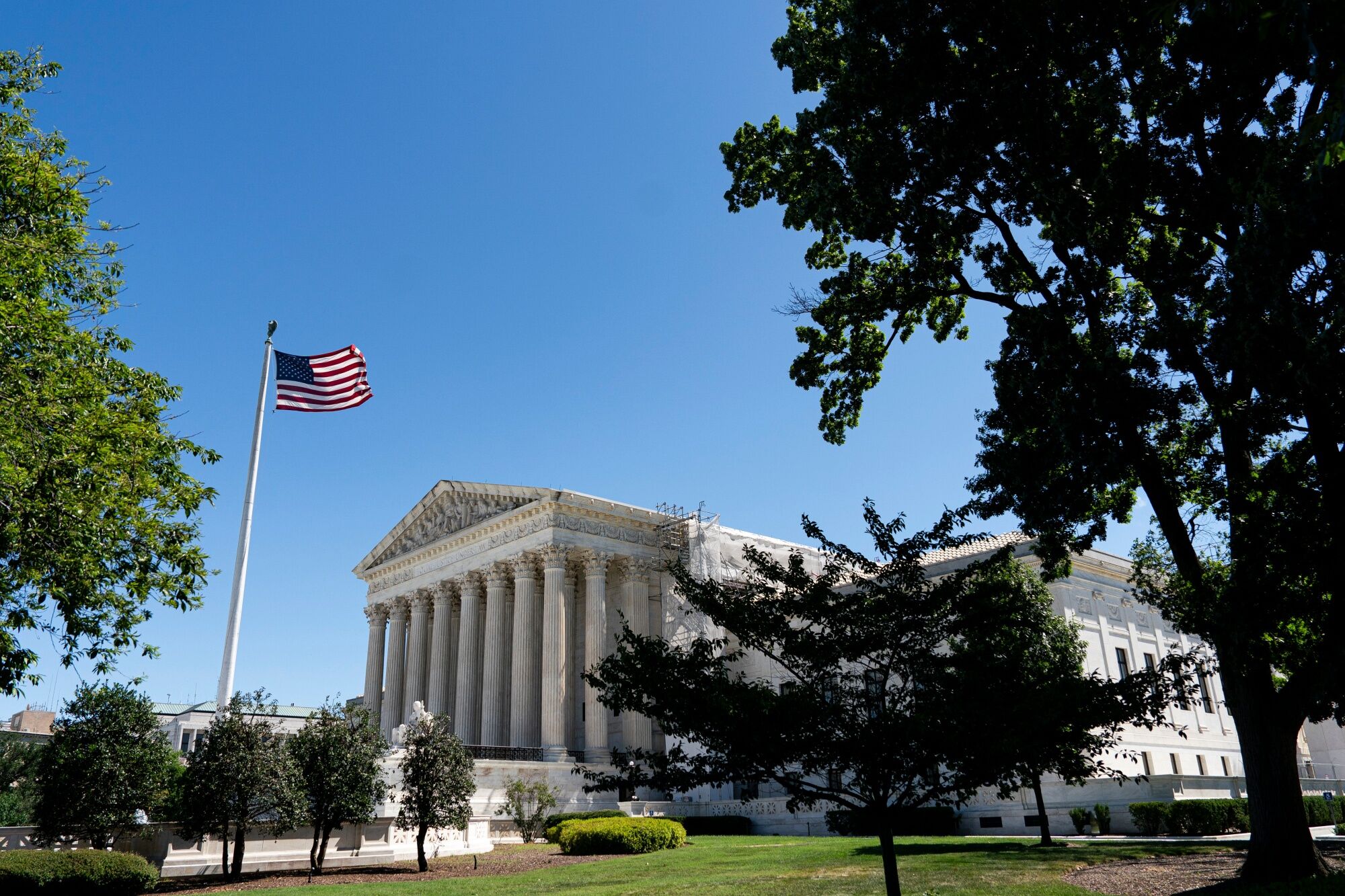
The US Supreme Court Monday rejected a bid by Ghislaine Maxwell to overturn her 2021 sex-trafficking conviction for grooming teenage girls who were abused by disgraced financier Jeffrey Epstein.
The 63-year-old British socialite and former Epstein girlfriend is serving a 20-year prison term. Maxwell argued she was shielded from the charges by language in a non-prosecution agreement Epstein reached in 2007 with federal prosecutors in Florida. She was indicted by federal prosecutors in New York in 2020.
“We're, of course, deeply disappointed,” her lawyer, David Oscar Markus, said in a statement. “But this fight isn't over. Serious legal and factual issues remain, and we will continue to pursue every avenue available to ensure that justice is done.”
Had the Supreme Court agreed to review her case, it would have added a new twist to a high-stakes legal and political drama. President Donald Trump's administration has been under pressure to release files from the federal investigation into Epstein, who died in a Manhattan jail in 2019 while facing new sex-trafficking charges.
Trump, who has acknowledged a past friendship with Epstein, said in July he had the power to pardon Maxwell. The following month, Maxwell told a top Justice Department official that she had never seen Trump act inappropriately.
Epstein in 2008 pleaded guilty to Florida state charges and served about a year in jail after Alexander Acosta, then the US Attorney for the Southern District of Florida, promised not to prosecute him for federal crimes. While the document doesn't name her, Maxwell says she was covered by this agreement as an uncharged co-conspirator.
The financier was later indicted in July 2019 by federal prosecutors in Manhattan. A month later, while awaiting trial, he was found dead of an apparent suicide in his jail cell.
Maxwell, the daughter of British publishing tycoon Robert Maxwell, was found guilty by a federal jury in December 2021, after a monthlong trial. Prosecutors presented evidence and testimony that she lured and groomed teen girls to be sexually assaulted by Epstein and sometimes participated in the abuse herself.
She was convicted of five counts including conspiracy to transport minors, a count of transporting a minor and a sex-trafficking charge.
In July, Maxwell was questioned during an an usual private meeting with Deputy Attorney General Todd Blanche. During the interview Maxwell said that while she and Epstein had a social relationship with Trump years ago, she never saw the president behave inappropriately, according to transcripts released by the government. She also said Epstein wasn't blackmailing famous people and she denied he kept a client list.
Shortly after the interview, Maxwell was moved to a minimum-security prison camp in Texas.
Lawyers for the Oxford-educated socialite argued to the Supreme Court that two different federal appeals courts were divided on a legal question of whether such a plea agreement protected co-conspirators.
Prosecutors opposed Maxwell's petition, arguing her interpretation of Epstein's plea deal was “implausible.” They said Justice Department policy only covers the district granting the immunity and not every federal prosecutors' office in the country, as Maxwell contended.
Last year a federal appeals court in Manhattan rejected Maxwell's appeal, concluding “nothing” in the non-prosecution agreement “affirmatively shows” that it “was intended to bind multiple districts” and protect Maxwell and others from ever being charged.
Four women testified at Maxwell's trial, saying they were sexually abused as teenagers from 1994 to 2004 at Epstein's Upper East Side mansion, his Palm Beach estate and New Mexico ranch, as well as Maxwell's London townhouse, among other luxury properties.
The case is Maxwell v. United States, 24-1073.

-
Talking Points This Week: Leadership Shock At Nvidia, Earnings Strength, And The Fog Over Hormuz

The Anthropic IPO pricing and first trading day, Nvidia's upcoming earnings, and any fresh signals from Iran will set the tone for the following week.
-
Signature Play: The Classic Cocktail Is Dead. Or Is It?
Classic cocktails are disappearing from India's cocktail menus. But they're still being ordered, taught to bartenders and borrowed from. So, who's really having the last drink?
-
A New Samvat Wishlist: Inclusive Prosperity And Human Development
India has strengthened its economic foundations through infrastructure, digital access and enterprise. Its next growth chapter must deepen productivity, create better livelihoods and widen participation in prosperity.
-
Love, Sex Aur Dhokha: The Audacious Plot To Spy On Jensen Huang
A Taipei dinner, a Singapore chip buyer and a suspected Chinese asset: inside the alleged spy operation that got close to NVIDIA's Jensen Huang.
-
Ten Things I Learnt This Samvat
Patience can be a trap. Cheap stocks can stay cheap. Leverage can wipe you out. What did Samvat 2082 teach us? Niraj Shah writes on 10 lessons from the year gone by.
-
Talking Points This Week: Tech Nerves, FII Buying, And A Faraway Banking Shock
The global markets are not shining this Diwali. The exception in the large markets is, India.
-
Midterm Rally Lasted A Day. The Hard Reality Of A Divided US May Last Two Years | Opinion
Between a contested AI boom, a debt ceiling that arrives in 2027 and a president with every incentive to act alone, the next two years may prove more volatile than the first day's rally suggests.
-
Blue Wave Will Derail the AI Trade but Won't Dismantle the AI Era | Unhedged Position
The Democrats' sweep of the US Congress will see politics collide with economic forces both over the long and short term.
-
It's Time To Take The GST Council's Bet On Trust Global
Payment records can prove India's services exports, and clear, proportionate rules can bring foreign digital sellers into the tax net.
-
Opinion | India at 38: From Innovation Overperformer to Innovation Powerhouse
India now has 453 VC-backed deep science startups, 18 of them late-stage, after 117 percent growth since 2020. Laurus Labs, at USD 9.3 billion, is the most valuable deep science company in any middle-income economy outside China.









