Support For Rate Cut Remains Restricted To One Member, Show MPC Minutes
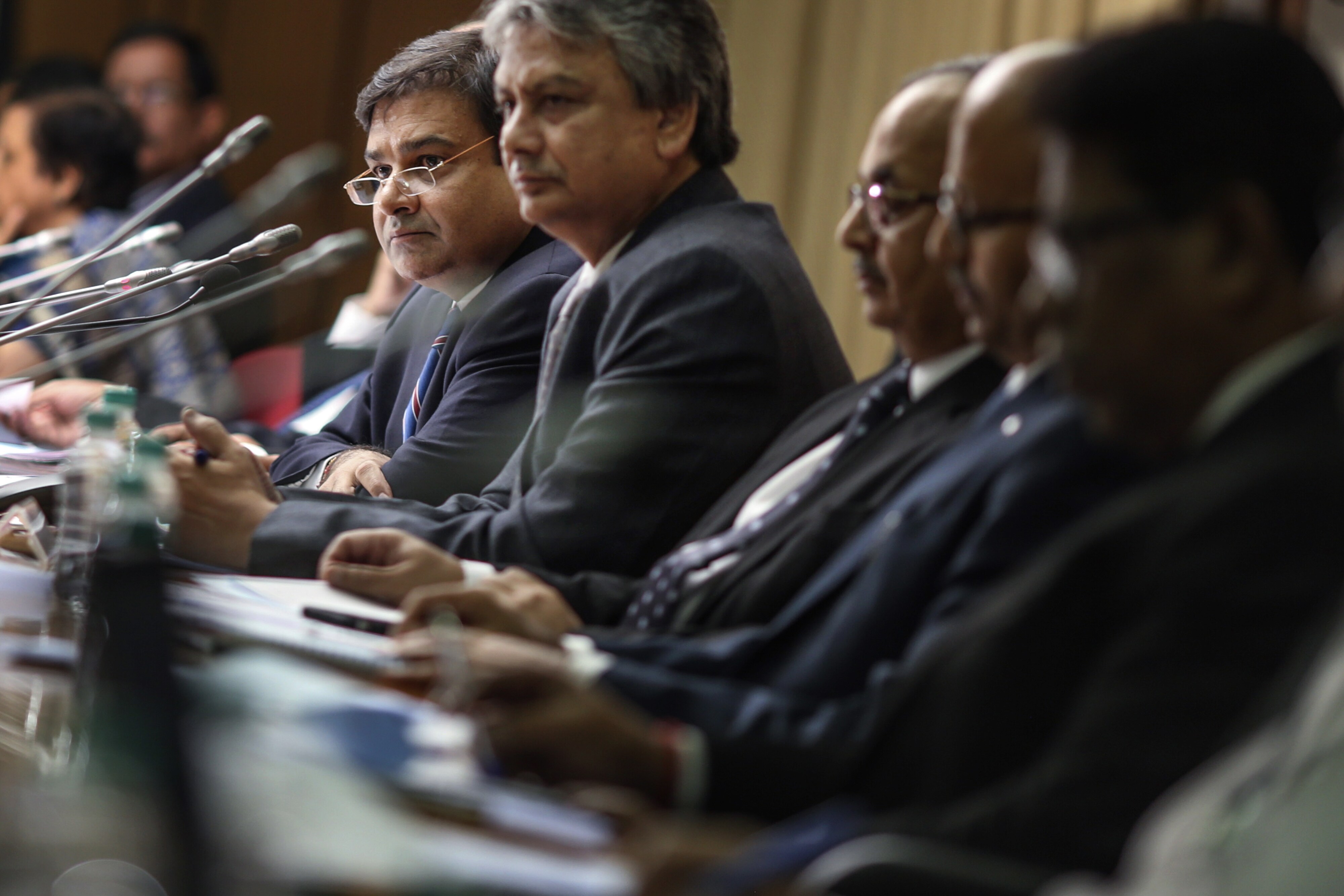
India's monetary policy committee (MPC), which voted 5-1 to keep interest rates unchanged at its June meeting, remains unconvinced that inflation has taken a structural turn to the downside, show minutes of the meeting released on Wednesday.
With the exception of Ravindra Dholakia, who voted for a 50 basis point cut in rates, most members cited the need for more data before they can decide if prevailing macroeconomic conditions justify more accommodative monetary policy. The minutes come against the backdrop of heightened expectations of a rate cut and may prove to be dampener for the bond markets, where yields fell to 4-month lows ahead of the release of the MPC minutes.
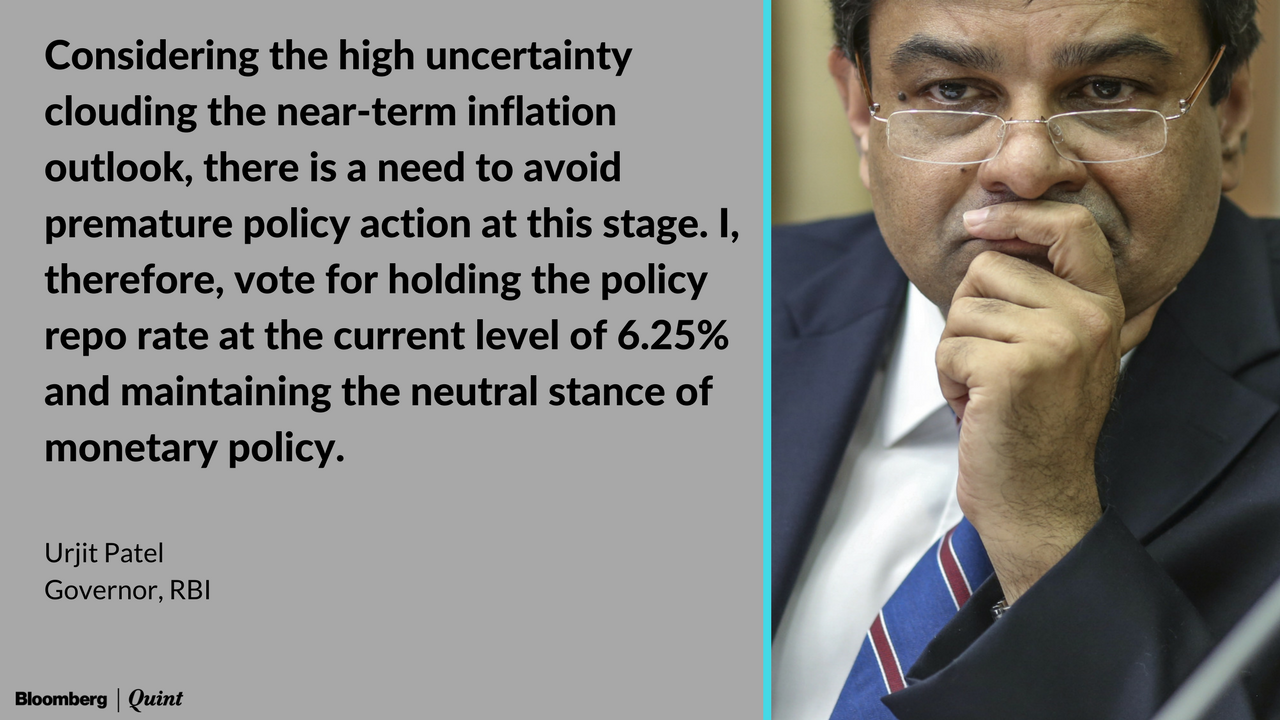
Sharing his assessment of the economy, Reserve Bank of India Governor Urjit Patel noted that there has been “unusually low momentum” in food prices. He also acknowledged that there was disinflation in services, which has allowed consumer price inflation to soften. On the flip side, Patel highlighted the elevated inflation expectations and fiscal pressure, emerging from farm loan waivers, which could push up inflation.
Patel's view was matched by that of RBI Executive Director Michael Patra who said that monetary policy cannot be conducted by looking in the rear-view mirror. Patra also questioned the premise that the recent fall in vegetable prices, which in turn has brought down headline retail inflation to a record low of 2.2 percent, is sustainable.
“It is hard to believe that deflation of 15.9 per cent in the prices of pulses and 8.6 per cent in the prices of vegetables is the steady state that will define the medium-term food inflation path,” said Patra.
He went on to lay down the following factors which could push up rural inflation:
- Agricultural wages have risen by 8.5 percent
- Farm input costs are by 10 percent
- Bank credit to agriculture is up by 13.5 percent in the past year
- Output gap in agriculture is turning positive on rising rural incomes
The MPC's decision to leave rates unchanged at its June meeting was the first split decision taken since the committee-based approach to monetary policy was adopted last year.
Ravindra Dholakia, one of the three external members of the MPC, dissented on the decision. The minutes show that Dholakia was in favour of a 50 basis points cut in the benchmark repo rate from 6.25 percent to 5.75 percent.
In an extensive note explaining his stance, Dholakia argued that there have been several noteworthy developments that warrant “decisive action”.
He lists the following among them:
- Headline CPI inflation over the next 12 months likely to be at least 50 basis points lower than anticipated in April
- Three-month and 12-month advance inflationary expectations unambiguously declining
- Low capacity utilisation, which indicates the existence of a large output gap
Prudence lies in creating space when conditions arefavorable and risks are not high than waiting and losing the opportunity. In case, theconditions were really to turn unfavorable in future, the costs to the society would besevere if during the right time expansionary policies are not followed. I, therefore,strongly plead to the MPC to effect a 50 basis points cut in the policy rate withoutlosing any time.Ravindra Dholakia, Member, MPC
Chetan Ghate and Pami Dua, the other two external members on the MPC, maintained a neutral stance and vote for status quo. Dua cited “mixed risks to inflation and growth” and said that a wait-and-watch stance is appropriate.
Ghate said that the recent decline in inflation and inflation expectations is comforting. He added that he would like to see a decline in food and fuel inflation on a more durable basis. Ghate also noted the fiscal risks that could emerge from the growing trend of state government's annoucing farm loan waiver.
Uttar Pradesh, Maharashtra, Punjab and Karnataka are among those that have announced loan waivers.
Banking Stress And Rates
Viral Acharya, deputy governor at the Reserve Bank, added another dimension to the interest rate debate. Apart from joining other members in flagging off the risk that fiscally expansive measures, like farm loan waivers, could spark off generalised inflation in due course, Acharya also linked interest rates to the banking crisis.
Acharya noted that the monetary easing in 2015-16 had failed to have a positive impact on the private sector investment cycle. He also said that the treasury gains that banks accrued due to lower bond yields (and higher bond prices) helped mask the true level of stress on bank balance sheets.
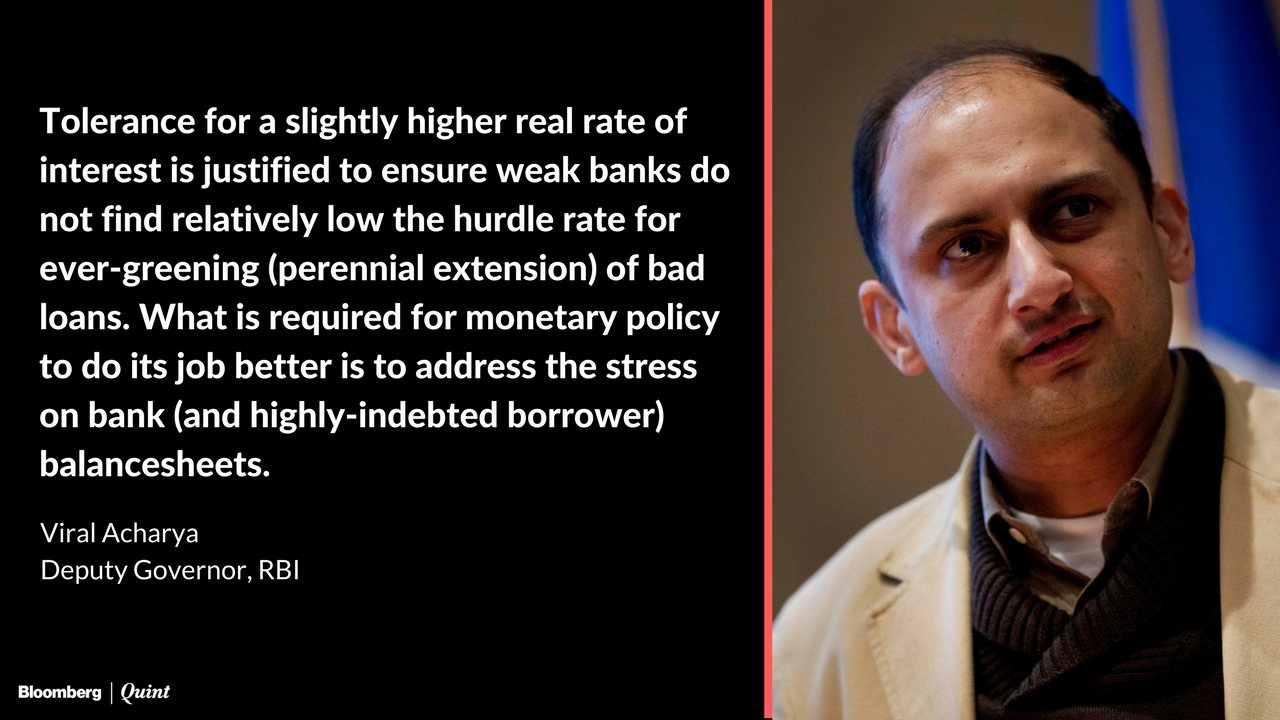
Acharya went on to counter arguments that lower interest rates would help in easing the stress on bank balancesheets. This, he said, would be counter productive and relax the pressure on cleaning up the banking sector.
Some suggest that monetary policy should be eased with the explicit objective of recapitalising the weak bank balance-sheets. Nothing could be worse for monetary policy, in my view.Viral Acharya, Deputy Governor, Reserve Bank of India

-
Talking Points This Week: Leadership Shock At Nvidia, Earnings Strength, And The Fog Over Hormuz

The Anthropic IPO pricing and first trading day, Nvidia's upcoming earnings, and any fresh signals from Iran will set the tone for the following week.
-
Signature Play: The Classic Cocktail Is Dead. Or Is It?
Classic cocktails are disappearing from India's cocktail menus. But they're still being ordered, taught to bartenders and borrowed from. So, who's really having the last drink?
-
A New Samvat Wishlist: Inclusive Prosperity And Human Development
India has strengthened its economic foundations through infrastructure, digital access and enterprise. Its next growth chapter must deepen productivity, create better livelihoods and widen participation in prosperity.
-
Love, Sex Aur Dhokha: The Audacious Plot To Spy On Jensen Huang
A Taipei dinner, a Singapore chip buyer and a suspected Chinese asset: inside the alleged spy operation that got close to NVIDIA's Jensen Huang.
-
Ten Things I Learnt This Samvat
Patience can be a trap. Cheap stocks can stay cheap. Leverage can wipe you out. What did Samvat 2082 teach us? Niraj Shah writes on 10 lessons from the year gone by.
-
Talking Points This Week: Tech Nerves, FII Buying, And A Faraway Banking Shock
The global markets are not shining this Diwali. The exception in the large markets is, India.
-
Midterm Rally Lasted A Day. The Hard Reality Of A Divided US May Last Two Years | Opinion
Between a contested AI boom, a debt ceiling that arrives in 2027 and a president with every incentive to act alone, the next two years may prove more volatile than the first day's rally suggests.
-
Blue Wave Will Derail the AI Trade but Won't Dismantle the AI Era | Unhedged Position
The Democrats' sweep of the US Congress will see politics collide with economic forces both over the long and short term.
-
It's Time To Take The GST Council's Bet On Trust Global
Payment records can prove India's services exports, and clear, proportionate rules can bring foreign digital sellers into the tax net.
-
Opinion | India at 38: From Innovation Overperformer to Innovation Powerhouse
India now has 453 VC-backed deep science startups, 18 of them late-stage, after 117 percent growth since 2020. Laurus Labs, at USD 9.3 billion, is the most valuable deep science company in any middle-income economy outside China.









