Stronger Capital Goods Imports Adding To India’s Current Account Deficit Woes

Growth in the Indian economy has strengthened. A modest pick-up in the investment cycle is underway. That's the good news. The bad news is that a continued pick-up in investments could widen India's current account deficit further.
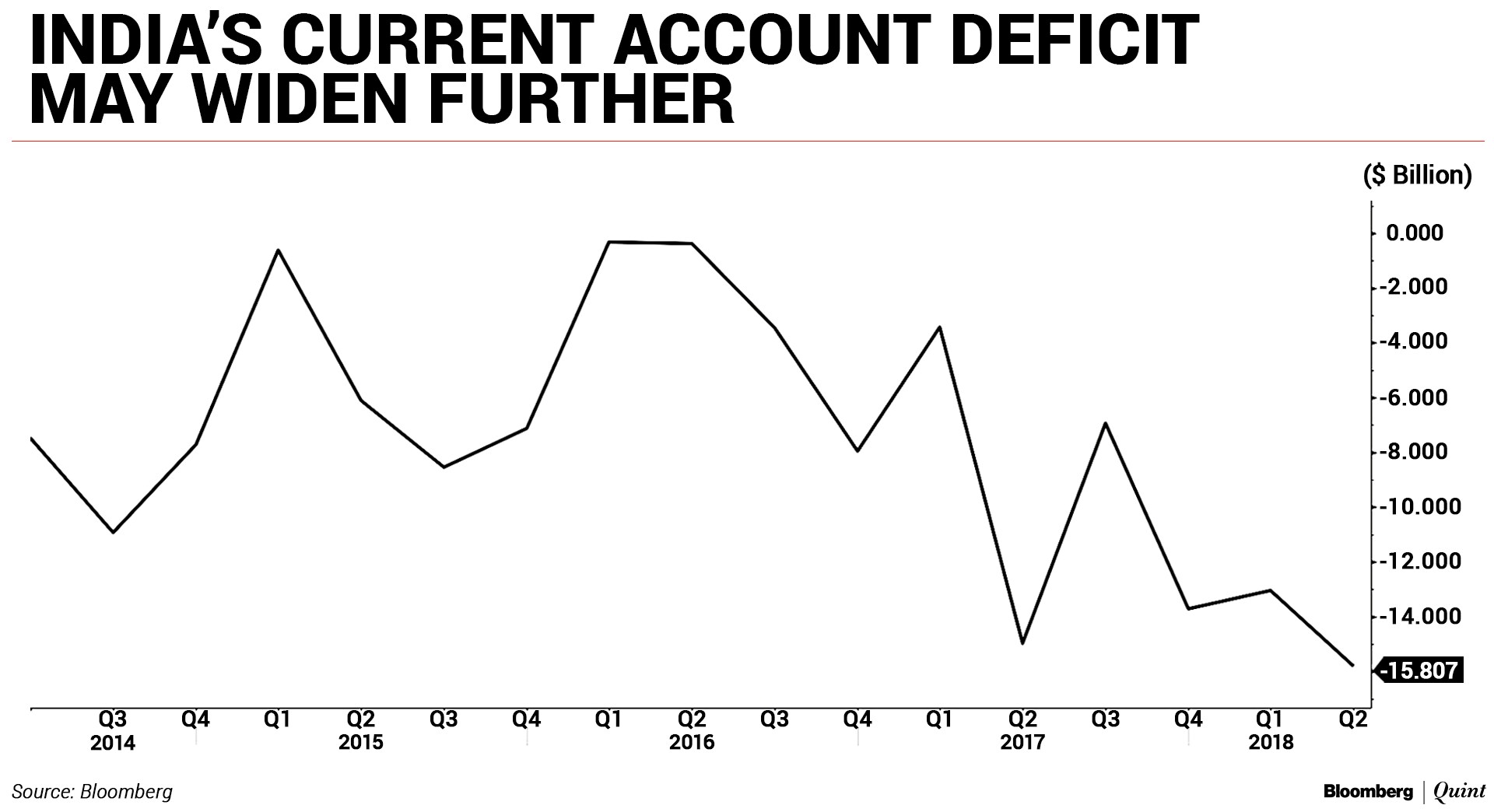
India's current account deficit widened to 2.4 percent of GDP in the April-June quarter, showed RBI data released on Friday. While oil remains the biggest pressure on India's import bill, a surge in imports of consumer items like smartphones has also weighed on the export-import balance.
Capital goods imports are also contributing to the imbalance and this could continue.
There exists a near perfect correlation coefficient between investments and capital goods imports, shows analysis by BloombergQuint. This implies that if investments rise over the coming quarters, capital goods imports will also rise. The correlation coefficient was calculated taking the absolute level of capital goods imports and the nominal gross fixed capital formation.
Growth will start rising and private investments will rebound after elections, pushing up capital goods imports further, said Pranjul Bhandari, the chief India economist at HSBC in a conversation with BloombergQuint. Capital goods are assets that businesses use to produce consumer goods.
Bhandari added that even if export growth strengthens, imports of crude oil, capital and consumer goods will likely outpace exports.
As India's growth differential with the rest of the world is rising, imports are expected to remain very strong and the current account deficit will continue to widen.Pranjul Bhandari, Chief India Economist, HSBC
The bank forecasts India's current account deficit to widen to 2.7 percent of the GDP for the fiscal year ended March 2019 from 1.9 percent of the GDP the previous fiscal year.
Capital Goods Imports - A Lesser Devil?
A deficit in the current account is created when the value of goods and services imported, is higher than the value of goods and services exported by a country.
But the quality of that deficit also matters. Economists feel that strong capital goods imports are a positive indicator as they increase the productive capacity of the economy.
Capital goods and consumer goods imports cannot be treated alike, said Shubhada Rao, chief economist at Yes Bank. “Capital goods imports are a positive indicator as they create further capacity expansion,” she said. Yes Bank expects a current account deficit of 2.8 percent of GDP this year.
In contrast, consumer goods imports simply reflect increased consumption spending, which may not always be healthy.
In volume terms, core imports (non-oil, non-gold) rose 10.9 percent year-on-year in July from 3 percent in June, noted Nomura Global Market Research in a note last month. A break-up of the imports showed a 9.3 percent year-on-year increase in consumer goods imports, Nomura pointed out. “Investment and industrial imports growth continued to show strong performance, in sync with the domestic cyclical capex recovery,” it added.
Together, capital and consumer goods account for nearly a fifth of of all imports, slightly less than what crude oil accounts for.
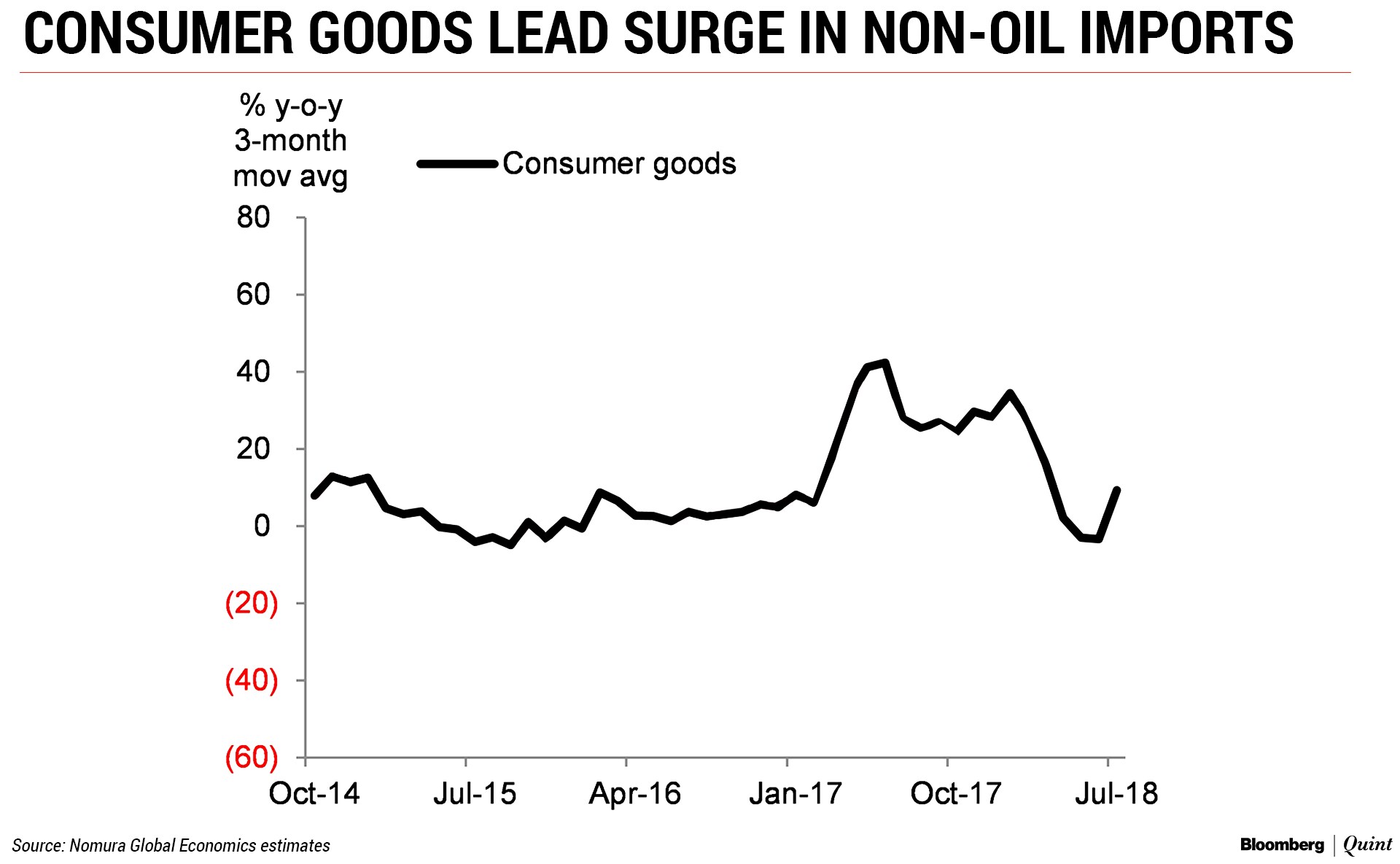
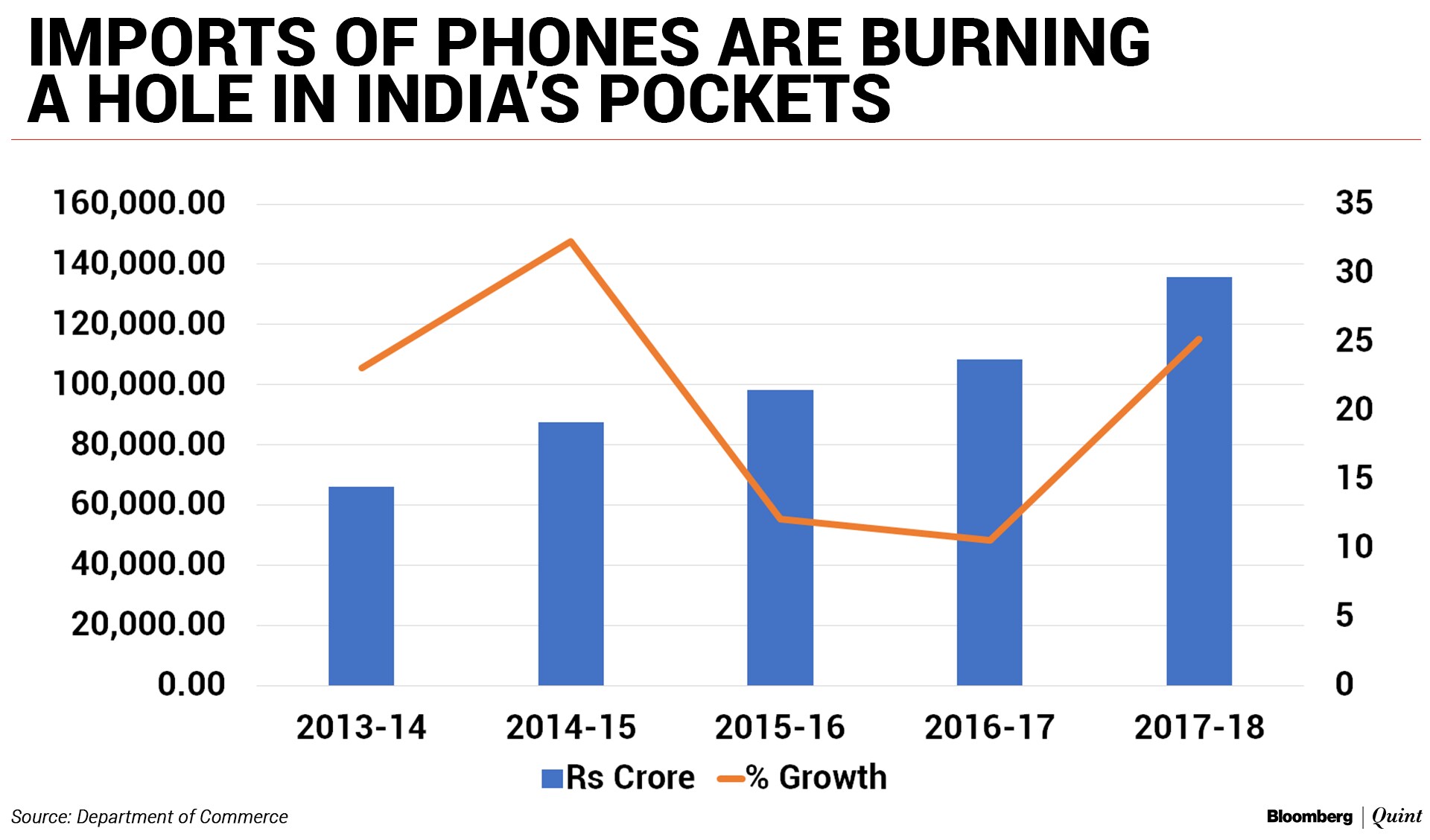
Within consumer goods, items like mobile phones, have been an increasing cause of concern. Phone imports, largely from China, have doubled in the past five years, and feature among the largest imports, after petroleum products and coal, in terms of share of India's total imports.
India imported mobile phones worth nearly Rs. 32,305.82 crore or $4.8 billion in the first quarter of the current fiscal year, shows a break-up of the import data on the Commerce Ministry's website. This constituted 3.8 percent of all imports in this period.
Consumer goods such as these (smartphones) are driven by demand and the impact of rupee depreciation is unlikely to have a significant impact on their imports, said Bhandari countering the narrative that a weaker rupee will bring down imports of non-essential goods.
Policy intervention to curb imports may well be needed, even if only for the near term, said Saugata Bhattacharya, chief economist at Axis Bank. However, this should only be done after making a clear distinction between capital goods and consumer goods, he said.

-
AI Bias In Investing Cannot Be Eliminated, But It Can Be Governed

Framing is a particularly important example as identical financial information presented in terms of gains rather than losses can lead an LLM to reach a different assessment.
-
Joining The Dots | Dark Skies, Steady Diya: Why Hope Holds This Diwali
With war, a weak rupee and foreign outflows weighing on sentiment, policymakers at the NDTV World Summit and market veterans at NDTV Profit Ignite: Diwali Edition offered the same advice: stay invested and filter out the noise.
-
The Curious Case of Equitas Small Finance Bank And A CEO Who Quit For Stock
PN Vasudevan believes persistent investor concerns over a perceived conflict of interest had become a governance overhang on Equitas Small Finance Bank's stock, even as the lender improved profitability and asset quality.
-
Talking Points This Week: AI Cash Burn, A Tiger Comeback And An India That Still Finds Its Own Path
India is not immune to higher oil or tighter global liquidity, yet its earnings base is broader, its domestic policy levers are still available.
-
Foreign Investors Own Half Of HDFC Bank and ICICI Bank. An LTCG Cut Could Matter Most Here
Foreign portfolio investors have US$115 billion parked in HDFC Bank, ICICI Bank. If the government cuts long-term capital gains tax, Jefferies says returning foreign money could land here first.
-
'Never Seen This Level Of Negativity': Sandeep Tandon Says The Next Rally May Be Closer Than You Think
Veteran investor Sandeep Tandon says foreign selling is easing, large-caps are due a comeback and mid-caps are crowded, while he turns positive on gold, power and pharma this Diwali.
-
Indians Stay With Family, Not In Hotels | The Reason Why
India still lacks enough clean, reliable and affordable hotels for budget-conscious travellers.
-
The Economic Imperative: Analysing The Material Driving Force Behind India-Canada Strategic Reset
This economic complementarity is further reinforced by deep institutional investment ties and talent mobility, which form the bedrock of the bilateral framework.
-
Medicine Pricing: Where Must Profit Stop?
India must confront excessive margins, hidden incentives and regulatory gaps that threaten the integrity of medicine.
-
Why Amazon And Flipkart Are Struggling To Beat Meesho In India's Smaller Cities
With 274 million users and lowest-cost logistics, Meesho is defending its value commerce crown against giants like Amazon and Flipkart.










