Starbucks Sells 60% China Stake To Boyu At $4 Billion Value
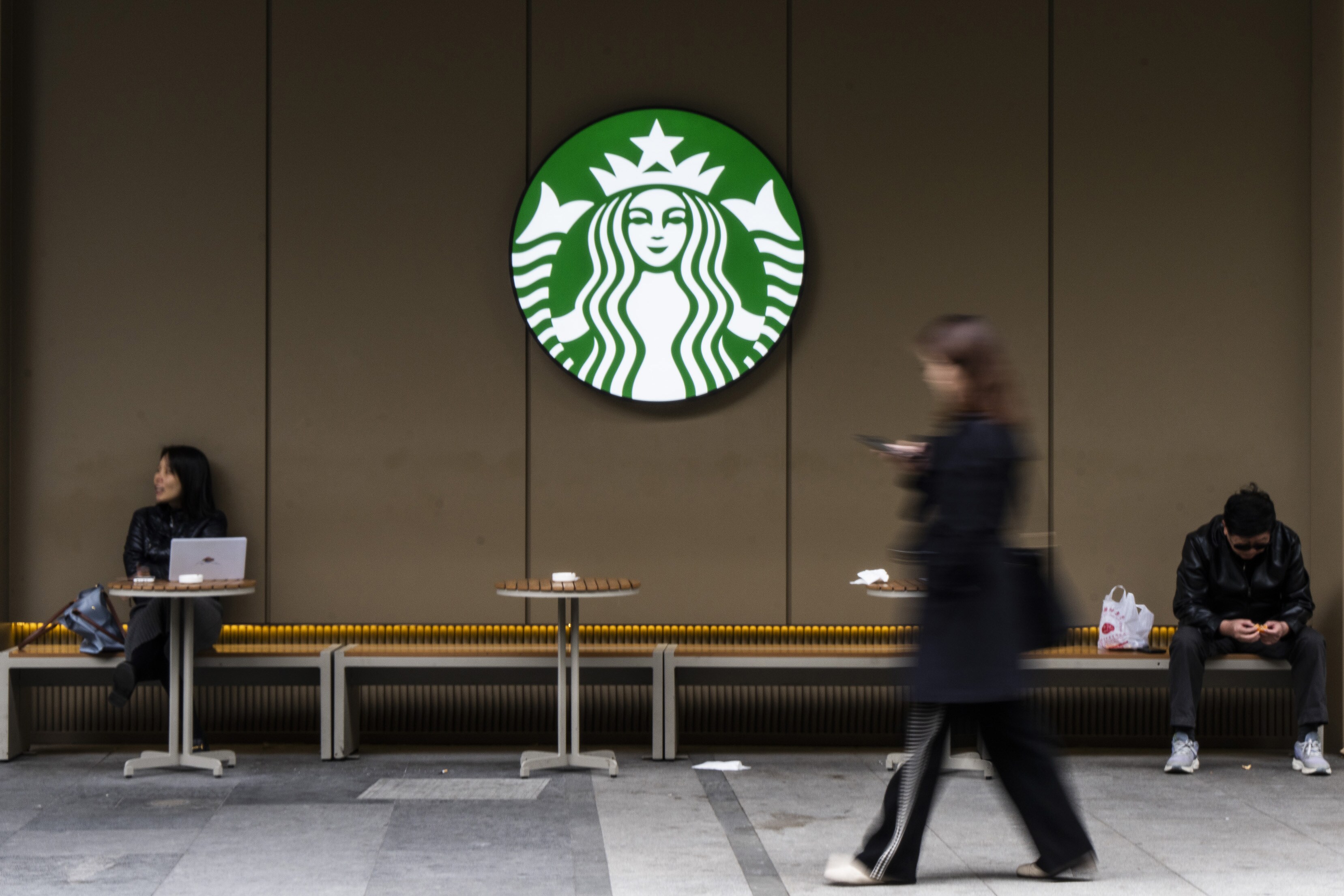
Starbucks Corp. agreed to sell a majority stake in its China business to private equity firm Boyu Capital at a $4 billion enterprise value in a bid to improve the coffee chain's fortunes in the country.
Boyu Capital will hold up to a 60% interest in Starbucks' retail operations in China through a new joint venture with the coffee seller, the companies said in a statement. Starbucks will hold the remaining 40% interest and will continue to license the brand and intellectual property to the joint venture.
The agreement marks the end of a search for a partner to help chart Starbucks' next chapter in China, where it has about 8,000 stores after opening its first outlet in Beijing in 1999. However, Starbucks has struggled in recent years, along with other Western companies that have lost ground to local rivals amid rising nationalism and reluctance to pay premiums for foreign brands.
Read More: Starbucks Struggles to Find a New Identity in Cutthroat China
Xiamen-based Luckin Coffee Inc. dethroned Starbucks as China's biggest coffee chain two years ago by selling coffee at one-third of its price. And while Starbucks' store format is expensive to upkeep, customers have become less willing to pay higher prices for its drinks since the Covid pandemic and ongoing economic downturn.
“Starbucks' store expansion has been restrained amid fierce competition from local rivals, and the deal is expected to accelerate growth with sufficient funds and Boyu's retail experience,” said Jason Yu, Shanghai-based managing director of CTR Market Research. “Boyu needs to balance Starbucks' brand positioning and its participation in price competition, otherwise it will harm its long-term profitability in China.”
Read More: Shanghai Is the World's Most Compelling Coffee City Right Now
Bloomberg previously reported that Boyu had emerged as the front-runner, and that Starbucks was evaluating five bids from potential suitors.
Founded in 2011 and based in the Cayman Islands, Boyu invests in private equity, public equities, real estate and infrastructure, according to its website. It also has a venture capital and renewable energy platform. Its private equity business invests in areas such as technology, consumer and retail and health care.
“We see a path to grow from today's 8,000 Starbucks coffeehouses to more than 20,000 over time,” Starbucks Chief Executive Officer Brian Niccol said in a blog post.
Comparable store sales in China rose 2% in the fourth quarter, helping the company post positive same-store sales growth for the first time in more than a year.
Starbucks expects the total value of its China retail business to exceed $13 billion, including the value of licenses, according to the statement.
The coffee seller's shares rose less than 1% at 6:17 p.m. in after-hours trading in New York. The stock has declined about 11% this year, trailing a nearly 17% advance by the S&P 500 Index.
As part of its efforts to lure back customers in China, Starbucks earlier this year opened free “study rooms” in some of its stores there. Under new China chief Molly Liu, the chain has also expanded its drinks menu to include more sugar-free options and teas catering to local tastes, slashed prices on a slew of beverages and upped its options for customizing orders. That's in contrast to recent moves in the US, where the menu has been simplified to boost operational efficiency.

-
The Economic Imperative: Analysing The Material Driving Force Behind India-Canada Strategic Reset

This economic complementarity is further reinforced by deep institutional investment ties and talent mobility, which form the bedrock of the bilateral framework.
-
Medicine Pricing: Where Must Profit Stop?
India must confront excessive margins, hidden incentives and regulatory gaps that threaten the integrity of medicine.
-
Why Amazon And Flipkart Are Struggling To Beat Meesho In India's Smaller Cities
With 274 million users and lowest-cost logistics, Meesho is defending its value commerce crown against giants like Amazon and Flipkart.
-
High US Salaries, No Green Card Certainty: The Financial Calculation Facing Indian H-1B Families
The suspension of PERM processing at eight technology employers does not cancel existing H-1B visas. What it does is force a question many Indian families have been avoiding: is the US salary worth tying your career and family plans to one employer?
-
Swiggy vs Eternal: Food Delivery's Two Rivals Are No Longer In The Same Race
Eternal is building a private AI assistant, dark.ai. Swiggy is still working out how to make Instamart pay, with an operating loss of Rs 895 crore in the July-September quarter while Blinkit stayed profitable.
-
Where You Live Shapes How You Get To Work | The Reason Why
Two-wheelers are the most popular way to get to work in India, accounting for nearly 43% of workplace commutes.
-
Unhedged Position: Can India See An Indonesia-Style Time Correction?
The Nifty is trading below levels it first clocked in 2024. Is there, then, as I have suggested in the headline, potential that the current time correction drags on painfully for the next three-five, even ten years?
-
Navigating Friction And Energy Realities: An Analysis Of Marco Rubio's October Visit To India
Occurring at a critical juncture marked by stalled trade negotiations and escalating geopolitical pressures over global energy supplies, the visit offers a profound window into modern US-India relations.
-
India Exports Capital. Why Not Export Trusteeship?
The big question, then, is whether India can build an institution that global borrowers, investors, banks, and lawyers can trust, even without an Indian connection.
-
France's Economy & Politics Are In Crisis | The Reason Why
Let's look at how the French economy and politics evolved under Nicolas Sarkozy, Franois Hollande and Emmanuel Macron.










