Samsung Mulls US Battery Plant Despite Trump Anti-EV Stance
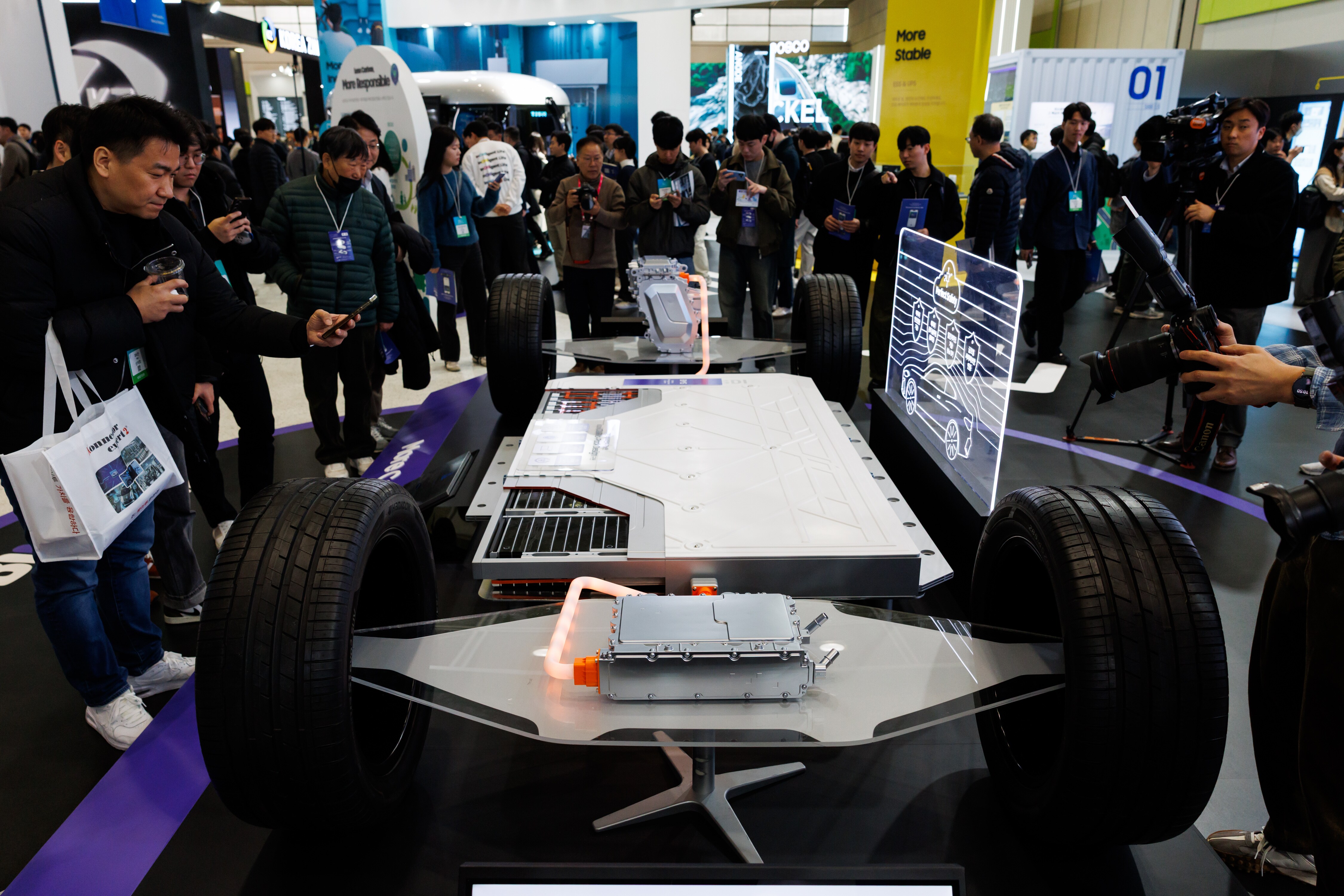
South Korea's Samsung SDI Co. said it's weighing the idea of another manufacturing plant in the US, signalling optimism about the market's growth despite President Donald Trump rolling back subsidies for electric vehicles.
The company, which supplies battery to General Motors Co. and Stellantis NV, is studying building a plant on its own in North America, Chief Executive Officer Joo Sun Choi told reporters in Seoul on Wednesday. It already has plans to build plants in collaboration with GM and Stellantis in Indiana and has already completed another facility with Stellantis.
“We are very conservative on building a new plant in North America because demand has weakened significantly this year compared to last year,” Choi said. “But we are vigorously reviewing the plan because we need mid-to-long-term growth.”
That shows that component suppliers for plug-in vehicles believe the market will rebound on the back of a global push for emissions reduction despite near-term pain from Trump's anti-EV rhetoric. South Korean battery makers, including LG Energy Solution Ltd. and SK On, have pledged at least $54 billion in combined investments for battery manufacturing facilities in the US, lured by tax credits under the previous Biden administration's green-energy bill.
Boosting manufacturing in the US could also help assuage Trump, who singled out South Korea for levying more tariffs against American products than China.

“We see the US policy as a move to increase domestic manufacturing and we already have many plants in the US,” LG Energy Chief Executive Officer Kim Dong-Myung said at a media briefing on Wednesday, citing the company's investments as an “advantage.”
LG Energy, South Korea's largest battery maker, sees the EV industry hitting the bottom in the first half this year.
Raw-material suppliers to battery makers echoed the view. Cathode maker Posco Future M Co.'s Chief Executive Officer Eom Gi-chen forecast the industry will probably rebound in two years. Despite weaker demand for EVs, the company increased its production target for this year as automakers are calling for made-in-Korea raw materials for cells, Eom said.
The industry is moving toward the so-called “free from China” approach, he said, referring to the push reducing reliance on Chinese supply chains.
Yi Kang-myung, the chairman of SungEel HiTech Co., a major battery recycler in Korea, also said he expects to start the operation of new plant in Indiana in March. Construction of a second plant in Georgia has yet to be decided, he said.
“We expect more details” of Trump's EV policy around April, Yi said. “We will decide whether to start the construction of the second plant or not” after that.

-
Talking Points This Week: AI Cash Burn, A Tiger Comeback And An India That Still Finds Its Own Path

India is not immune to higher oil or tighter global liquidity, yet its earnings base is broader, its domestic policy levers are still available.
-
Foreign Investors Own Half Of HDFC Bank and ICICI Bank. An LTCG Cut Could Matter Most Here
Foreign portfolio investors have US$115 billion parked in HDFC Bank, ICICI Bank. If the government cuts long-term capital gains tax, Jefferies says returning foreign money could land here first.
-
'Never Seen This Level Of Negativity': Sandeep Tandon Says The Next Rally May Be Closer Than You Think
Veteran investor Sandeep Tandon says foreign selling is easing, large-caps are due a comeback and mid-caps are crowded, while he turns positive on gold, power and pharma this Diwali.
-
Indians Stay With Family, Not In Hotels | The Reason Why
India still lacks enough clean, reliable and affordable hotels for budget-conscious travellers.
-
The Economic Imperative: Analysing The Material Driving Force Behind India-Canada Strategic Reset
This economic complementarity is further reinforced by deep institutional investment ties and talent mobility, which form the bedrock of the bilateral framework.
-
Medicine Pricing: Where Must Profit Stop?
India must confront excessive margins, hidden incentives and regulatory gaps that threaten the integrity of medicine.
-
Why Amazon And Flipkart Are Struggling To Beat Meesho In India's Smaller Cities
With 274 million users and lowest-cost logistics, Meesho is defending its value commerce crown against giants like Amazon and Flipkart.
-
High US Salaries, No Green Card Certainty: The Financial Calculation Facing Indian H-1B Families
The suspension of PERM processing at eight technology employers does not cancel existing H-1B visas. What it does is force a question many Indian families have been avoiding: is the US salary worth tying your career and family plans to one employer?
-
Swiggy vs Eternal: Food Delivery's Two Rivals Are No Longer In The Same Race
Eternal is building a private AI assistant, dark.ai. Swiggy is still working out how to make Instamart pay, with an operating loss of Rs 895 crore in the July-September quarter while Blinkit stayed profitable.
-
Where You Live Shapes How You Get To Work | The Reason Why
Two-wheelers are the most popular way to get to work in India, accounting for nearly 43% of workplace commutes.










