Russia’s Moon Failure a Dent to Its Space Partnership With China
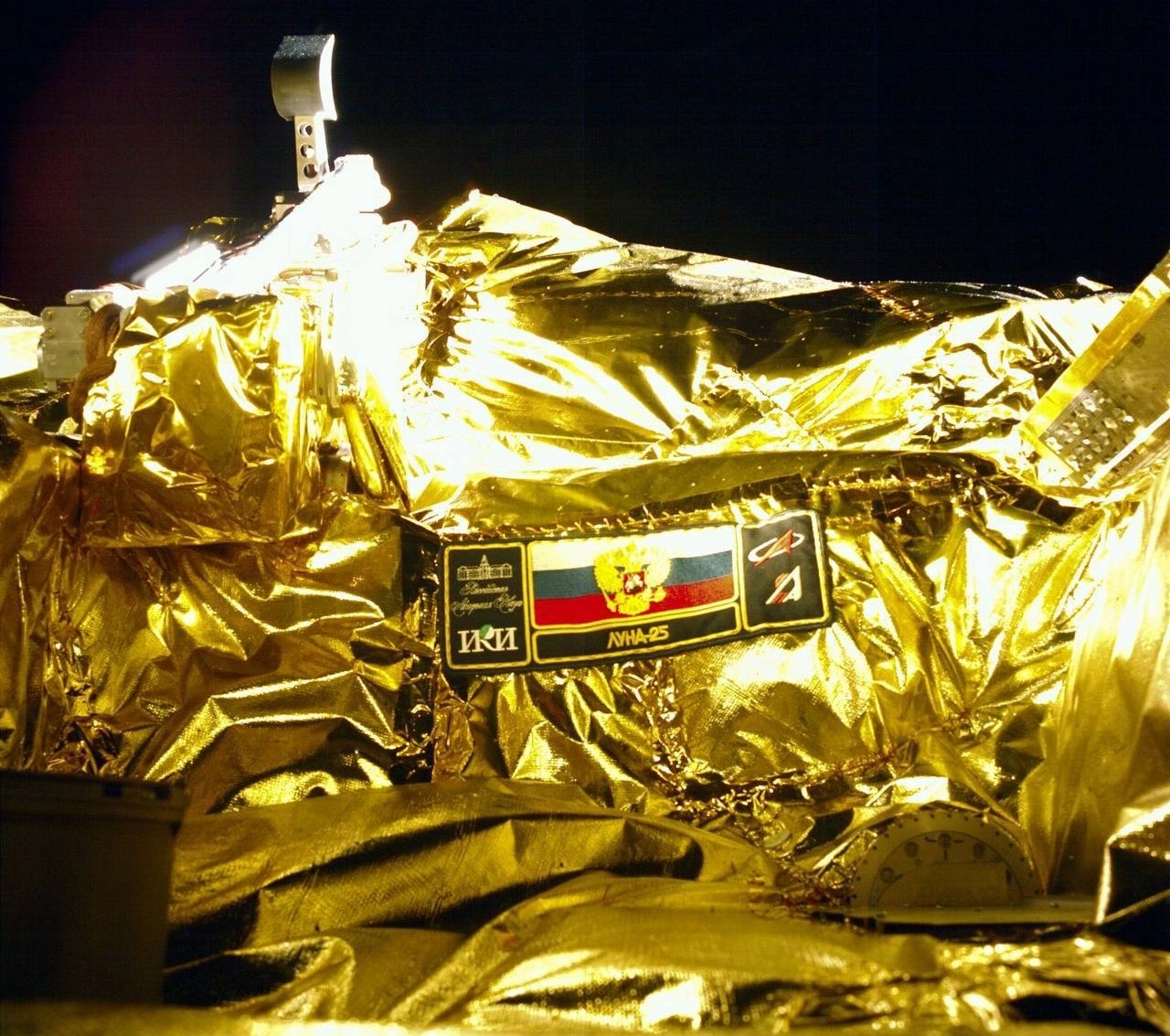
(Bloomberg) -- The crash of Russia's Luna-25 spacecraft into the moon over the weekend isn't just a setback for President Vladimir Putin's ambitions to overcome war-related sanctions.
It's also an embarrassment for Chinese President Xi Jinping — Putin's partner in building a proposed base on the moon meant to challenge the US and its space allies.

The Russian spacecraft was aiming to be the first to land near the south pole, the intended location of a joint base that space agencies in China and Russia announced in 2021 they had agreed to build together.
Wu Yanhua, the chief designer of China's major deep space exploration project, led a delegation to the Vostochny Cosmodrome in Russia's far east to attend the launch and discuss deepening cooperation between the two countries' space programs, Chinese media reported earlier this month.
Now that the mission has ended in failure, Chinese media reports on the crash have been far and few between, with the official Xinhua news agency only carrying a terse five-sentence missive on Sunday.
“This failure is expected to deal a blow to Russia's ambitions,” Hu Xijin, the former editor of the Communist Party-controlled Global Times, wrote in an opinion piece for the newspaper, adding that “the West should not underestimate Russia just because its lunar program has failed.”
Luna-25 was the first Russian spacecraft to attempt a moon landing since the end of the Soviet Union.
“We will have to learn everything again,” space historian Alexander Zheleznyakov told privately owned Russian media group RBC. “We must learn how to confidently fly to the moon, land confidently on its surface, and only after that proceed with the implementation of grandiose plans alone, either with China or with other countries.”
Russia's space program has stagnated because of corruption, mismanagement and sanctions, said Bruce McClintock, lead of the RAND Space Enterprise Initiative and a senior policy researcher at the RAND Corp. “For Russia, this is really bad,” he said. “This was their long-awaited, near-last chance to regain any credibility when it comes to outer space exploration.”
Since the invasion of Ukraine in February last year, Chinese media have downplayed Russia's role in the lunar base.
Read more: China-Russia Space Alliance Stumbles in Bid to Surpass US
Unlike Russia, China succeeded with its own attempt to beat others to the moon when it became the first country to land a spacecraft on the far side of the astronomical body in 2019. More than four years later, that mission's Yutu-2 lunar rover remains active.
Behind the scenes, China already recognizes that Russia is of limited value as a space partner, said Pavel Luzin, a senior fellow with the Jamestown Foundation and a researcher on space policy.
“China is not interested in cooperating with Russia because Russia can provide nothing to China,” he said.
While the Russians had intended on synchronizing their lunar missions with the Chinese ones to utilize resources more efficiently as the two nations worked toward establishing their join base at the moon's south pole, that's no longer an option, Luzin said.
“There was an opportunity for synchronization but currently it's just impossible,” Luzin said.
Russia's crash provides an opening for China's biggest Asian rival, India, which now has the chance to be the first to land at the lunar south pole. India's Chandrayaan-3, launched last month, is scheduled to attempt a landing as early as Wednesday.
Success would be a stark sign of the change in fortunes of the Russian and Indian space programs, since it wasn't that long ago that New Delhi was depending on taking part in the Luna program as its best way to get to the moon, McClintock said. “The Indians have gone on to have their own, organic space program,” he said.
China isn't about to give up on all forms of cooperation in space with Russia, however, since Moscow could be of help in developing space-based missile early warning systems, said Mark Hilborne, a lecturer in the Defence Studies Department at King's College London.
But in the more public areas of space exploration, “China may at least outwardly emphasize its collaboration with Russia to a lesser extent, partially due to international opprobrium over Ukraine and its recent lunar failure,” he said.
--With assistance from Lucille Liu.
More stories like this are available on bloomberg.com
©2023 Bloomberg L.P.

-
We May Need Another Tukaram Mundhe To Fight Air Pollution | The Reason Why

Developers may install basic measures such as sprinklers and green nets, resume work, and continue violating rules when this equipment stops working.
-
Extracting Value From Battery Scrap Could Be Challenging For India | The Reason Why
A discarded lithium-ion battery still contains valuable materials such as lithium, nickel and cobalt. These can be recovered and reused. When such batteries are crushed and shredded, they produce a dark powder called black mass.
-
One El Nino, India Can Handle. Two Could Break The Granary
India's grain stocks can absorb one bad year, but a second El Nino could drain the buffer in two to three years, economists say.
-
India's Troika Of Good Luck | Joining The Dots
As Jensen Huang's exit drags Nvidia down, a cooling AI trade and resilient earnings have revived investor interest in India. A likely RBI rate hike looms.
-
Talking Points This Week: Leadership Shock At Nvidia, Earnings Strength, And The Fog Over Hormuz
The Anthropic IPO pricing and first trading day, Nvidia's upcoming earnings, and any fresh signals from Iran will set the tone for the following week.
-
Signature Play: The Classic Cocktail Is Dead. Or Is It?
Classic cocktails are disappearing from India's cocktail menus. But they're still being ordered, taught to bartenders and borrowed from. So, who's really having the last drink?
-
A New Samvat Wishlist: Inclusive Prosperity And Human Development
India has strengthened its economic foundations through infrastructure, digital access and enterprise. Its next growth chapter must deepen productivity, create better livelihoods and widen participation in prosperity.
-
Love, Sex Aur Dhokha: The Audacious Plot To Spy On Jensen Huang
A Taipei dinner, a Singapore chip buyer and a suspected Chinese asset: inside the alleged spy operation that got close to NVIDIA's Jensen Huang.
-
Ten Things I Learnt This Samvat
Patience can be a trap. Cheap stocks can stay cheap. Leverage can wipe you out. What did Samvat 2082 teach us? Niraj Shah writes on 10 lessons from the year gone by.
-
Talking Points This Week: Tech Nerves, FII Buying, And A Faraway Banking Shock
The global markets are not shining this Diwali. The exception in the large markets is, India.









